Rebalancing
Which households have drifted from their policy, and the trades that would fix it.
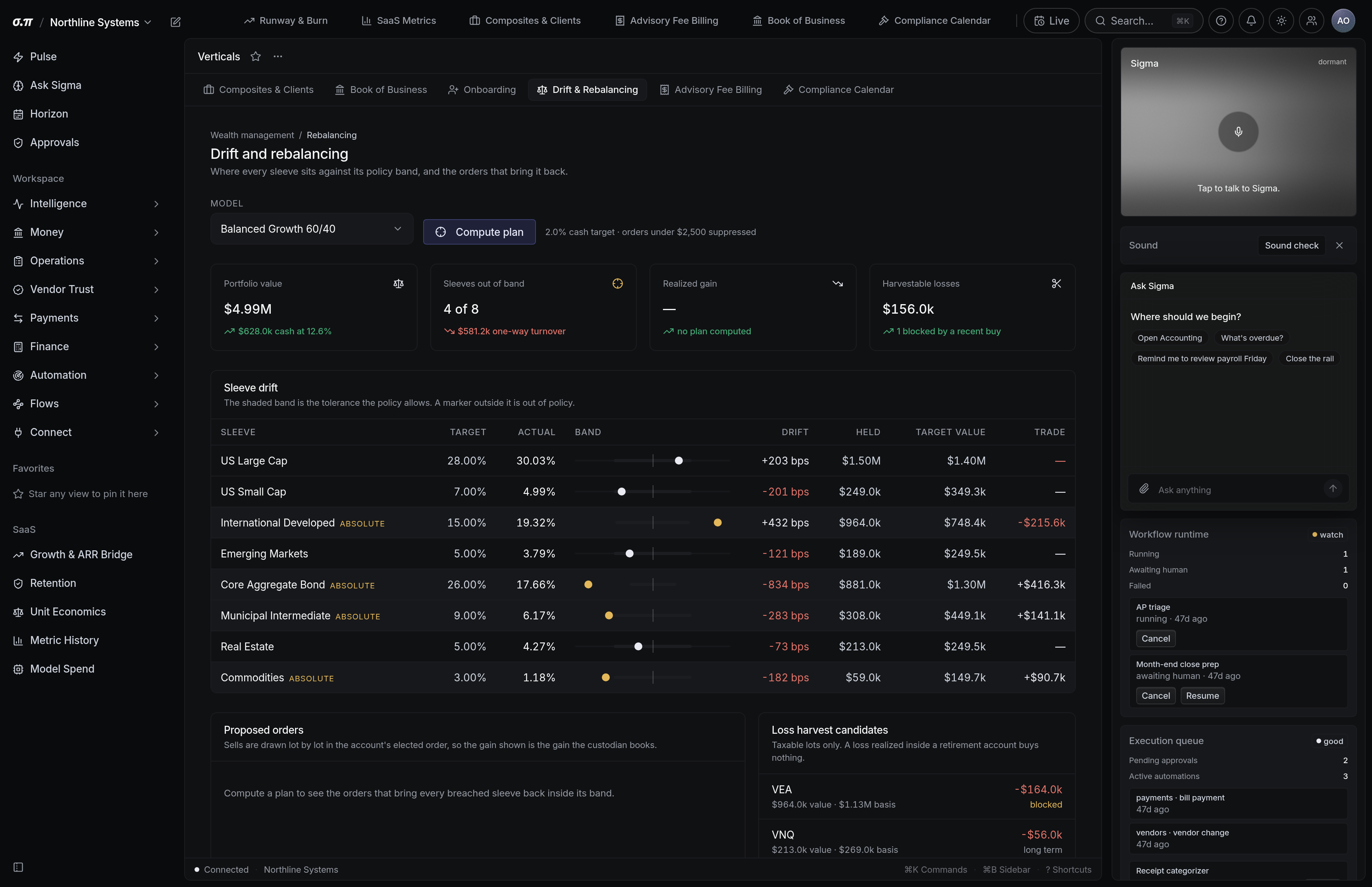
Drift is measured against each household's own target allocation and its own tolerance bands. A five percent drift matters in a narrow band and does not in a wide one.
Proposed trades account for tax, because a rebalance that generates unnecessary gains costs the client more than the drift did.
Where everything sits
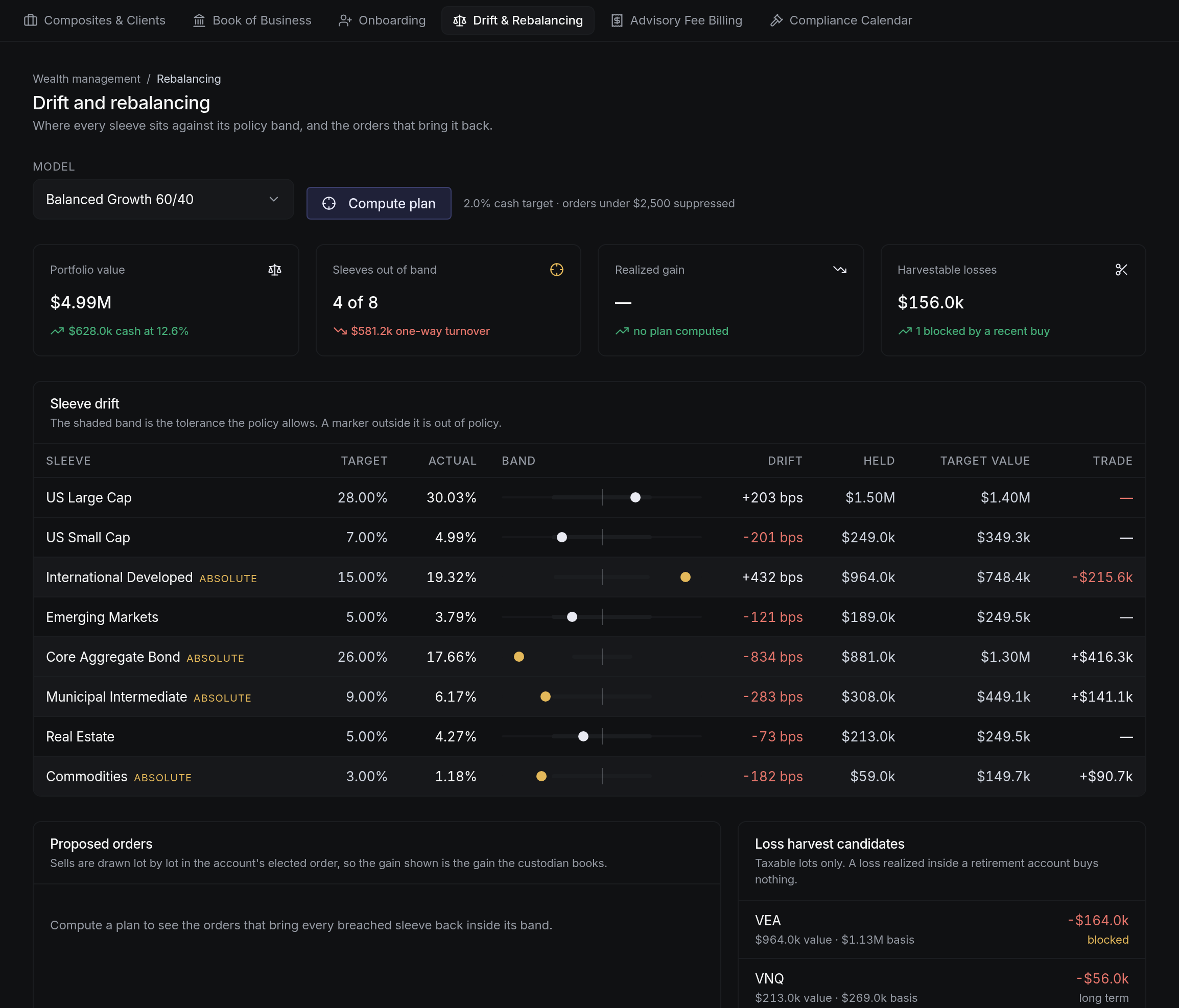




How to work this page
The band is what triggers action. Trading to exact target on every small move generates cost with no benefit.
Rebalancing in a tax-deferred account is free. In a taxable one it realises gains, so the sequencing differs.
Contributions and withdrawals can rebalance without any trade at all. It is the cheapest correction available.
Proposals are proposals. Wash sale exposure and holding periods are flagged on the trades that carry them.
On a phone
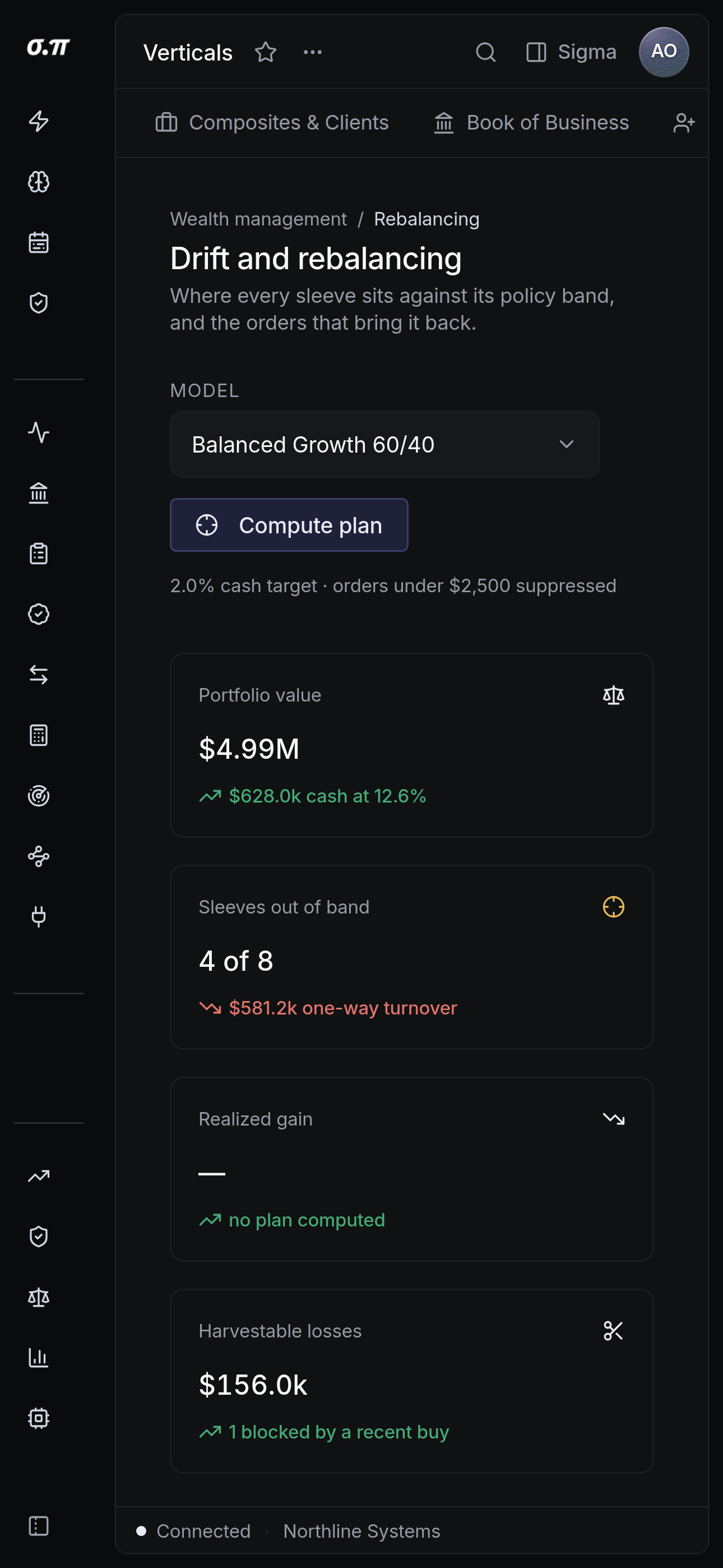
Every figure from the desktop appears here, stacked rather than reduced. Tables scroll inside themselves so the page never moves sideways, and figures keep their separators and their alignment at every width.
Questions people actually ask
On breach rather than on a calendar. Calendar rebalancing trades when nothing needs it and misses breaches between dates.
Opportunities are identified with the wash sale window checked against recent activity across the household.