Transfers
Moving money between your own accounts, once or on a schedule.

A transfer is a movement between accounts you control. Anything going to a third party is a payment and runs through Bills or Payments instead, where approval rules apply.
Rail matters. Same-institution transfers are usually instant. ACH between institutions takes one to three business days and is cheap. A wire is same day and costs money. The page shows the arrival estimate before you commit, because scheduling a payroll funding transfer on an ACH the day before payday is how a run fails.
Where everything sits


How to work this page
Arrival is estimated from the rail and the cut-off time for that institution. A transfer initiated after cut-off starts the next business day.
Available balance is what the bank will release today. A recent deposit can sit between posted and available for a day and a transfer against it will fail.
Payroll funding, tax reserve, sweep to savings. Recurring transfers carry the same rail and estimate as one-off ones.
A failure names the reason from the institution rather than a generic error, because insufficient funds and a closed account need different responses.
On a phone
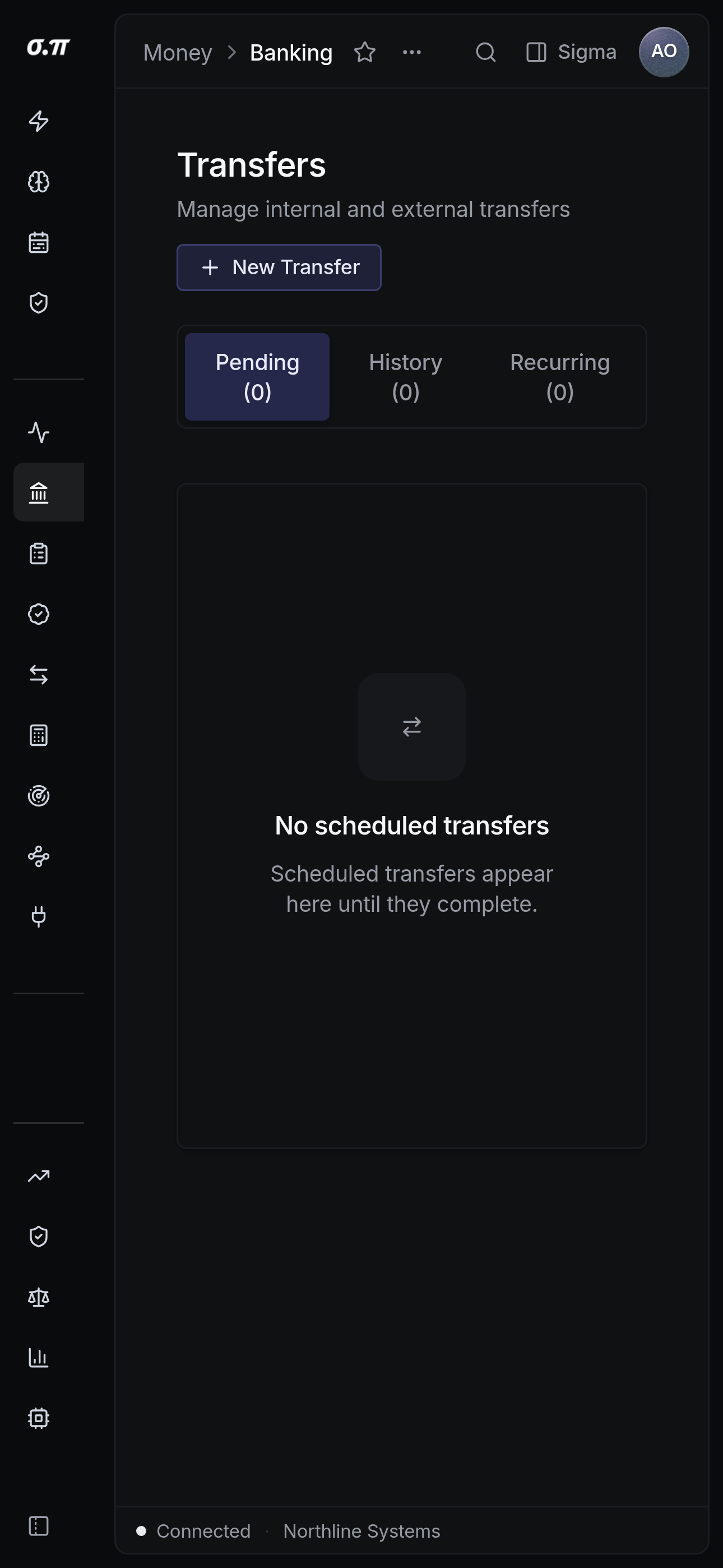
Every figure from the desktop appears here, stacked rather than reduced. Tables scroll inside themselves so the page never moves sideways, and figures keep their separators and their alignment at every width.
Questions people actually ask
Almost always a bank holiday or a cut-off time. Both are shown on the transfer, and the estimate accounts for weekends already.
Before it is submitted to the rail, yes. Once submitted, ACH can sometimes be recalled and a wire generally cannot. The page states which state a transfer is in.