Three way match
Purchase order, receipt and invoice compared before anything is paid.
A three way match is the oldest control in accounts payable and it exists because the alternative is paying for goods you did not order, did not receive, or were billed for twice.
The match compares what was ordered, what arrived, and what was billed. Quantity and price are both checked, and a variance inside the tolerance you set passes without stopping anybody. Anything outside it holds the invoice and names the difference.
Where everything sits


How to work this page
A percentage, an absolute amount, or both. Too tight and everything stops for a rounding difference. Too loose and the control stops being one.
Each exception names the line, the ordered figure, the received figure, and the billed figure, side by side. Most resolve in seconds once you can see all three.
Accept the variance with a reason, return to the vendor, or hold for a credit. Each choice is recorded against the invoice.
A vendor with a pattern of short deliveries or price creep shows up as a pattern rather than a series of unrelated exceptions.
On a phone
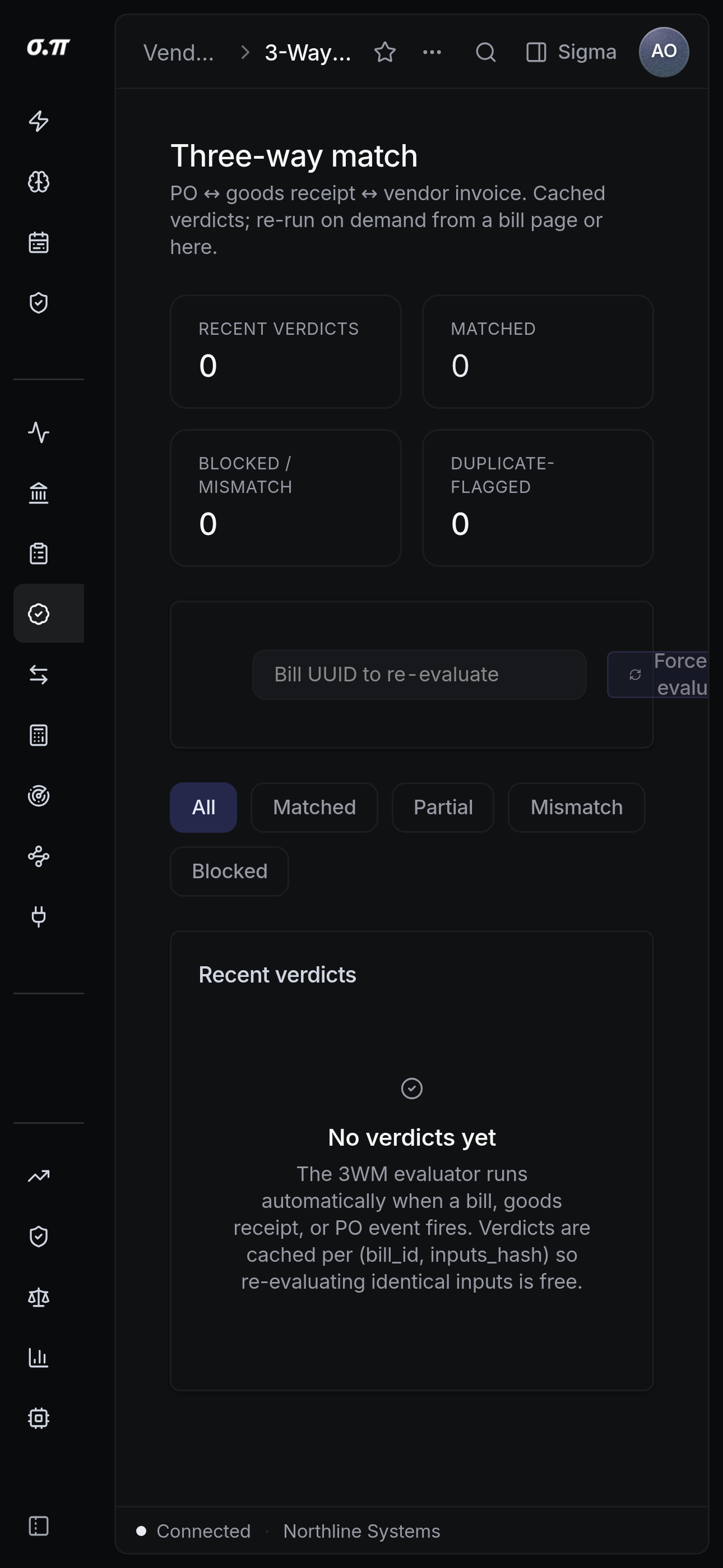
Every figure from the desktop appears here, stacked rather than reduced. Tables scroll inside themselves so the page never moves sideways, and figures keep their separators and their alignment at every width.
Questions people actually ask
Two way match compares invoice to receipt only. It is weaker and the page says so, but it is better than paying on the invoice alone.
Yes, with a reason and a person attached. Overrides are reported, because a control that can be silently bypassed is not a control.