Runway and burn
How long you have, calculated from the ledger, without rebuilding a spreadsheet every Monday.
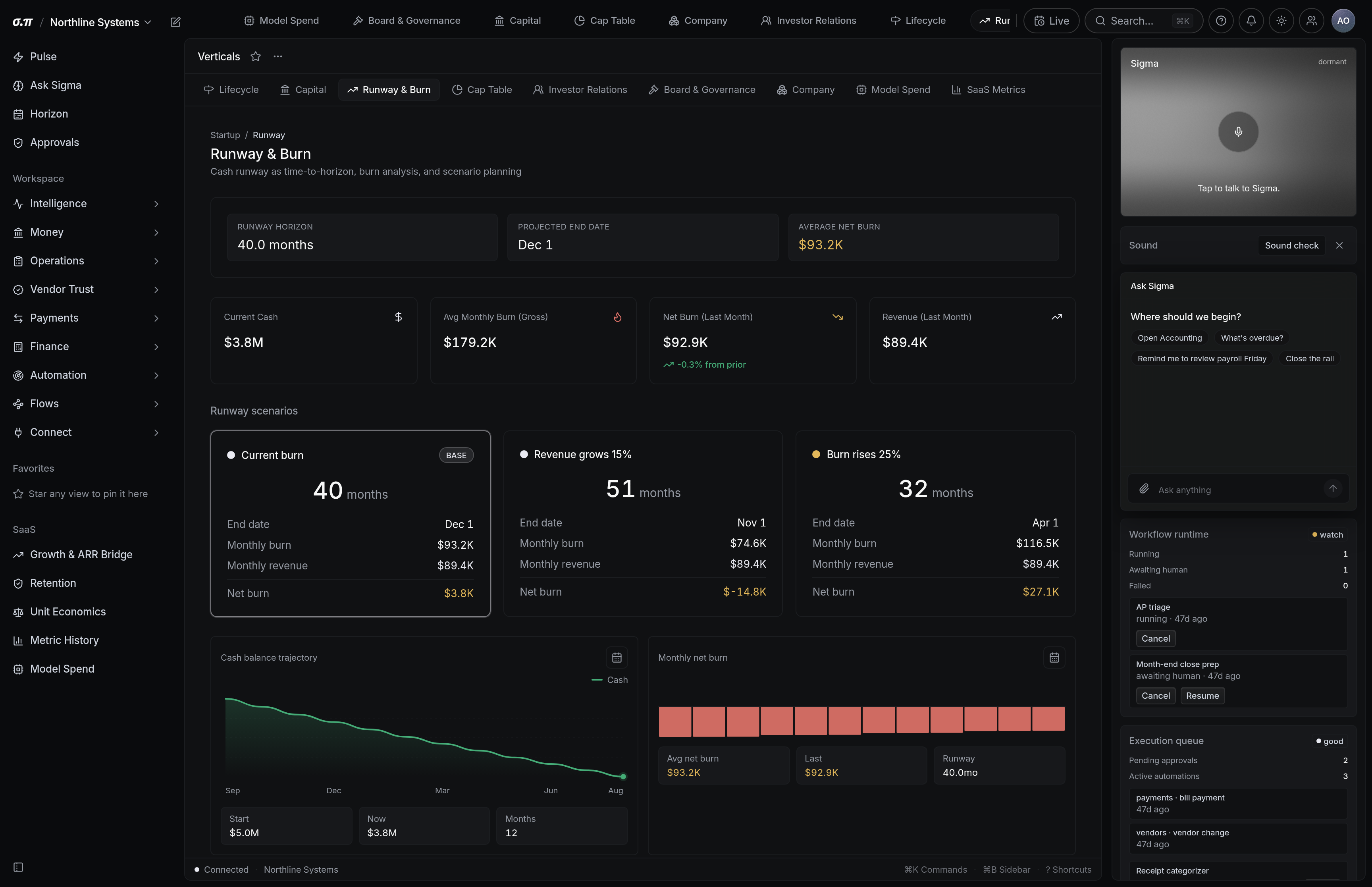
Runway is cash on hand divided by net burn. The reason that simple formula produces so many different answers in practice is that net burn is usually estimated from a memory of recent months rather than measured.
Here burn is computed from posted transactions. Gross burn is everything leaving. Net burn is that less revenue collected in the same period. Runway uses net burn over a trailing window you choose, and the window matters: three months reacts fast and is noisy, six months is steadier and slower to warn you.
Where everything sits
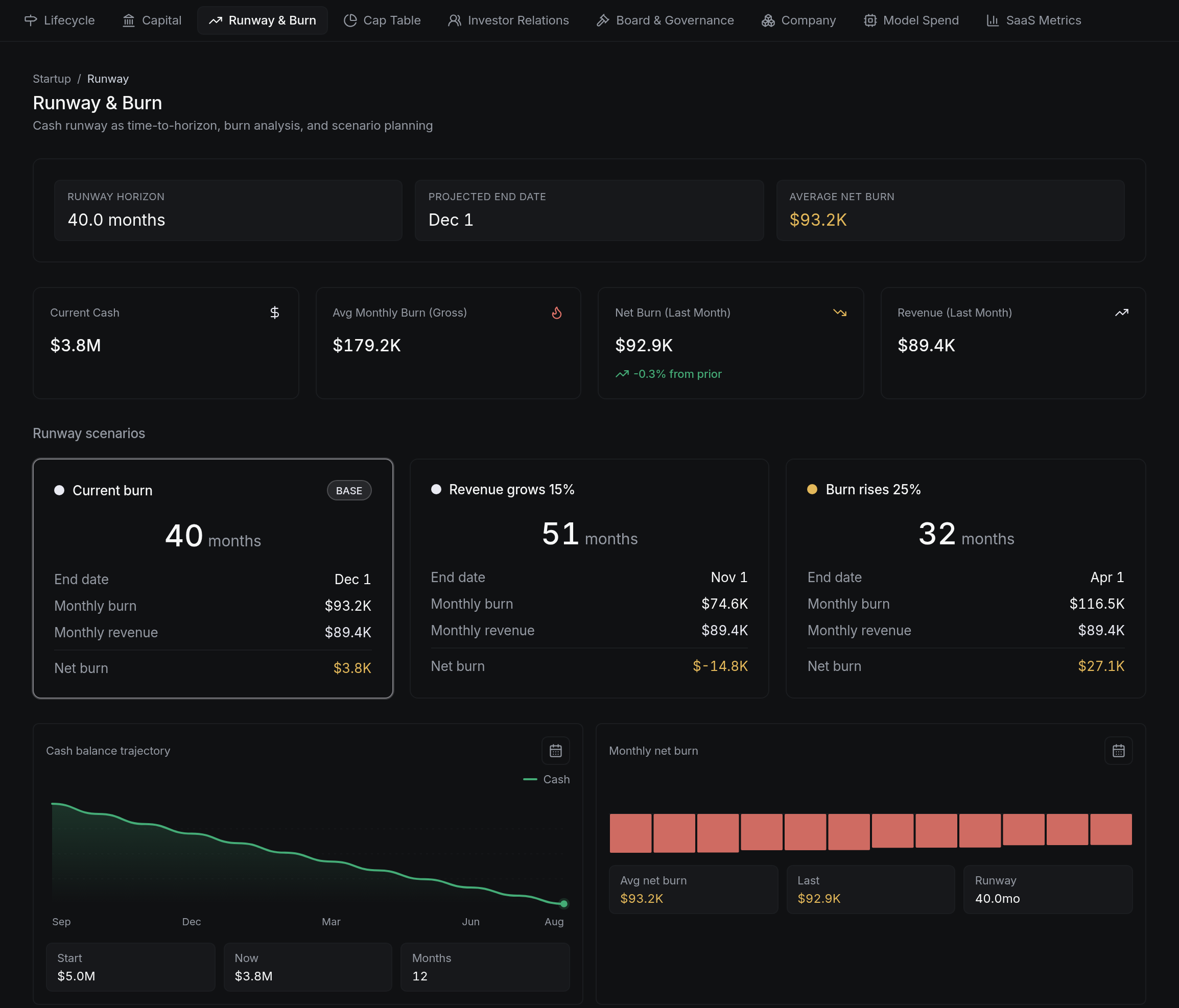




How to work this page
Three months if you are changing spend quickly. Six if you want the number you would put in front of a board. Twelve smooths out a seasonal business.
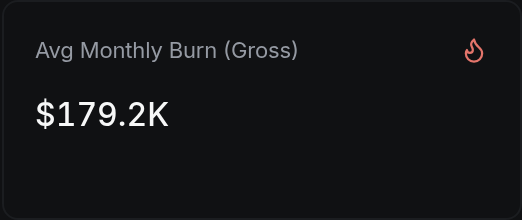
If net burn improved because one large invoice landed, gross will not have moved. That gap is the difference between spending less and collecting more.
Scenarios let you add a hire, a price change, or a raise and see the runway that results without touching the actual books.
A threshold in months triggers a notification when runway crosses it, so the number finds you rather than waiting to be checked.
On a phone
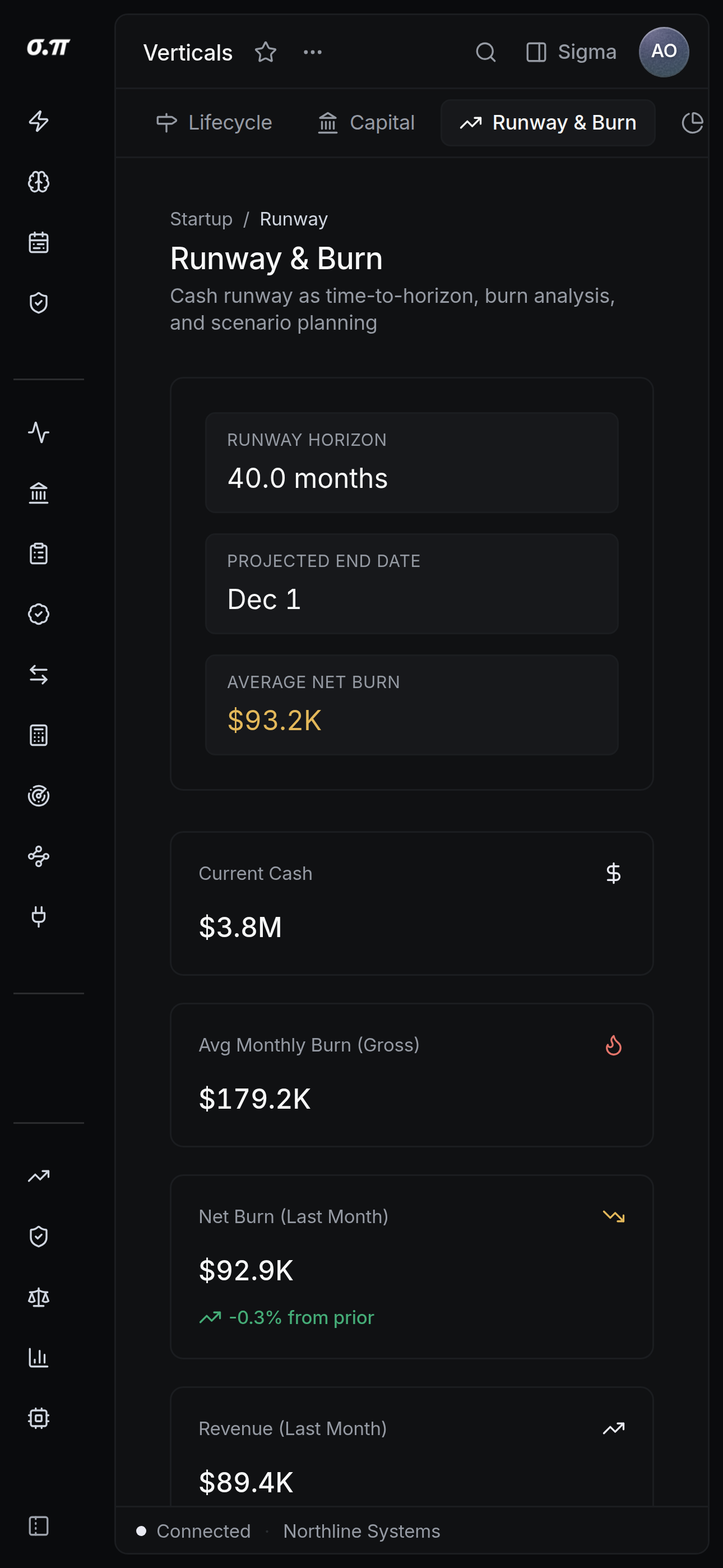
Every figure from the desktop appears here, stacked rather than reduced. Tables scroll inside themselves so the page never moves sideways, and figures keep their separators and their alignment at every width.
Questions people actually ask
Usually timing. A spreadsheet built from bank balances counts money on the day it moved. The ledger counts it on the day it was earned or owed. The gap is normally an unpaid invoice or an unrecorded bill.
Not in runway. Runway is cash you hold against cash you burn. Committed but unreceived funding appears in scenarios, clearly marked, so the two are never confused.