Cap table
Who owns what, on a fully diluted basis, including everything not yet converted.
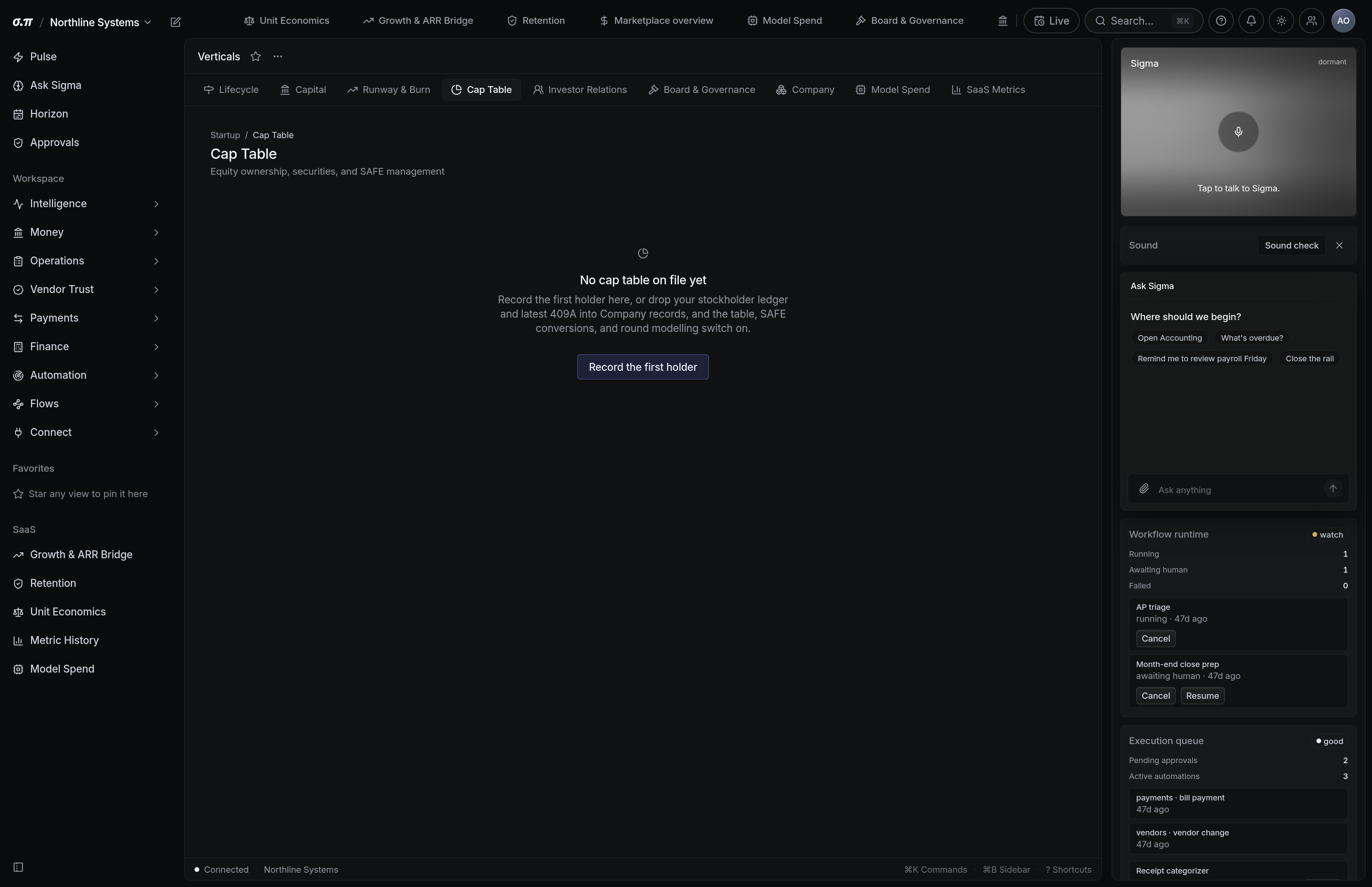
A cap table is simple until it is not. Options, warrants, SAFEs and notes all convert under different conditions, and a founder who reads only issued shares is reading a number that will not survive the next round.
This holds issued shares, the option pool with its granted and available portions, and every convertible instrument with its terms. Fully diluted ownership assumes every option exercises and every convertible converts, which is the basis an investor uses.
Where everything sits



How to work this page
Price, shares, and the class. Preferences, participation and anti-dilution are terms of the class and they change what happens on an exit.
Granted, exercised, and available are three different numbers. Available pool is what you can actually offer a hire tomorrow.
Enter a pre-money and an amount raised and see resulting ownership with every convertible converting at its own terms.
Founder ownership fully diluted, after the modelled round and after the pool top-up an investor will ask for. That second part is where the number people expect and the number they get diverge.
On a phone
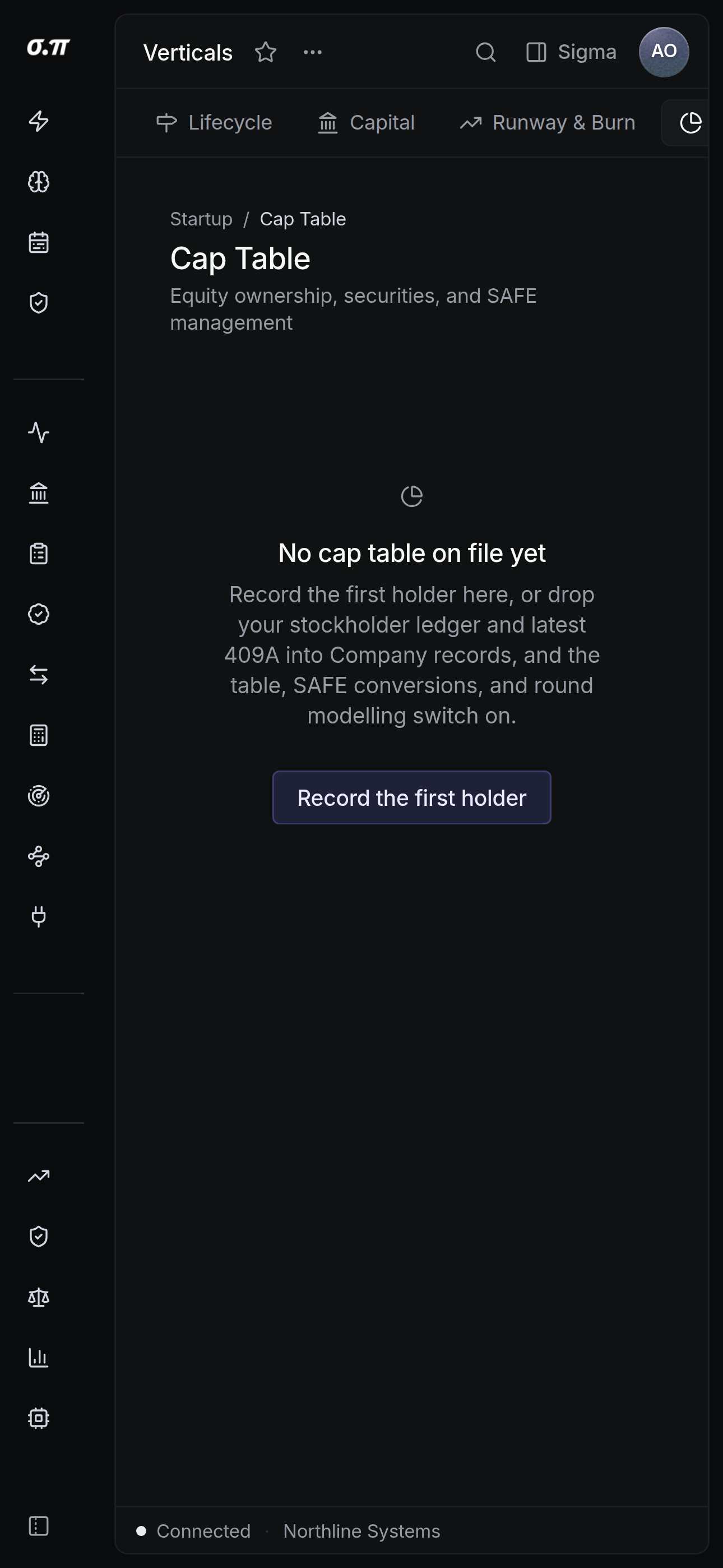
Every figure from the desktop appears here, stacked rather than reduced. Tables scroll inside themselves so the page never moves sideways, and figures keep their separators and their alignment at every width.
Questions people actually ask
They appear in fully diluted as if converted at their cap or discount, whichever produces more shares. Pre-conversion they hold no voting rights and the page distinguishes the two.
No. The signed documents are the record and they live in the Vault against each issuance. This is the arithmetic on top of them.