Capital
Every round, instrument and investor, and what the next raise does to ownership.
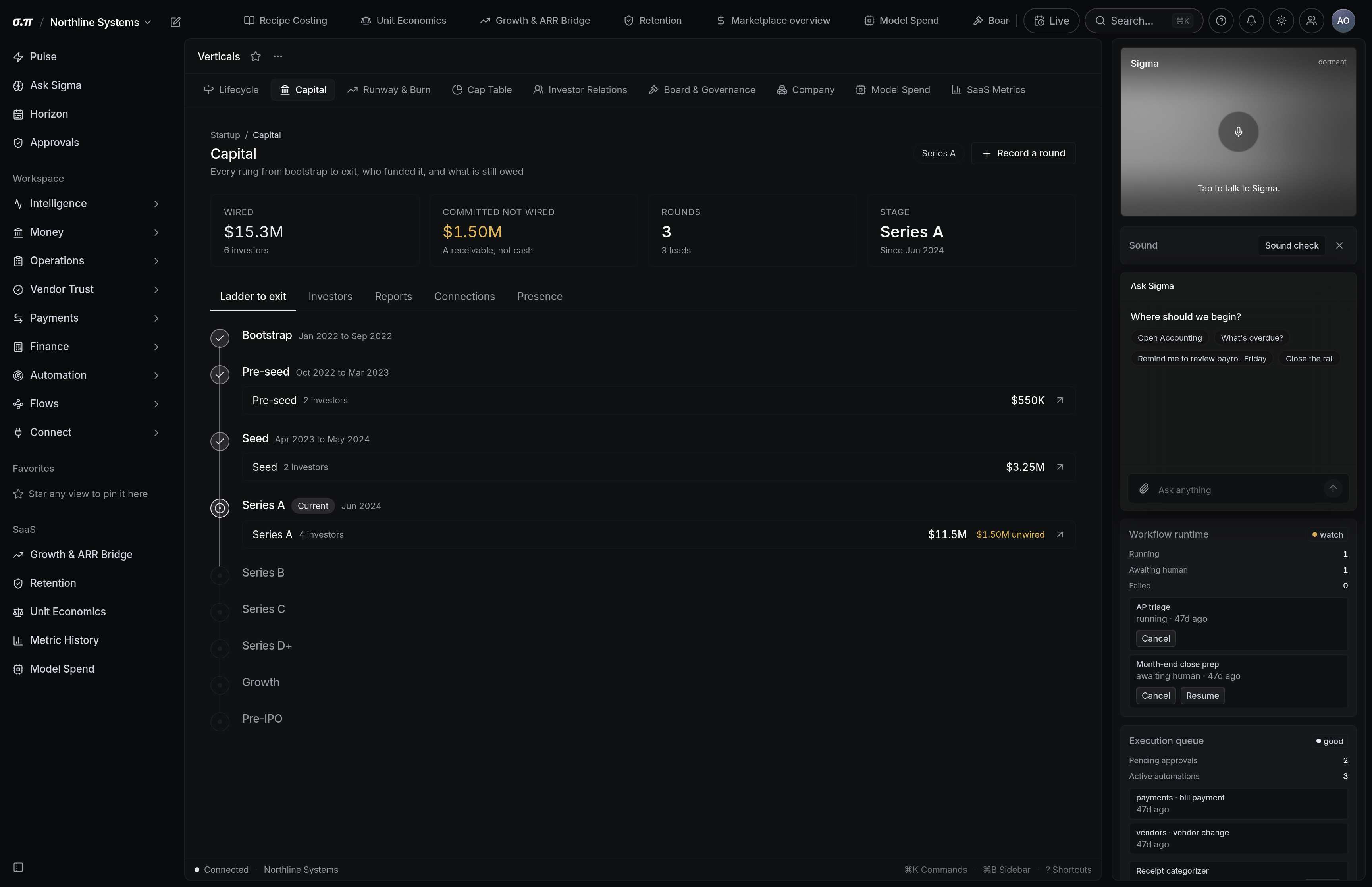
Priced rounds, SAFEs, notes and warrants each convert differently. A company that reads only its issued shares is reading a number that will not survive its next financing.
This holds the instruments with their terms and models the next round so the resulting ownership is a calculation rather than a surprise at signing.
Where everything sits
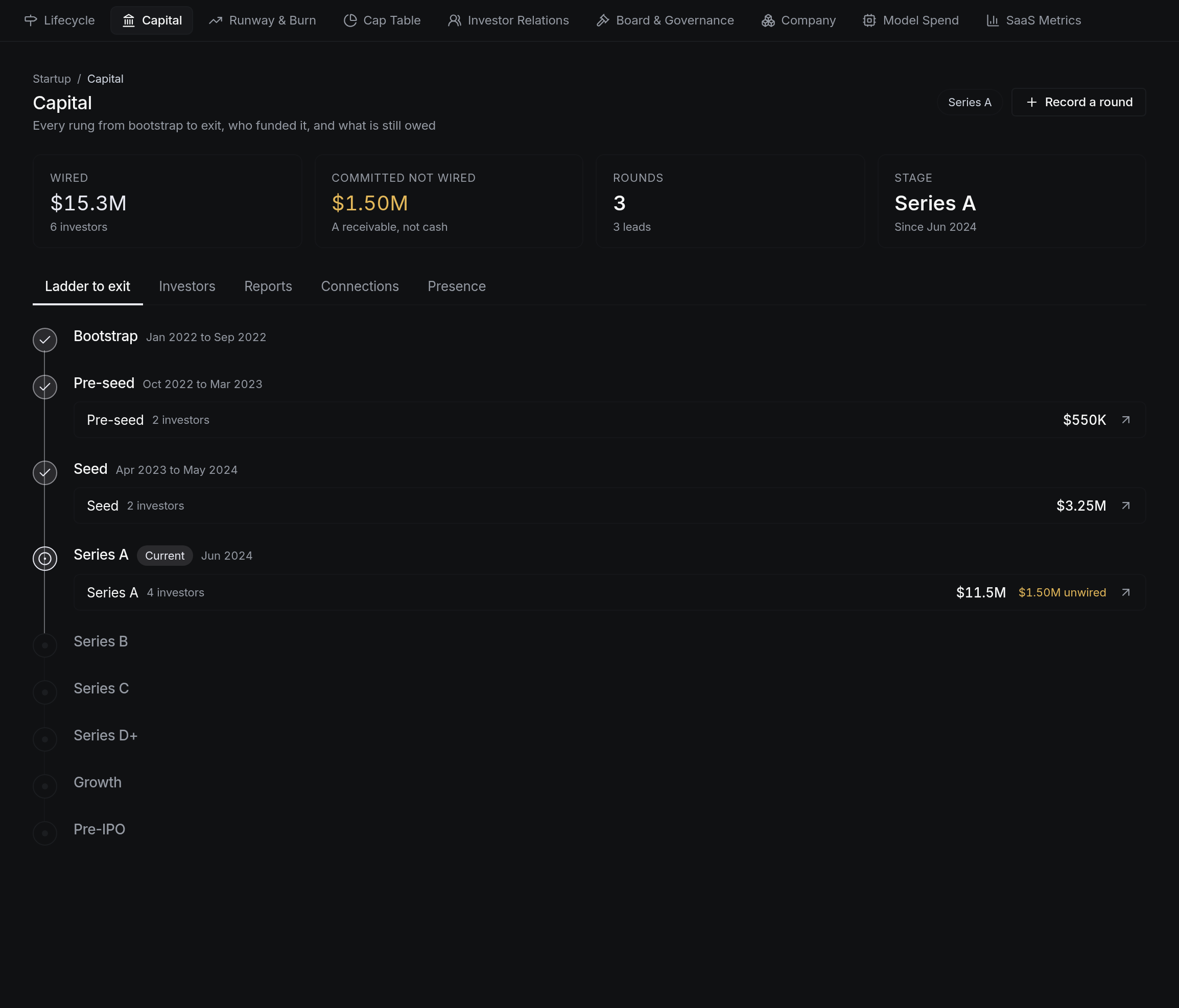




How to work this page
Cap, discount, interest and maturity on a note. Cap and discount on a SAFE. These determine conversion and they differ per instrument.
Pre-money and amount give resulting ownership with every convertible converting at its own terms.
Investors usually require a pool increase pre-money, which dilutes existing holders rather than the new money. It is the most commonly missed piece.
Liquidation preferences determine who gets what on an exit and they compound across rounds.
On a phone
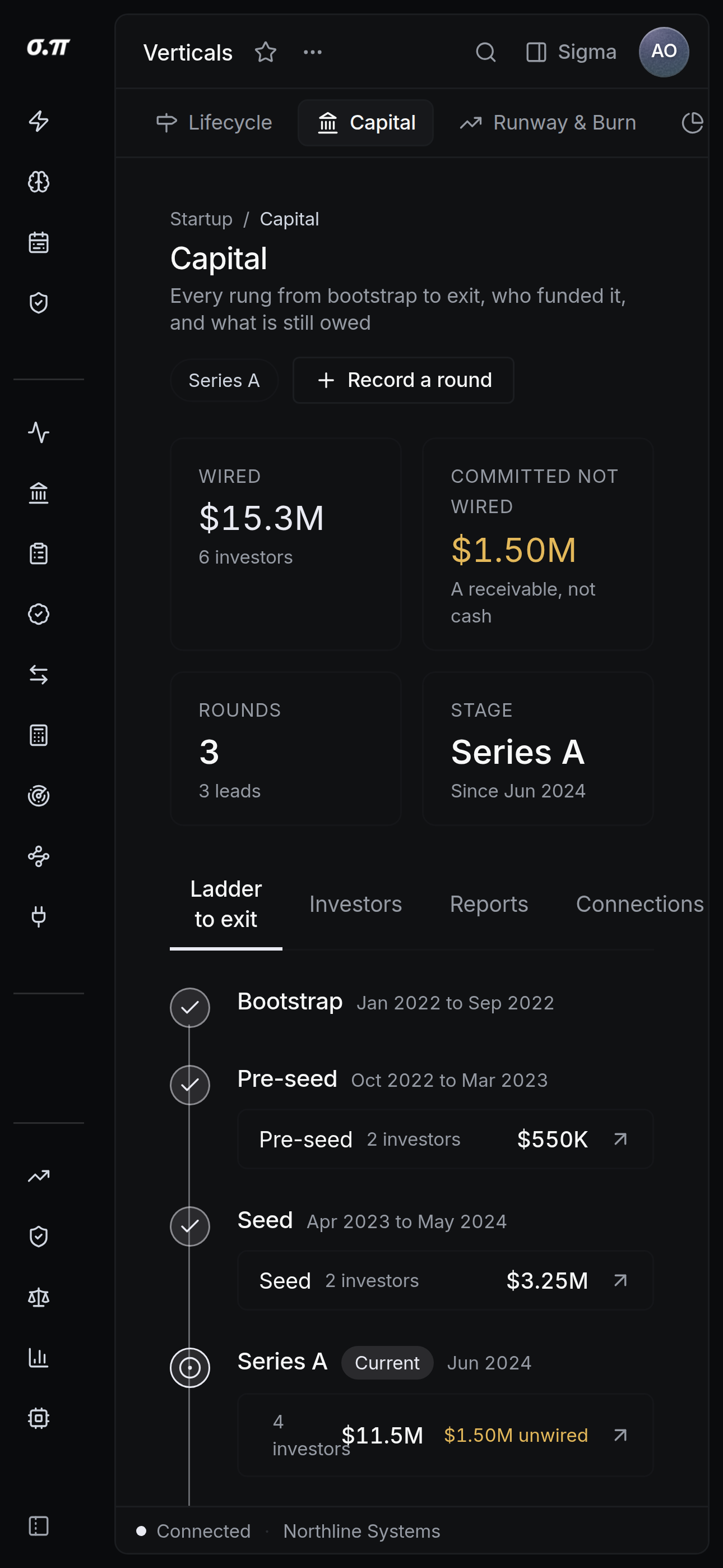
Every figure from the desktop appears here, stacked rather than reduced. Tables scroll inside themselves so the page never moves sideways, and figures keep their separators and their alignment at every width.
Questions people actually ask
Almost always the pool top-up taken pre-money. It dilutes founders and existing investors, not the incoming round.
Each converts on its own terms, so different SAFEs from one raise can convert at different prices. Each is calculated individually.