Model spend
What inference actually costs, by feature, against what it earns.
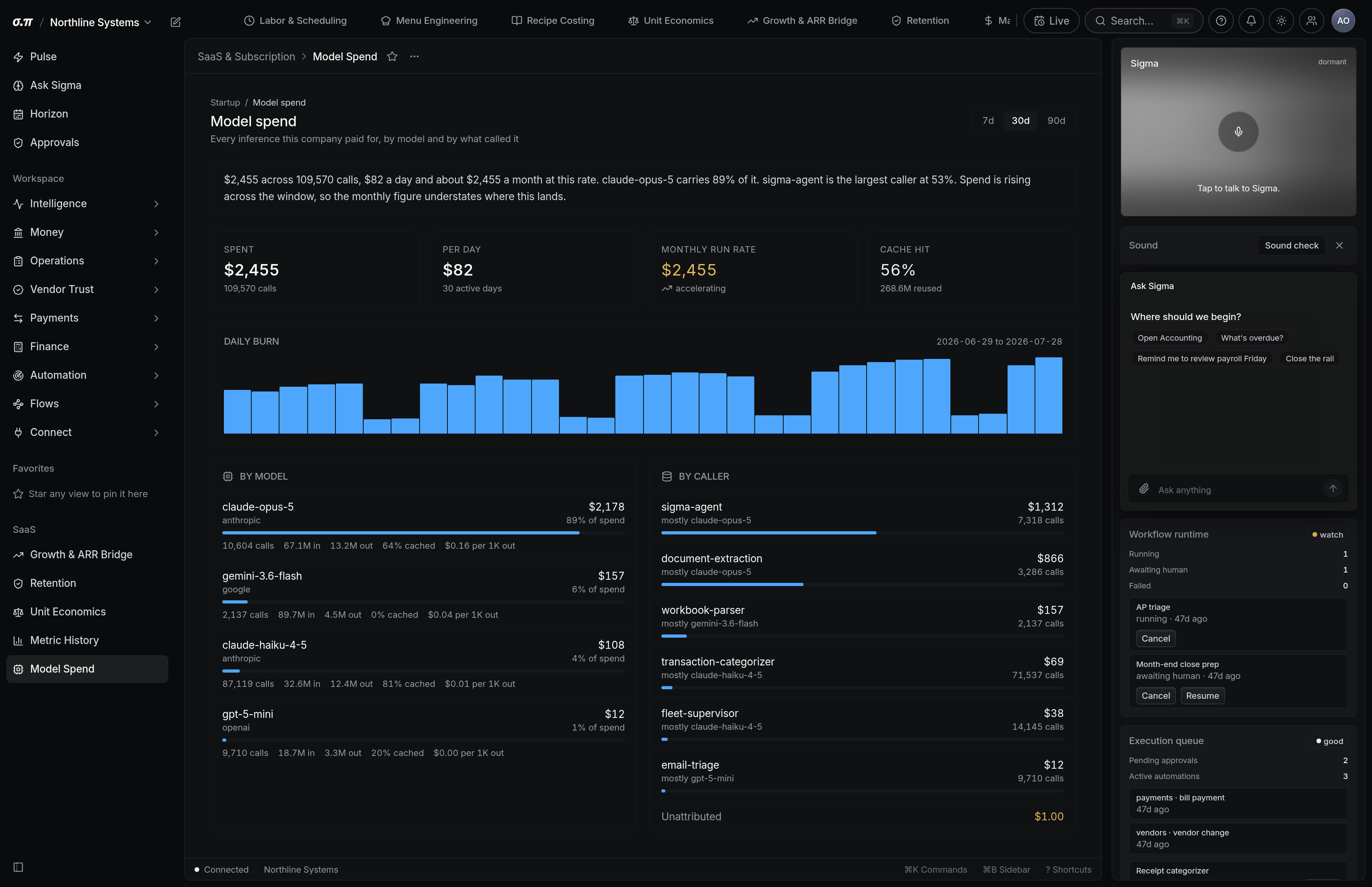
For a company building on models, inference is a variable cost that scales with usage, which makes it more like cost of goods sold than like a software subscription. Treating it as overhead hides the unit economics.
Spend is attributed to features and to customers where it can be, so gross margin per customer is a real number.
Where everything sits






How to work this page
Aggregate spend tells you the total and nothing about which feature is expensive. Attribution is what makes it actionable.
Especially on flat pricing, where a heavy user can be unprofitable while the average looks healthy.
Per request, per document, per seat. The absolute figure rising is fine if the unit cost is falling.
A price change and a usage change interact. Modelling both together is the only way to see the margin outcome.
On a phone
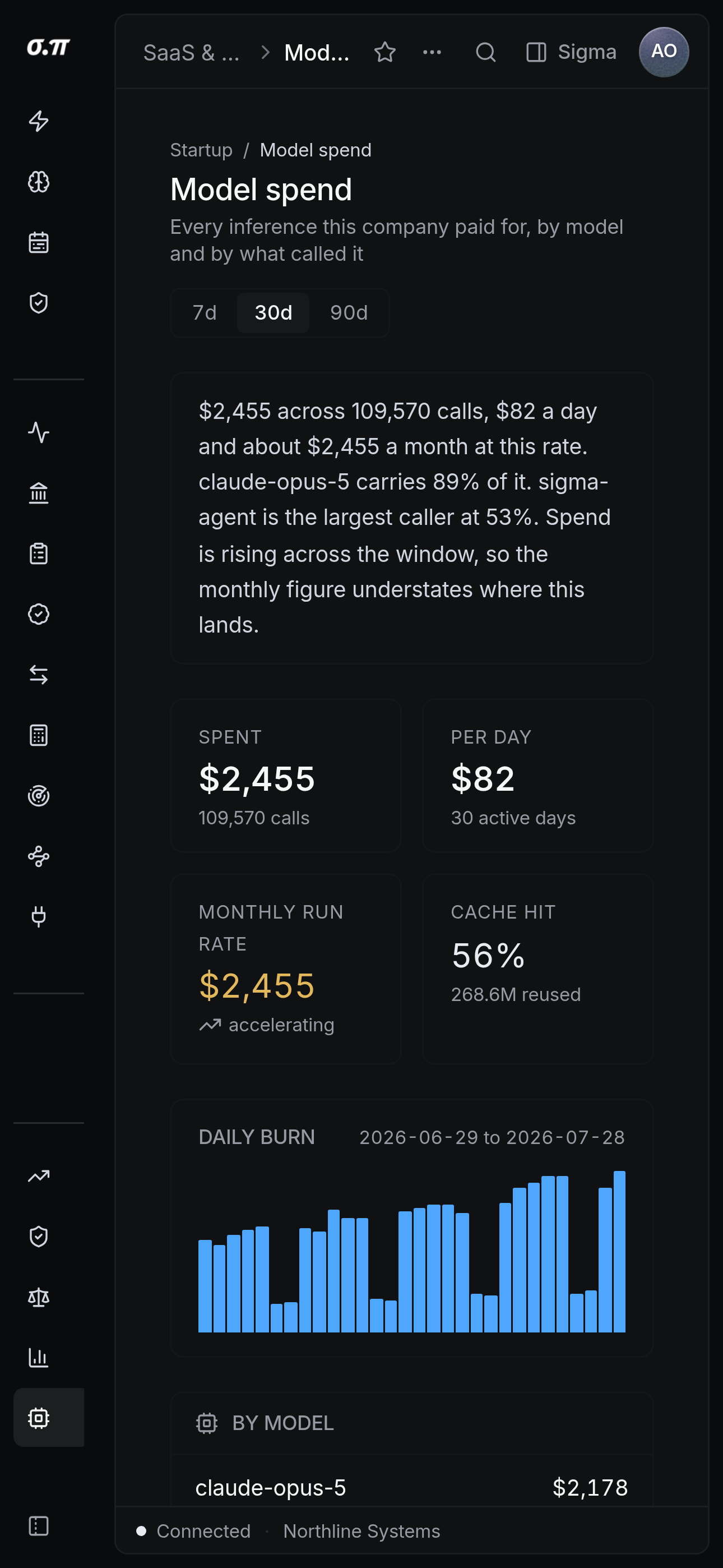
Every figure from the desktop appears here, stacked rather than reduced. Tables scroll inside themselves so the page never moves sideways, and figures keep their separators and their alignment at every width.
Questions people actually ask
Inference directly serving customers generally belongs in cost of sales. Internal development usage is an operating expense. The split matters because it changes gross margin.
The page identifies them by margin. Price change, usage limit, or accepting it deliberately are all valid, and the point is deciding rather than not knowing.