Setup
Getting a business from empty to producing real statements.
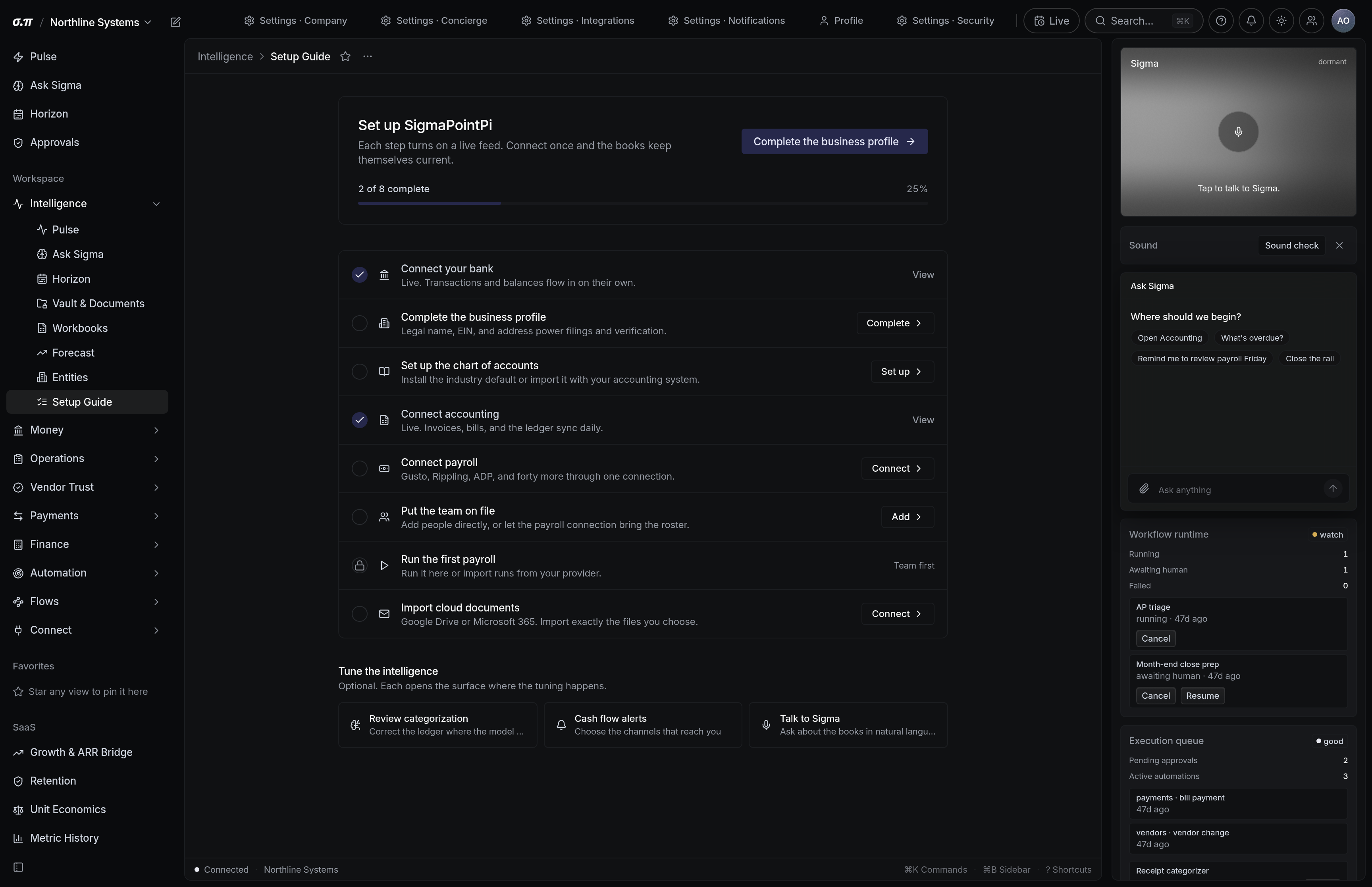
Setup is four things: the business identity, the accounts it banks through, the books it already has, and the people who need access. Everything else can wait.
Order matters. Connect the bank first, because it backfills history and gives every later step something real to work against.
Where everything sits

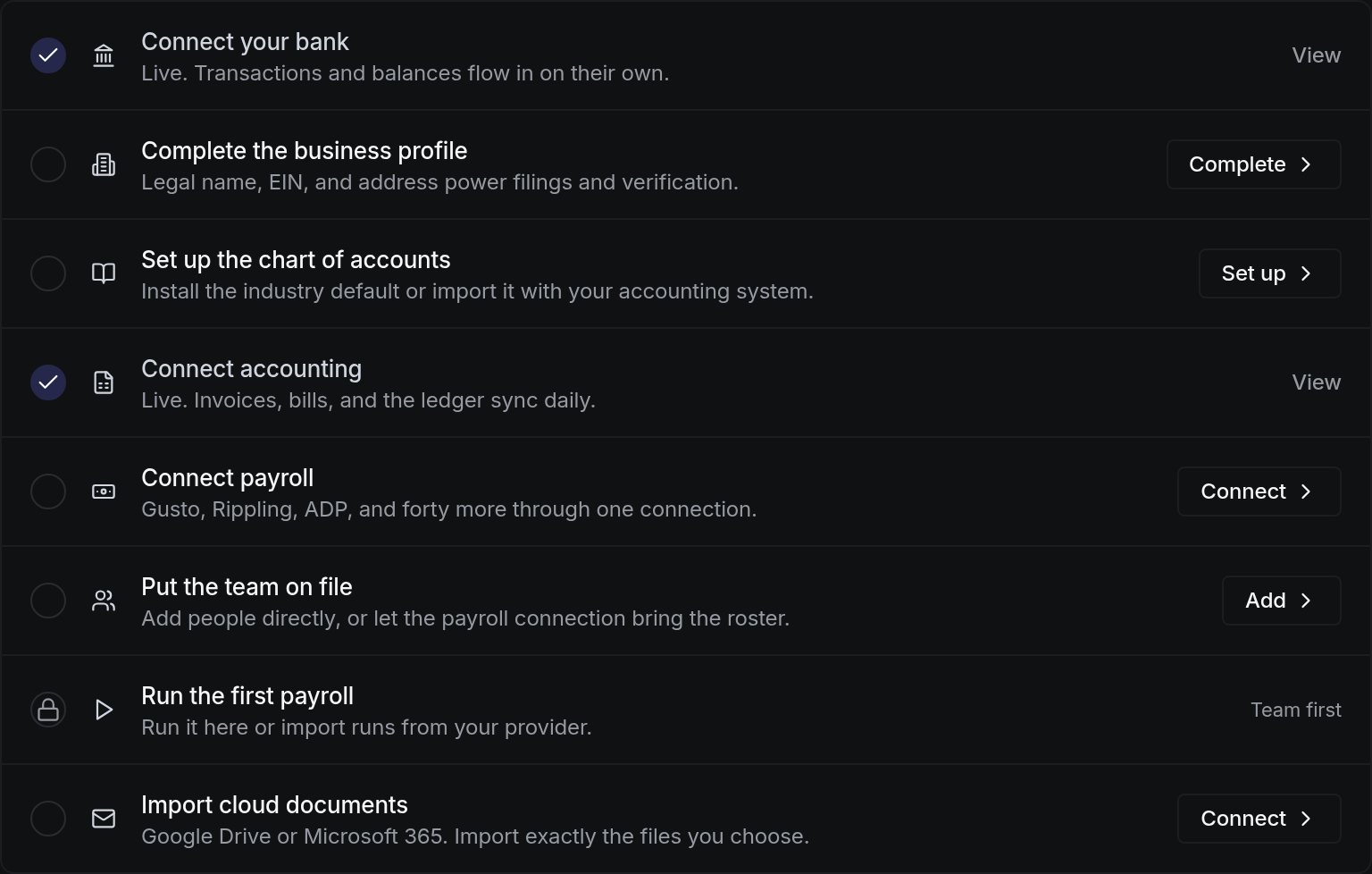




How to work this page
Legal name, entity type, formation state and identifier. Entity type drives which returns you owe, so an error here produces the wrong obligations all year.
Balances and up to two years of transactions arrive. This is what turns an empty system into one with something to say.
Connect the accounting system or import a workbook. The chart of accounts comes across as it is rather than being remapped.
Cash or accrual, and the year end. Both shape every statement and changing them later means restating.
Narrowest role that works. Payment authority is granted separately from data access.
On a phone
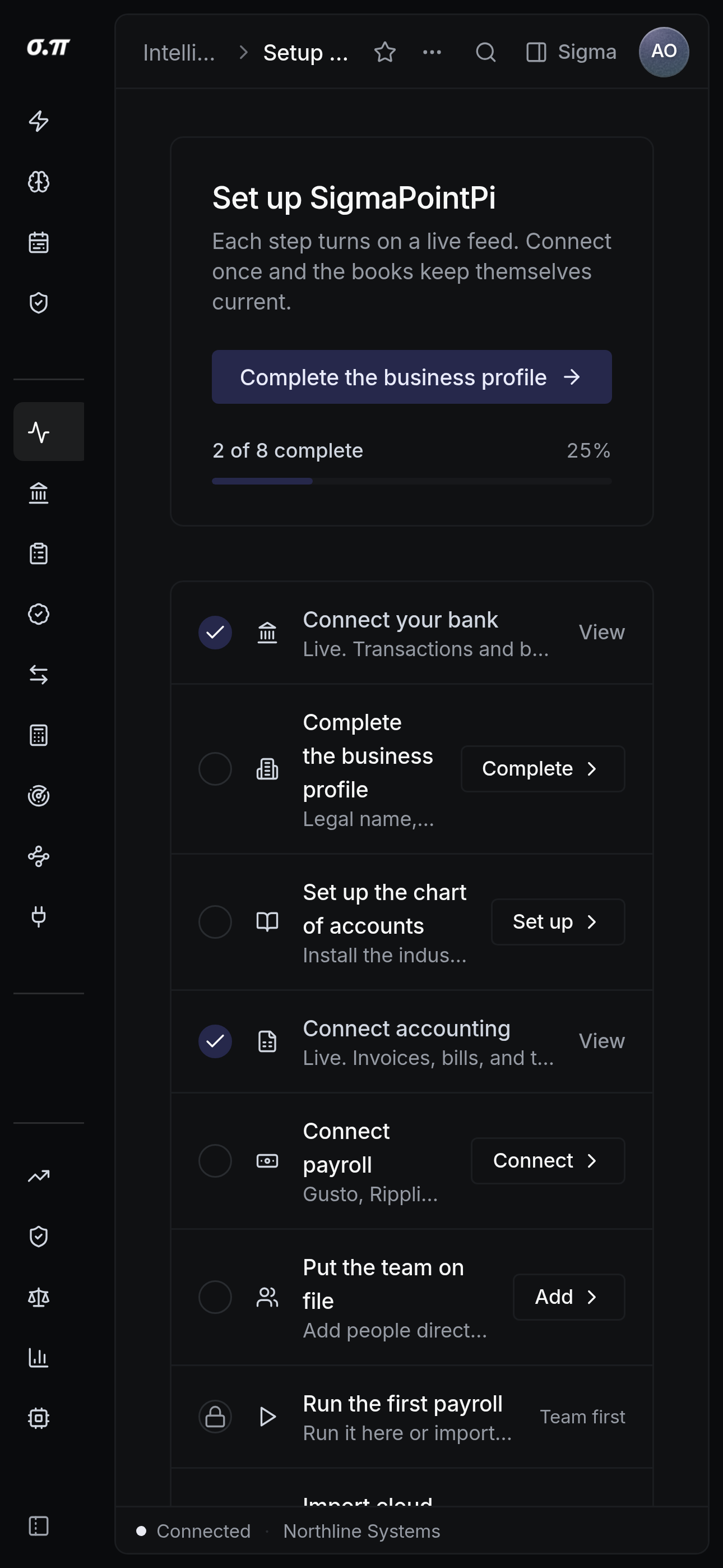
Every figure from the desktop appears here, stacked rather than reduced. Tables scroll inside themselves so the page never moves sideways, and figures keep their separators and their alignment at every width.
Questions people actually ask
Bank connection is a few minutes. Importing history depends on how much there is. A business with clean books elsewhere is usually producing statements the same day.
Then the bank connection is your starting point and the ledger builds from categorised transactions. It is a legitimate way to start.