Settings
How this business is configured, and who is allowed to do what inside it.
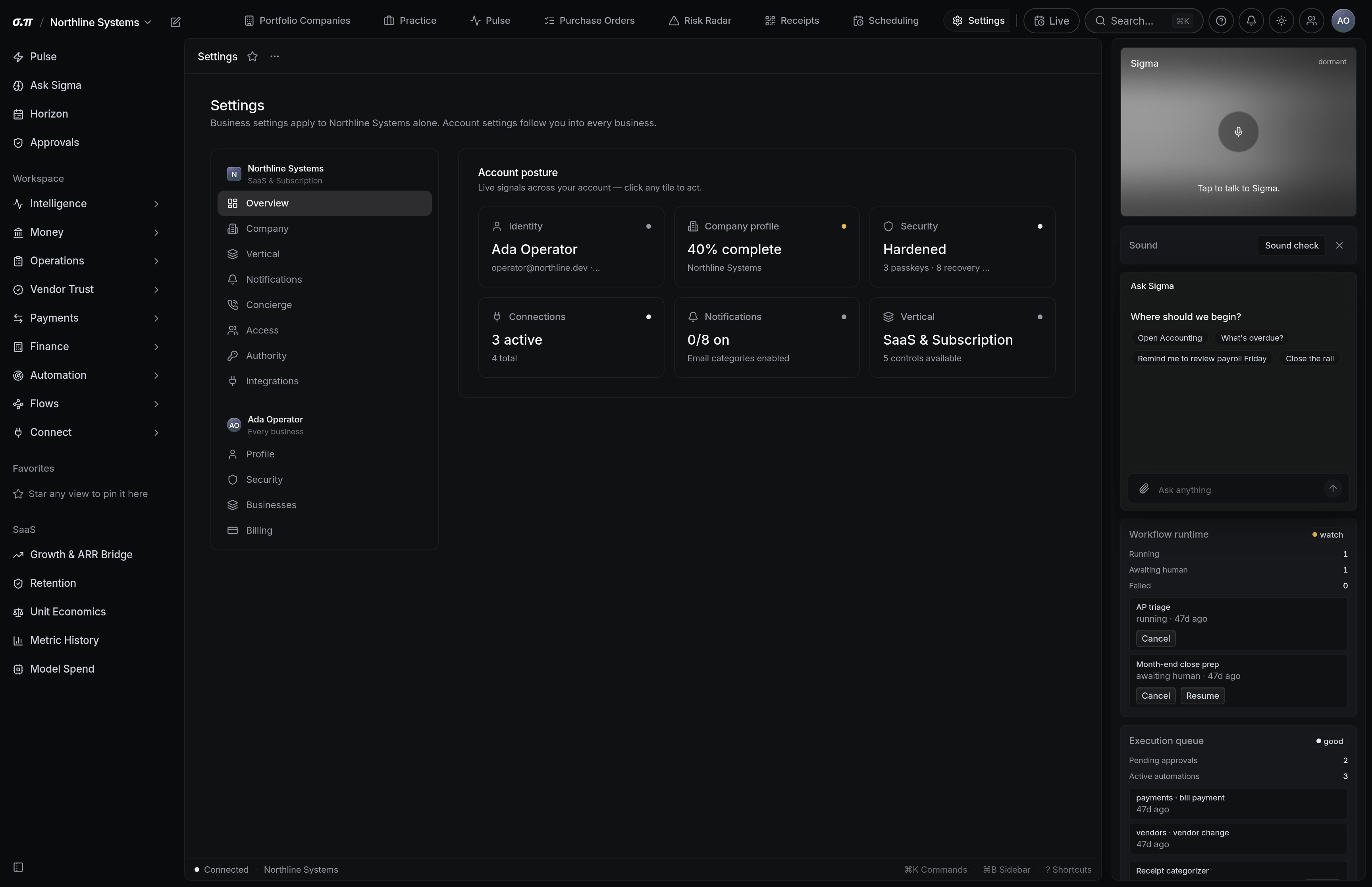
Business identity, fiscal year, accounting basis, currency, and the people with access. These settings shape every statement and every obligation, which is why changing one mid-year is a decision rather than a preference.
Roles are per business. Somebody who administers one business you run has no standing in another unless granted separately.
Where everything sits
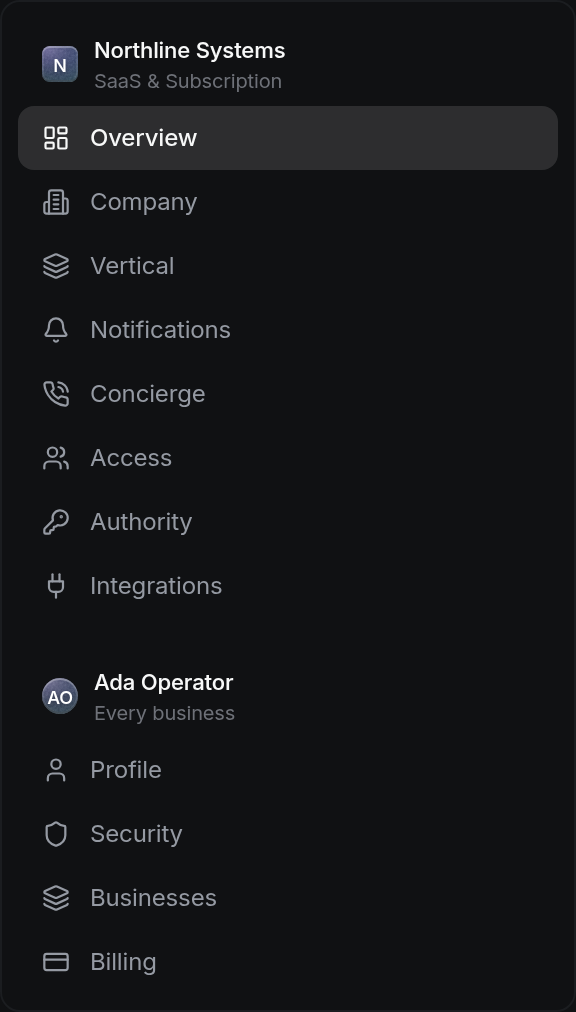
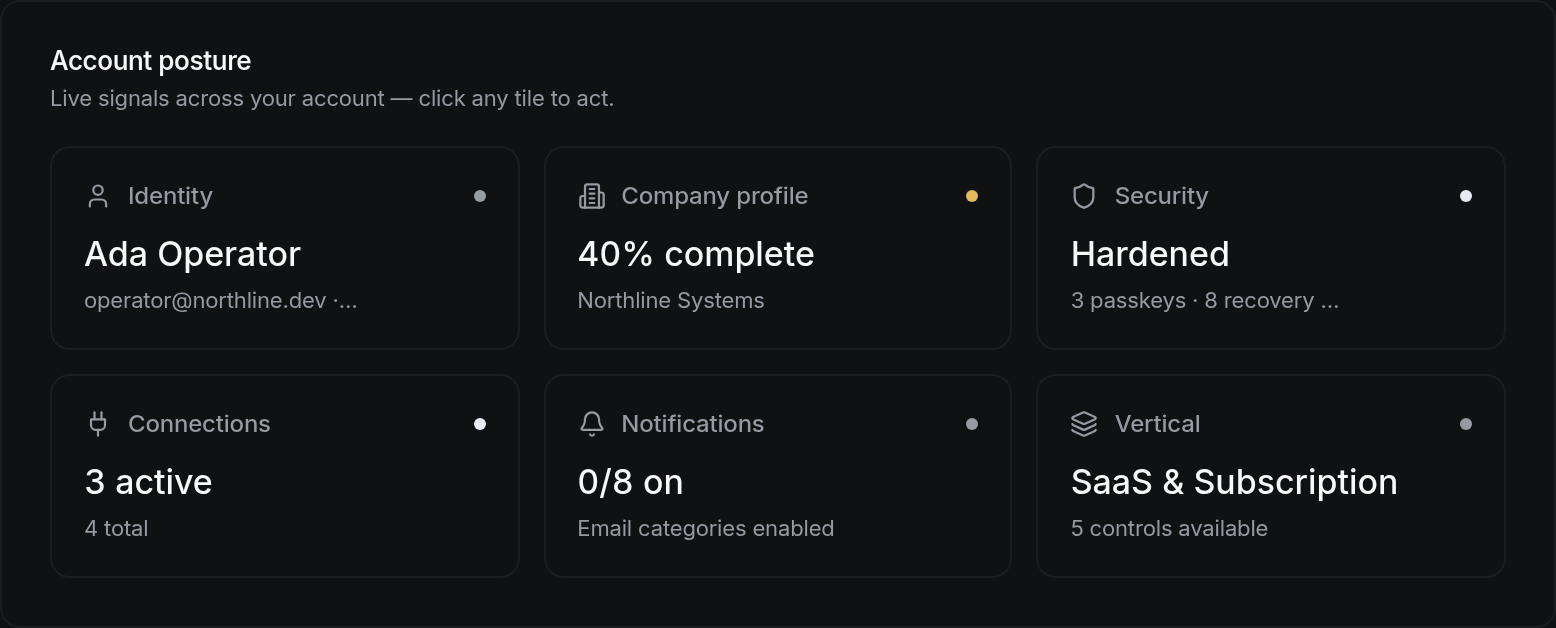




How to work this page
Both determine how every statement is produced. Changing them after a period is closed requires restating, so they are worth getting right at the start.
Roles range from read-only through to administrator. Payment authority is separate from data access and should be granted separately.
Who has access, at what level, and when they last used it. Dormant access is the access that gets exploited.
Legal name, identifier, address and registrations. These appear on invoices, filings and anything leaving the business.
On a phone
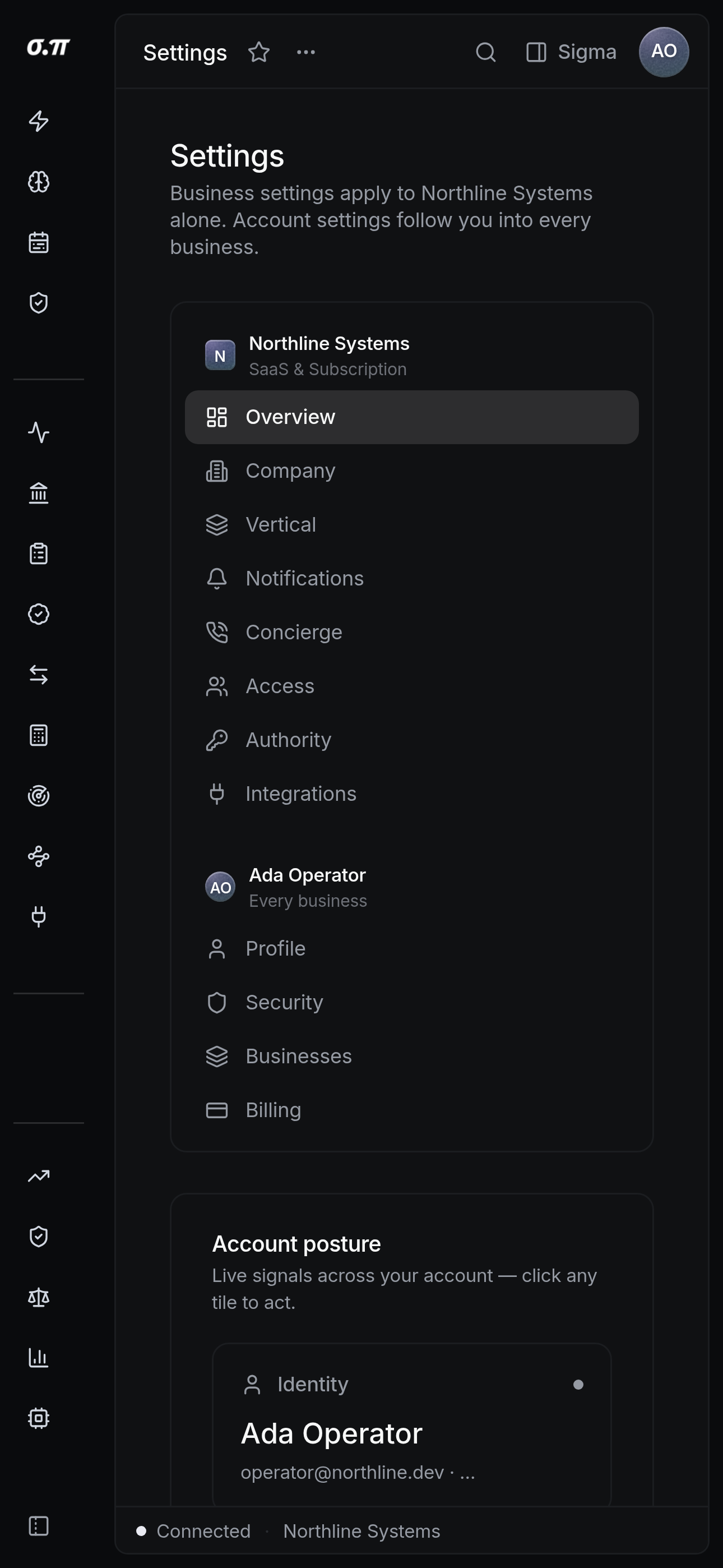
Every figure from the desktop appears here, stacked rather than reduced. Tables scroll inside themselves so the page never moves sideways, and figures keep their separators and their alignment at every width.
Questions people actually ask
No. People leave businesses and businesses stay on the ledger. You can archive one, which stops activity and keeps the record.
Grant them access to the second one. Role belongs to the person and business together, so the same person can be an administrator in one and read-only in another.