Retention
Gross and net revenue retention by cohort, with the churn separated from the contraction.
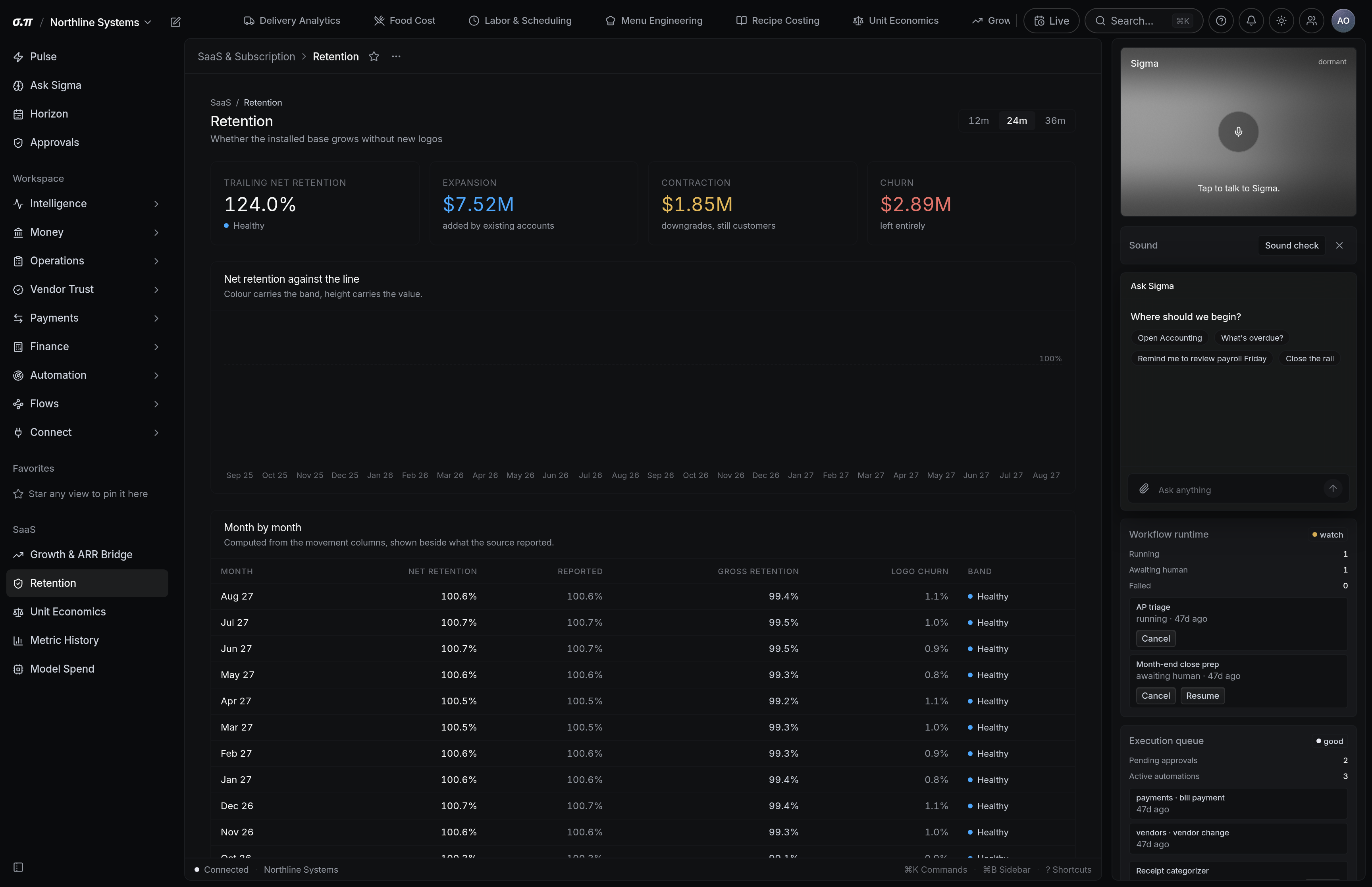
Net revenue retention above 100 percent means your existing customers grew. It can also mean a handful of expansions covered for a lot of churn, which is a different business.
This page shows gross retention, which cannot exceed 100 percent and therefore tells you honestly how much you lost, alongside net, which includes expansion. Reading them together is the only way to know which one is carrying you.
Where everything sits


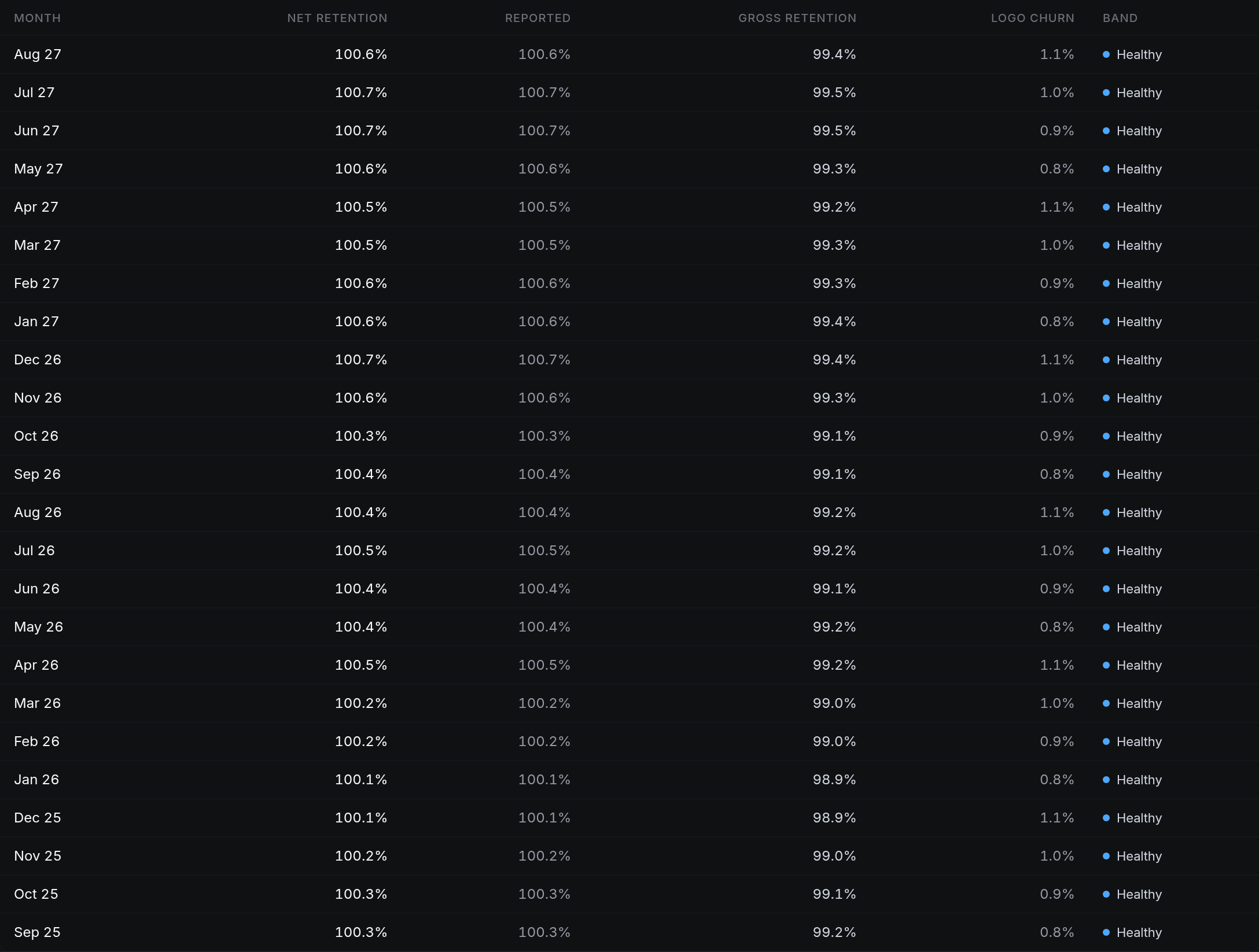
How to work this page
Gross retention is the floor. It counts churn and contraction and excludes expansion, so it cannot be flattered by a single large upsell.
Each cohort is a starting month. Reading down shows what that group did over time, which is the only view where a retention problem that started six months ago is visible.
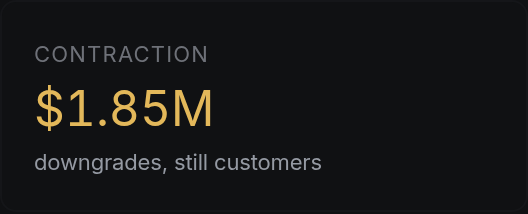
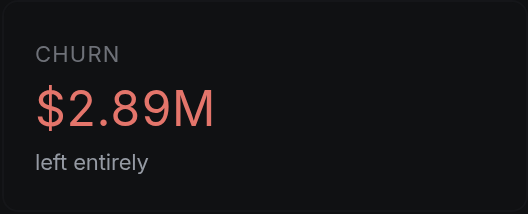
A customer who left and a customer who downgraded need different responses. They are separated rather than netted into one churn figure.
Losing many small customers and losing one large one produce the same revenue churn and completely different futures.
On a phone
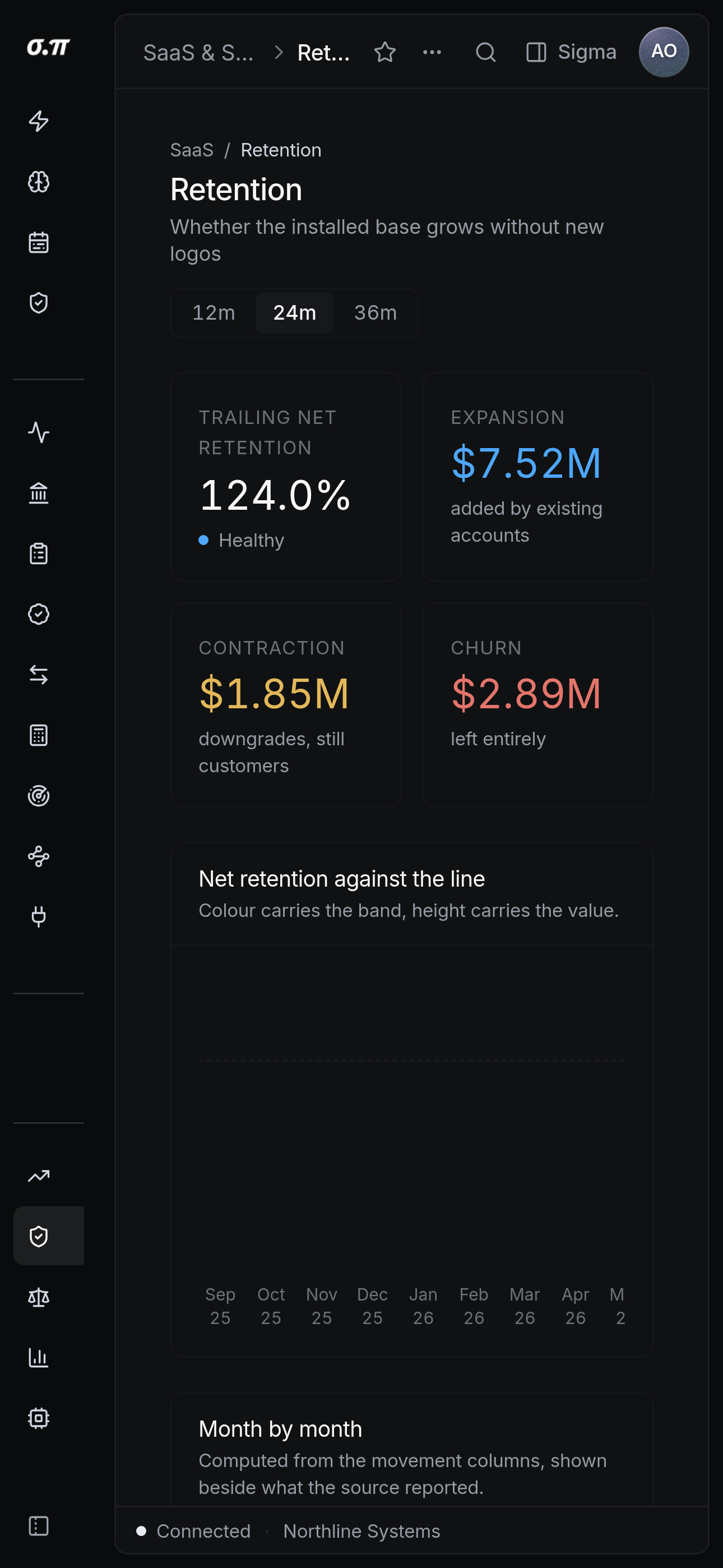
Every figure from the desktop appears here, stacked rather than reduced. Tables scroll inside themselves so the page never moves sideways, and figures keep their separators and their alignment at every width.
Questions people actually ask
They return as a new cohort from the month they came back, and the original cohort keeps its churn. Reinstating them into the old cohort would hide the gap.
Both are shown. Annual is the figure investors ask for. Monthly is the one that tells you something is wrong while you can still act.