Unit economics
What a customer costs to acquire, what they are worth, and how long until you are ahead.

Acquisition cost, lifetime value, payback period and gross margin. The ratio everybody quotes is far less useful than the payback period, because payback is a cash question and cash is the constraint.
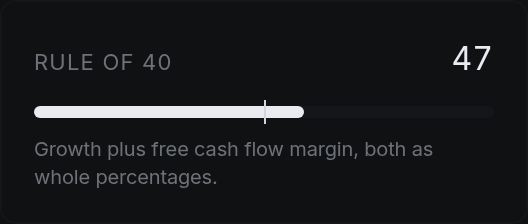
Each is computed from the books with its inputs shown, since these are the measures most often calculated flatteringly.
Where everything sits

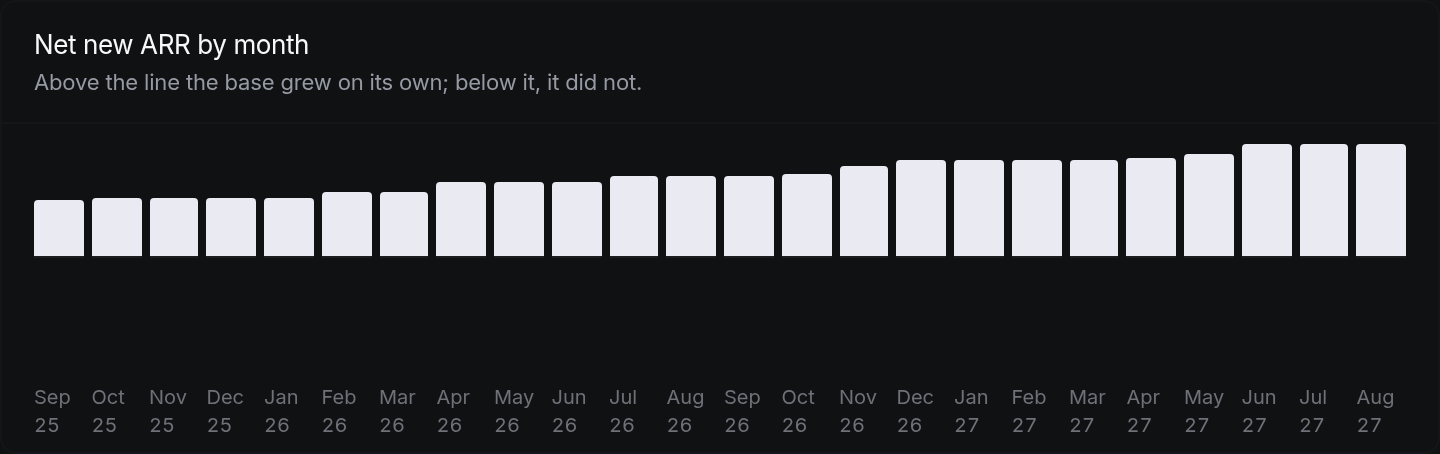
How to work this page
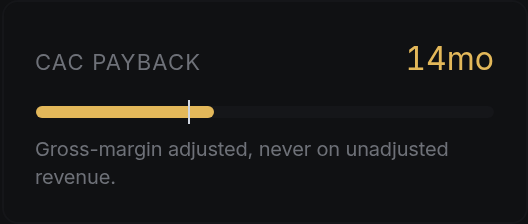
Months until a customer has repaid their acquisition cost on a gross margin basis. It is the number that determines how fast you can grow without funding.
All sales and marketing, including salaries, divided by customers acquired. Excluding salaries produces a flattering and meaningless figure.
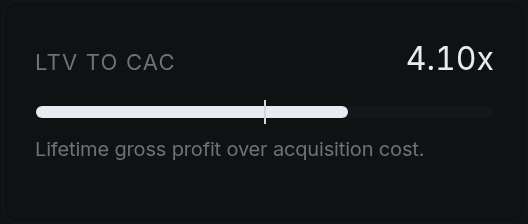
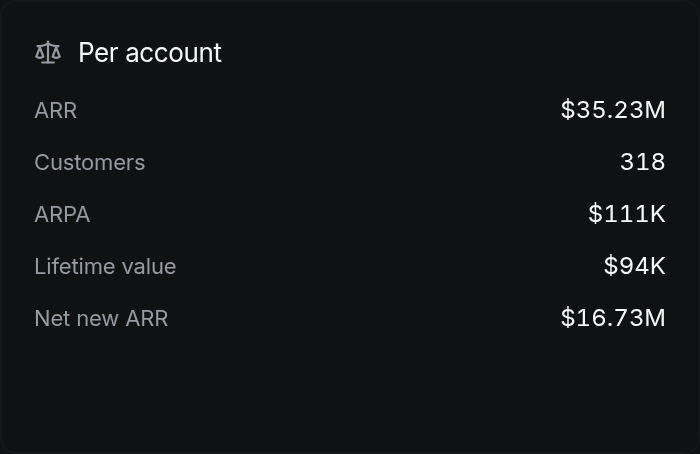
Revenue based lifetime value ignores the cost of serving and overstates by whatever your gross margin is not.
Blended economics across a wide customer mix hide a segment that is unprofitable and a segment that is excellent.
On a phone
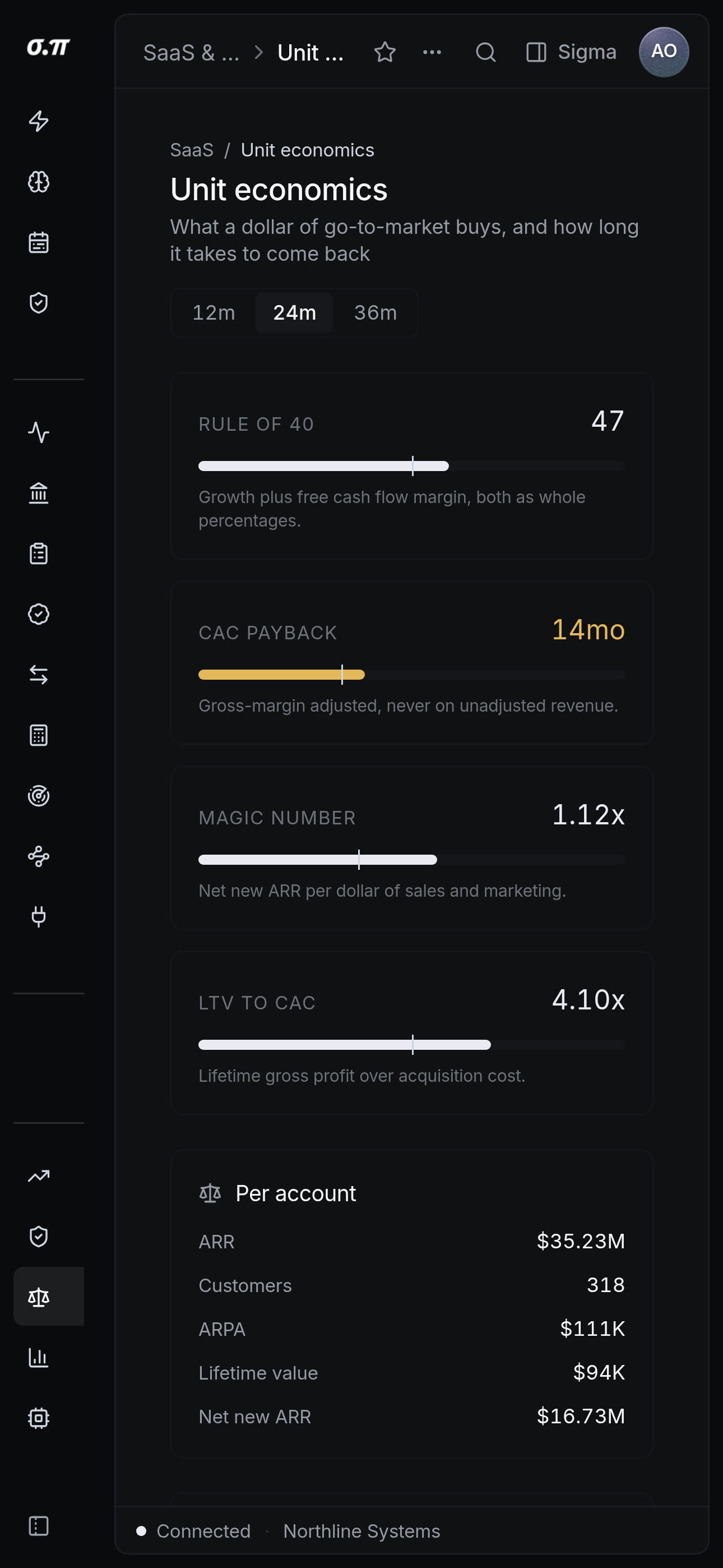
Every figure from the desktop appears here, stacked rather than reduced. Tables scroll inside themselves so the page never moves sideways, and figures keep their separators and their alignment at every width.
Questions people actually ask
Under twelve months is generally strong for a business selling to companies. Longer requires funding to bridge the gap, which is a strategic choice rather than a failure.
An uncapped calculation on high retention produces absurd figures. Capping at a defined horizon keeps it usable and the horizon is stated.