Commissions
Splits calculated per transaction, including caps, referral fees and the brokerage share.
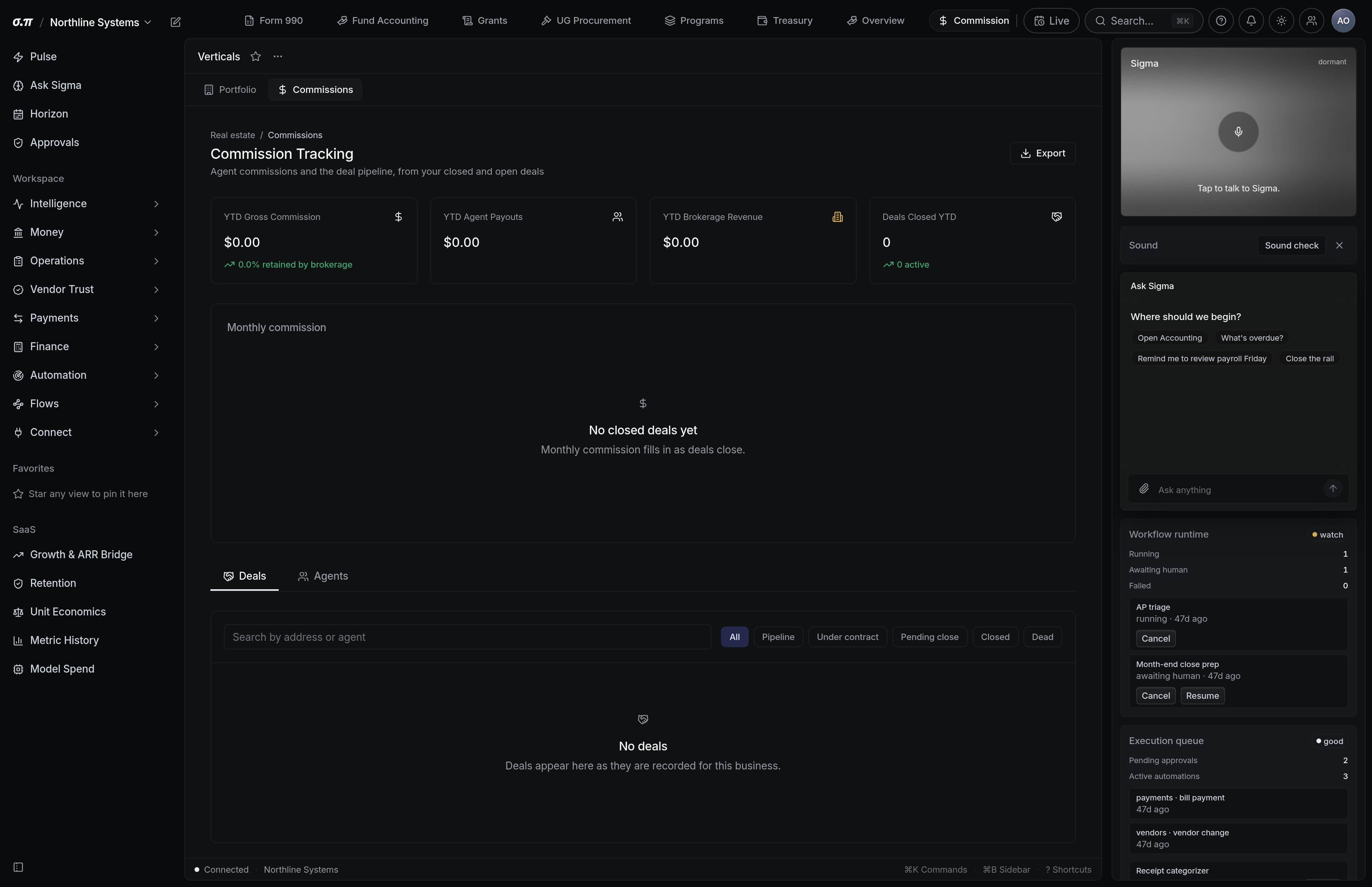
A commission looks like a percentage until you have a team split, a referral out, an agent partway to their cap, and a transaction fee. Getting it wrong is how brokerages lose agents.
Every transaction computes the gross commission, then applies the referral, then the split at the agent's current plan, then any cap that has been reached. Each step is shown rather than blended into a single payout.
Where everything sits
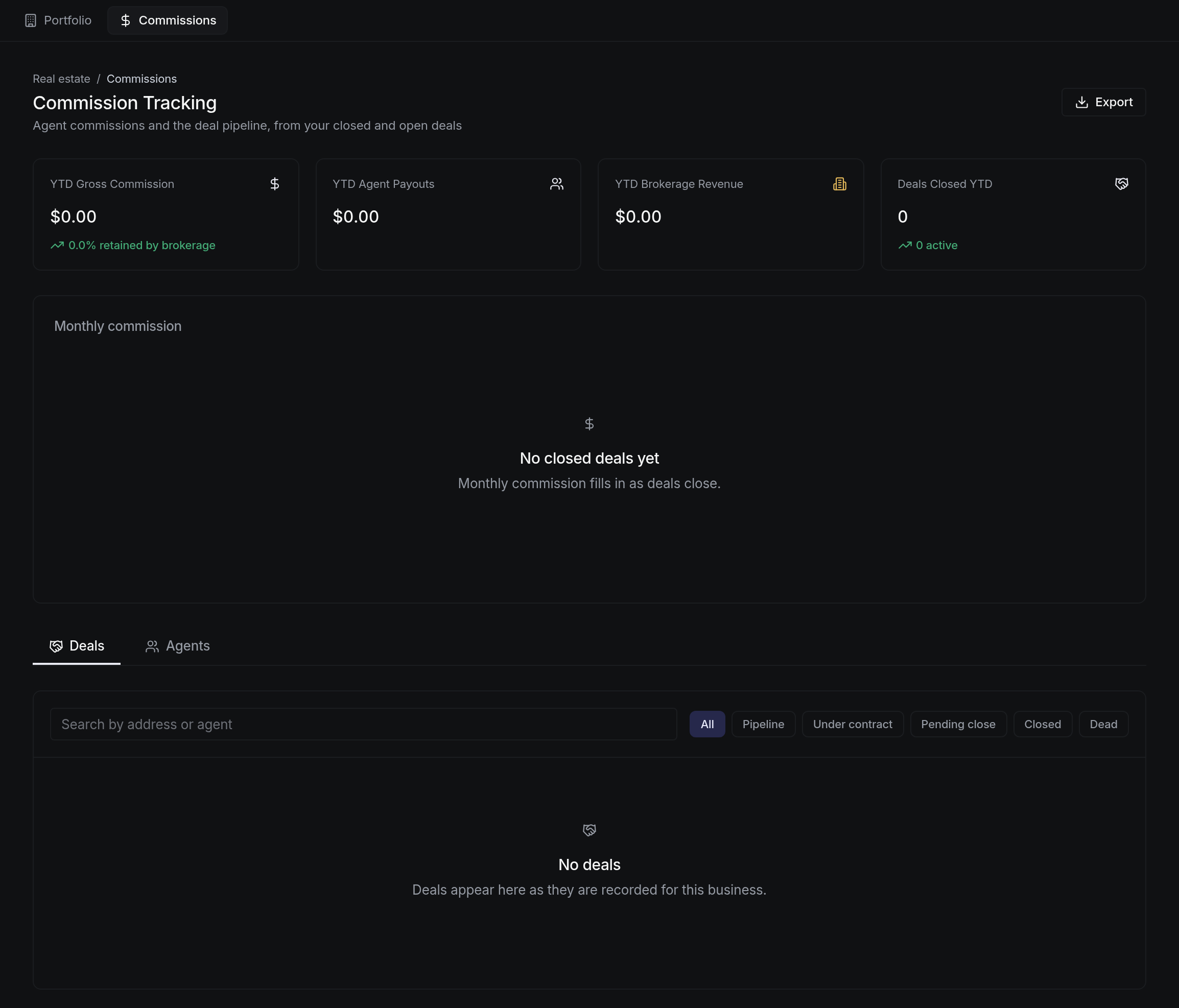

How to work this page
Sale price, total commission, and which side you represent. A dual agency transaction computes differently and is marked as one.
A referral fee comes off the top. Applying it after the split is a common and expensive error, and the order here is fixed.
An agent approaching their annual cap changes split partway through a transaction year. Progress against cap is shown per agent so the change is expected.
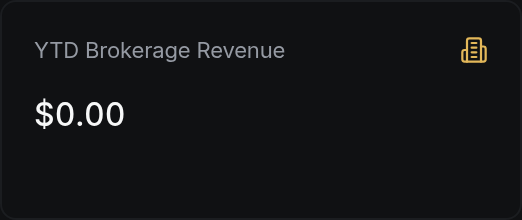
What the brokerage retains after every deduction, per transaction and in total. It is the number that tells you whether a producing agent is actually profitable.
On a phone
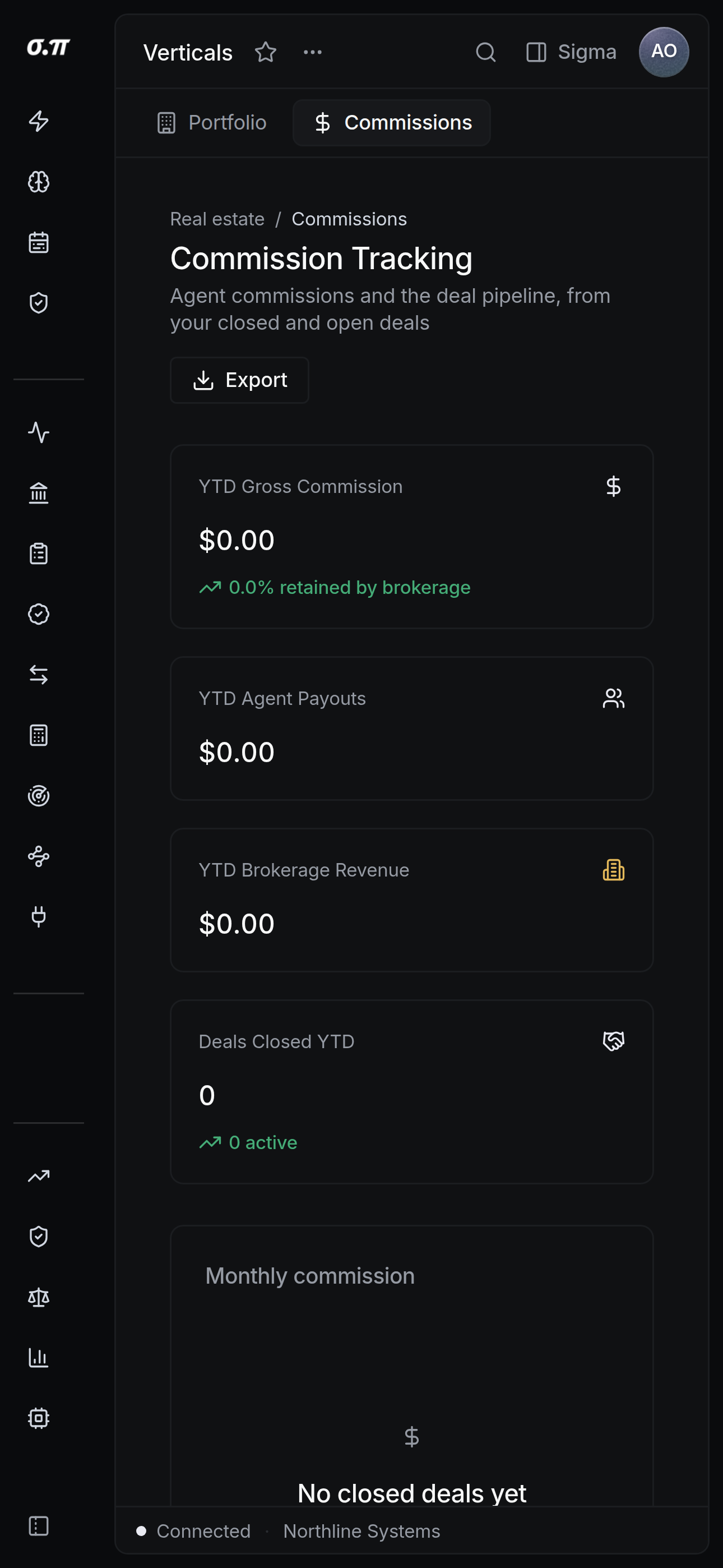
Every figure from the desktop appears here, stacked rather than reduced. Tables scroll inside themselves so the page never moves sideways, and figures keep their separators and their alignment at every width.
Questions people actually ask
The team lead's arrangement applies first, then each member's split within it. Both levels are shown so an agent can see how their number was reached.
They stay on the record as terminated with the stage they died at. Pipeline reporting counts them, because a brokerage that only counts closings cannot see its conversion rate.