Purchase orders
Commitments recorded before the money is spent rather than after the invoice arrives.
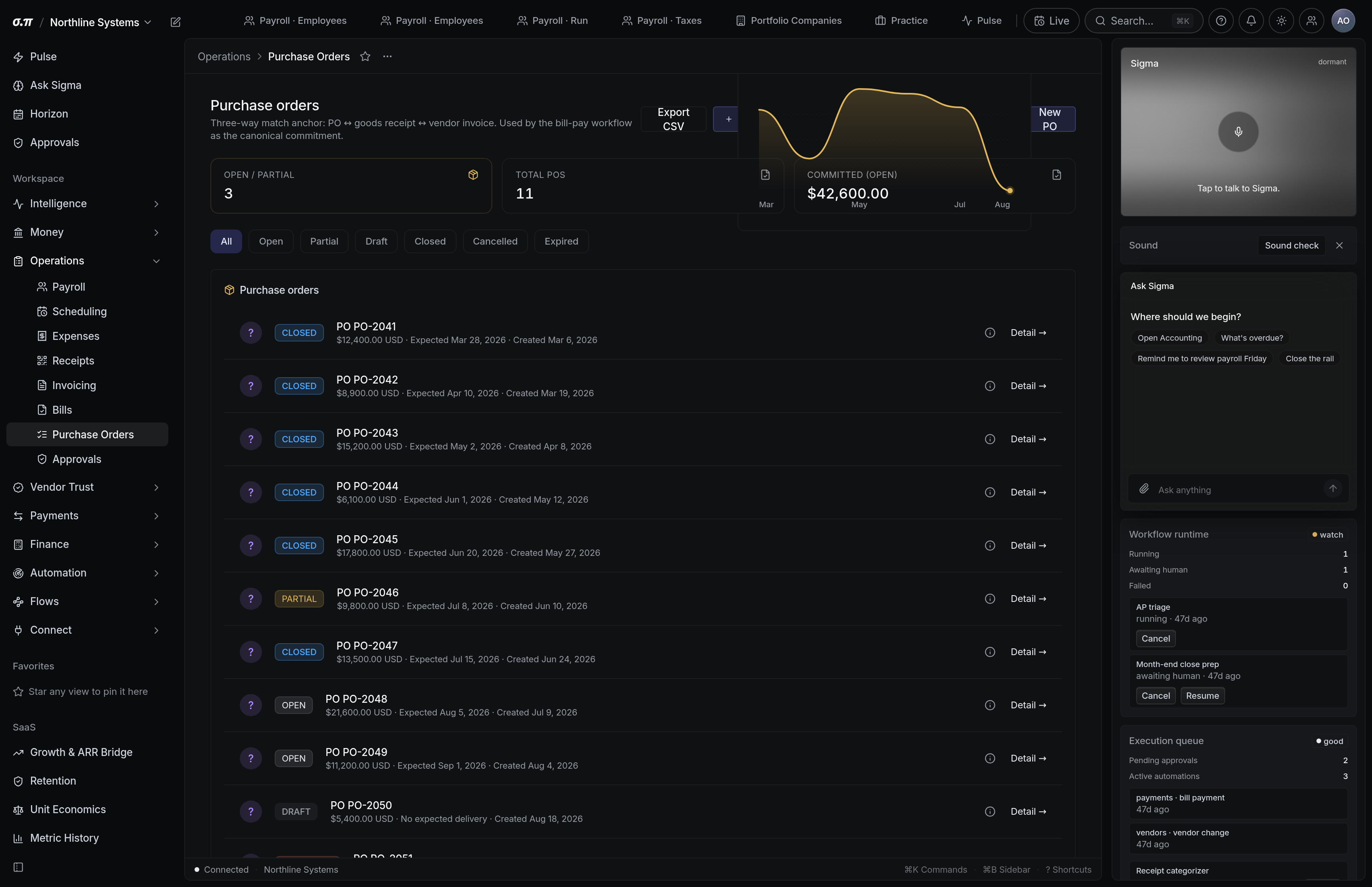
A purchase order turns an intention into a recorded commitment. Without one, the first the finance side hears of a purchase is the bill, which is far too late to do anything about it.
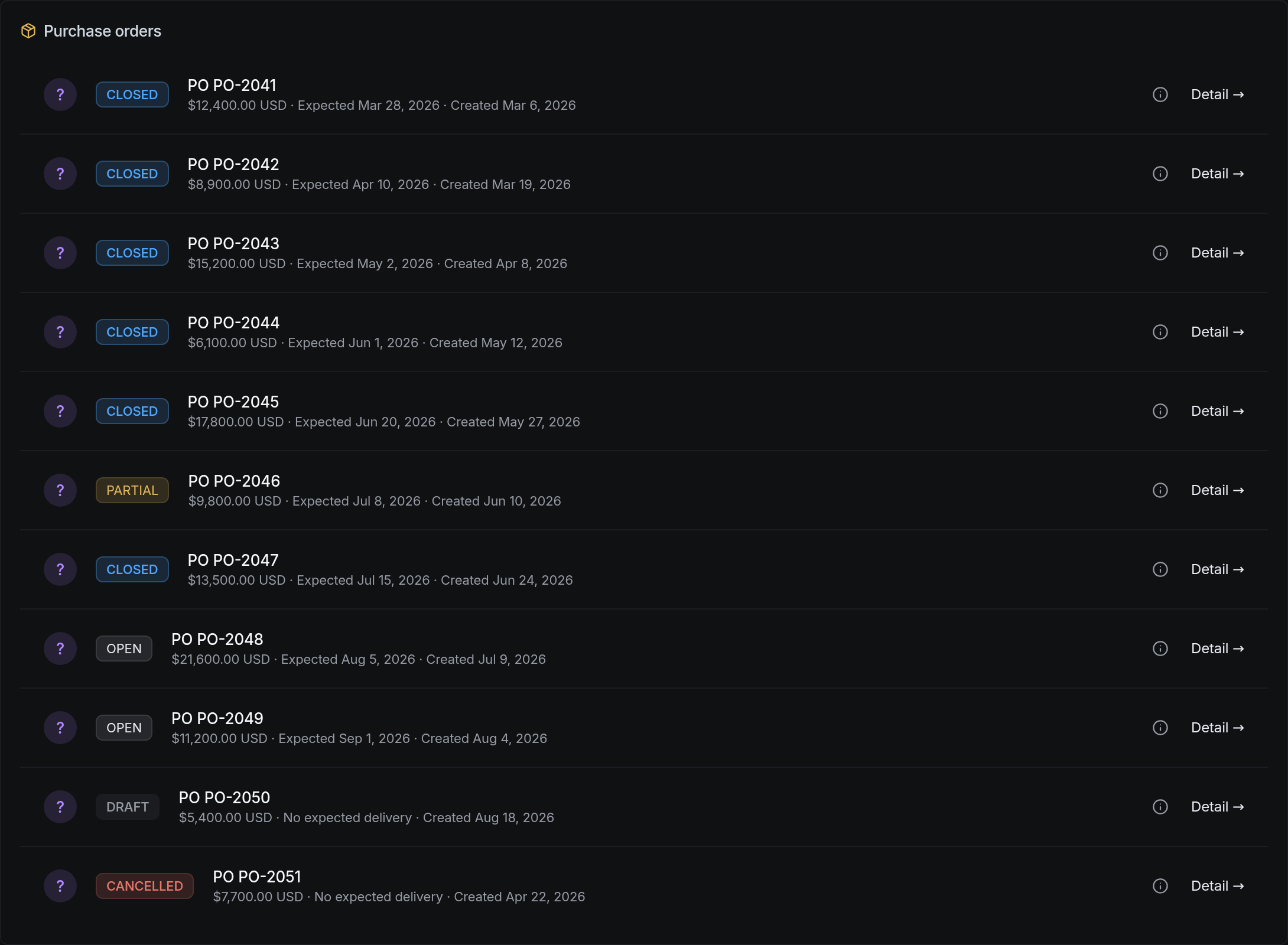
Each order holds the vendor, the lines, the amount, and the approval. Receipt is recorded against it, and the invoice matches against both.
Where everything sits



How to work this page
The point is to approve spending before it exists, not to document it afterwards.
Quantity received against quantity ordered. Partial receipts are normal and are recorded as partial.
Order, receipt and invoice compare automatically. Anything outside tolerance holds the invoice.
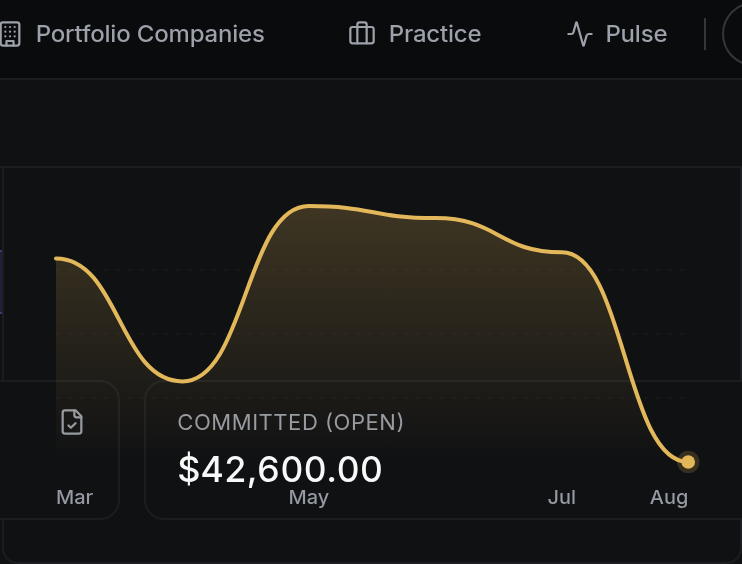
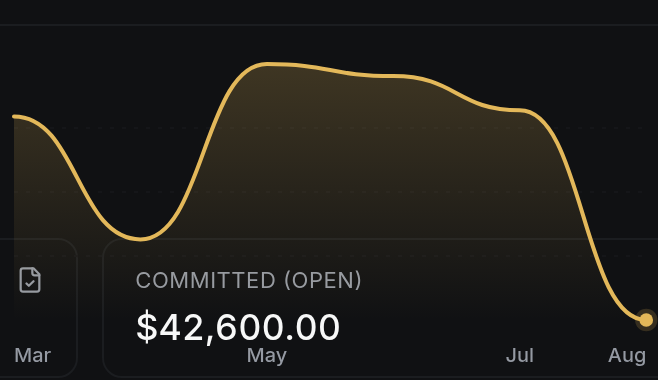
Orders raised and not yet invoiced are money committed and not yet spent. It belongs in your cash view and it appears in the forecast.
On a phone
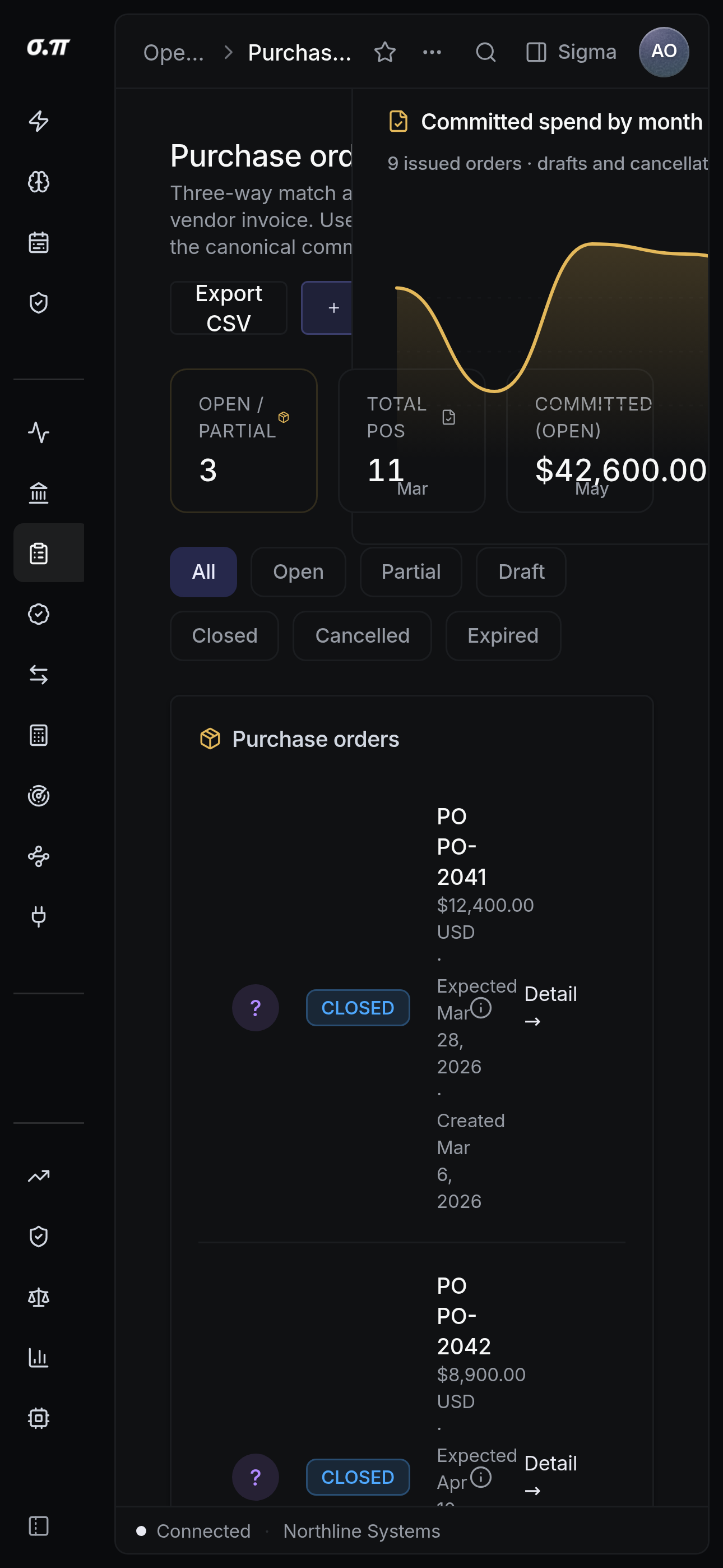
Every figure from the desktop appears here, stacked rather than reduced. Tables scroll inside themselves so the page never moves sideways, and figures keep their separators and their alignment at every width.
Questions people actually ask
No. Set a threshold. Below it, ordering is friction. Above it, the absence of an order is how surprise costs arrive.
The match holds it and names the difference. Accepting it requires a reason and is recorded against both.