Pulse
Everything the business is doing right now, on one screen, without opening anything else.
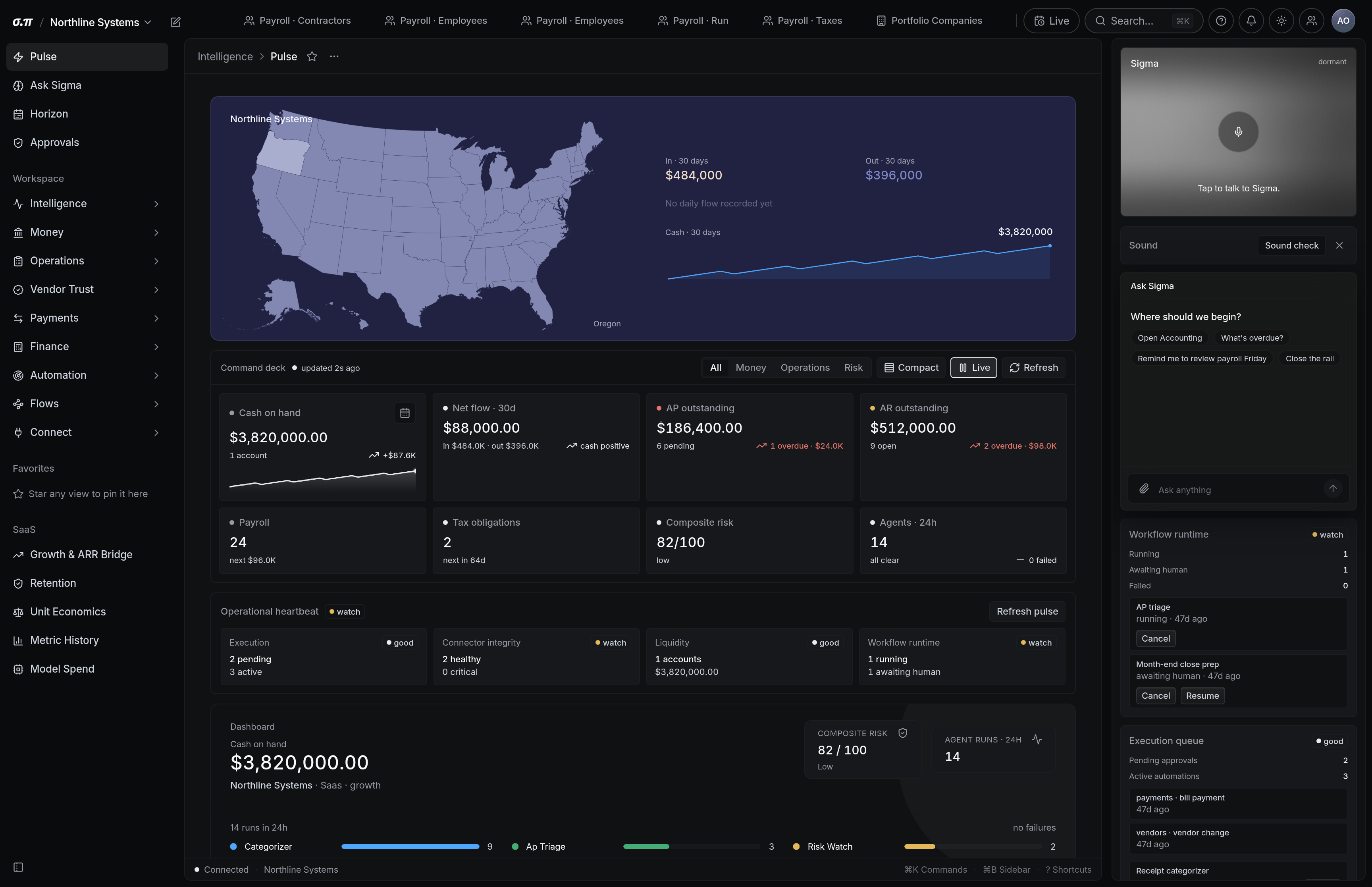
Pulse is the first screen after you sign in. It answers the question you actually have when you open a financial system, which is whether anything needs you today.
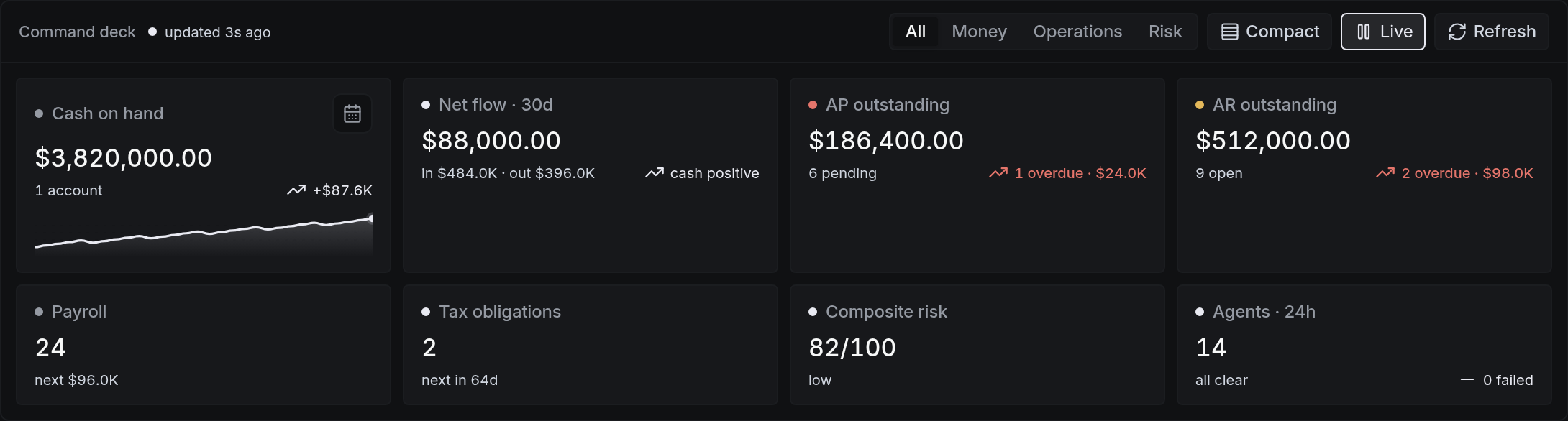
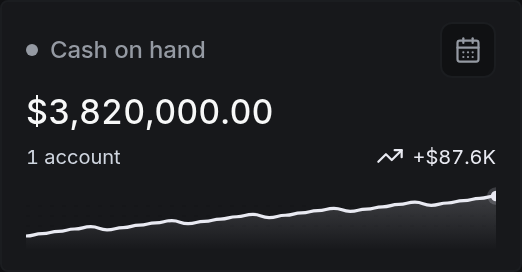
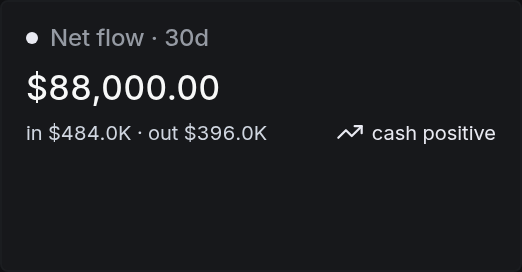
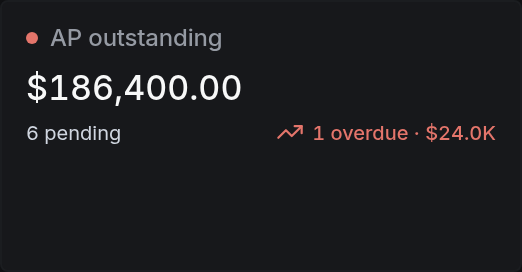
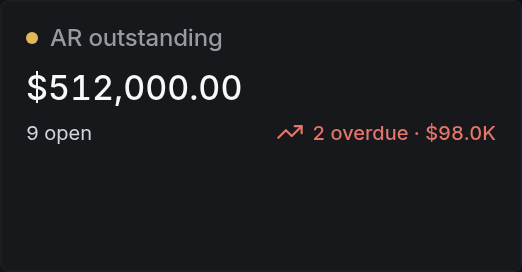
The command deck across the top carries six figures. Cash on hand totals every connected account and draws the last ninety days beneath it. Net flow over thirty days shows money in against money out and states plainly whether the period was cash positive. AP outstanding is what you owe, with the overdue portion called out separately. AR outstanding is what is owed to you, on the same terms. Payroll shows the headcount and the amount of the next run. Tax obligations counts what is open and how many days until the nearest one.
Nothing on this screen is a rounded estimate. Every figure resolves from the ledger and every one of them opens to the rows underneath it.
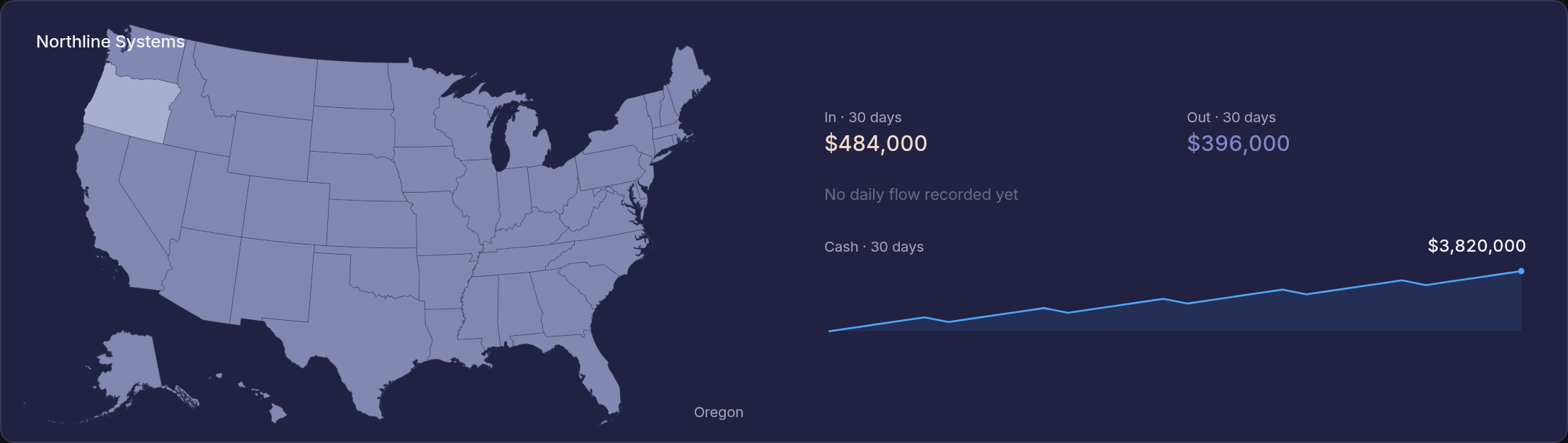
Where everything sits
How to work this page
Cash, then flow, then what you owe, then what you are owed. That order is deliberate. It moves from what you hold to what is committed against it.
All, Money, Operations and Risk sit above the deck. Money hides operational cards. Risk brings the composite score and the heartbeat forward.
Compact drops the sparklines and fits every card above the fold on a 13 inch screen.
Live subscribes to the org stream. Balances and pending counts update without a refresh, which matters on payroll day and on the last day of a month.
Execution, connector integrity, liquidity and workflow runtime each carry good, watch or critical. Watch means a condition is present and nothing has failed yet.
The rail on the right holds the agent. It reads this business, not general knowledge, and answers about the figures on this exact screen.
On a phone
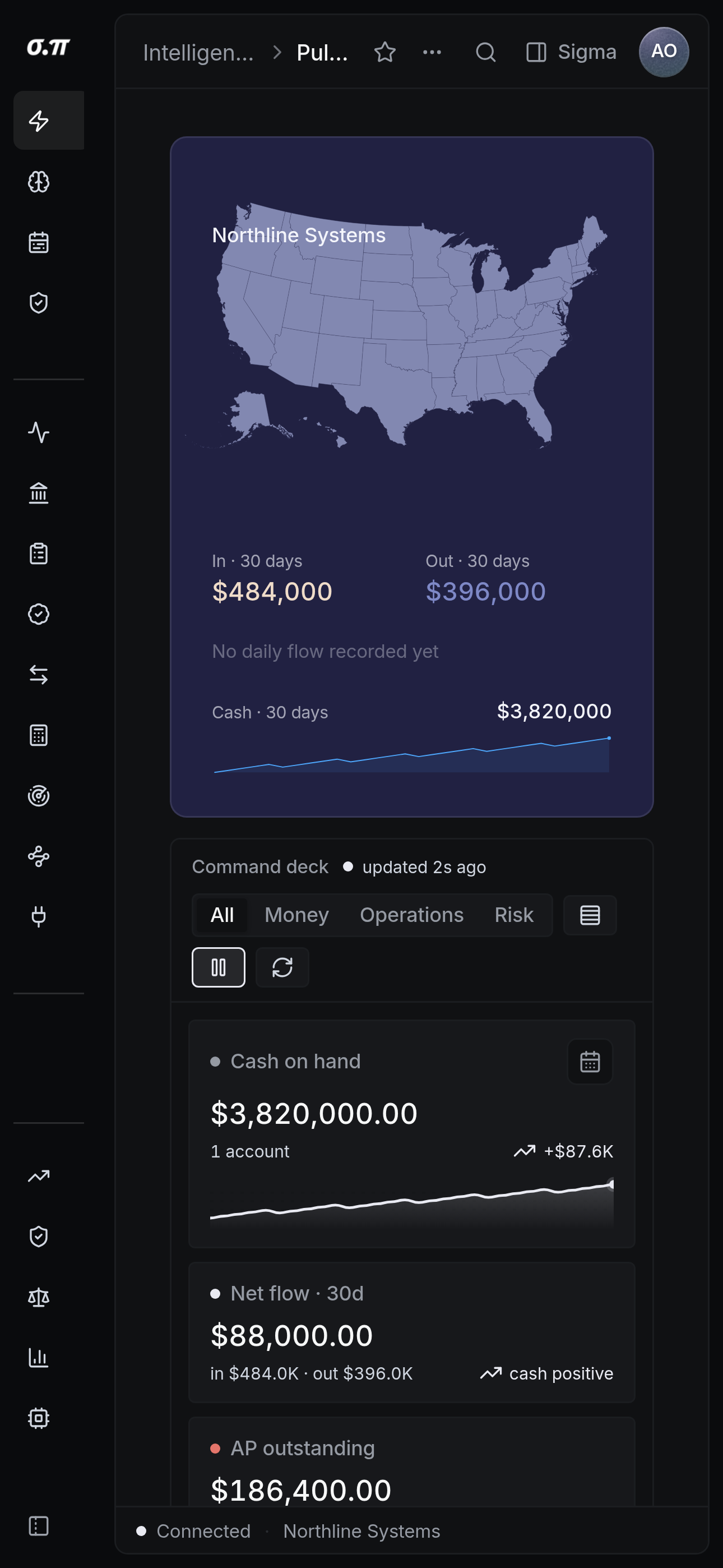
Every figure from the desktop appears here, stacked rather than reduced. Tables scroll inside themselves so the page never moves sideways, and figures keep their separators and their alignment at every width.
Questions people actually ask
Pending transactions. The bank shows the posted balance. Pulse shows posted plus anything in flight that has cleared the rail, which is the number you can actually spend against.
Four inputs, weighted: payment execution health, connector integrity, liquidity cover, and whether workflows are completing. A single connector needing re-authorisation moves it a few points. A failed payment run moves it a lot.
It is the time since the last successful read from the underlying data, not since the page opened. If a connector is down that number grows and the card carrying it changes state.