Profit and loss
Revenue, cost of sales, gross margin and operating expense for any period you choose.
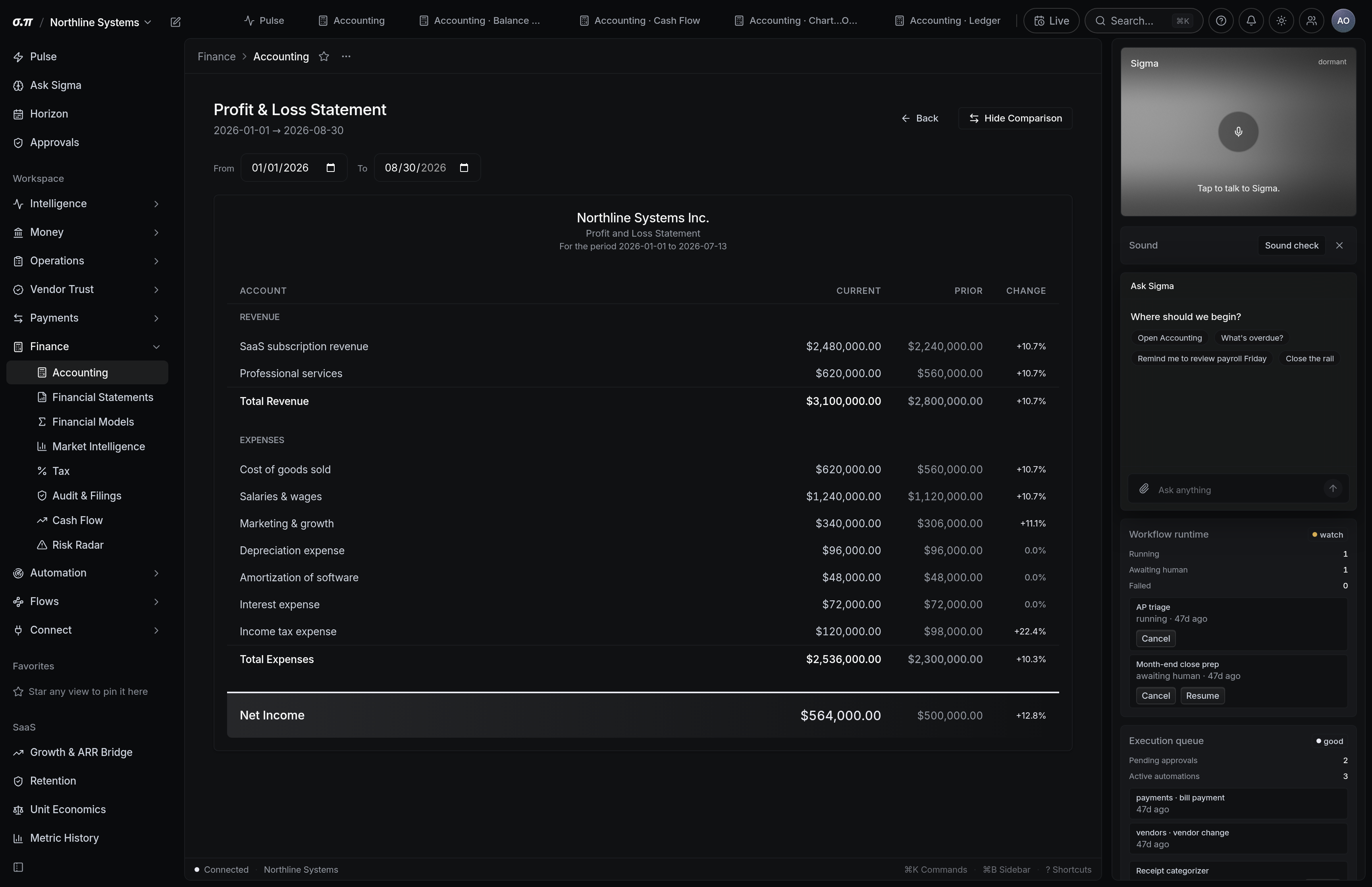
The profit and loss statement built directly from the ledger. Every line opens to the entries behind it, so a figure that looks wrong is one click from its cause.
Comparison against the prior period and the same period last year runs alongside, because a number in isolation rarely tells you anything.
Where everything sits
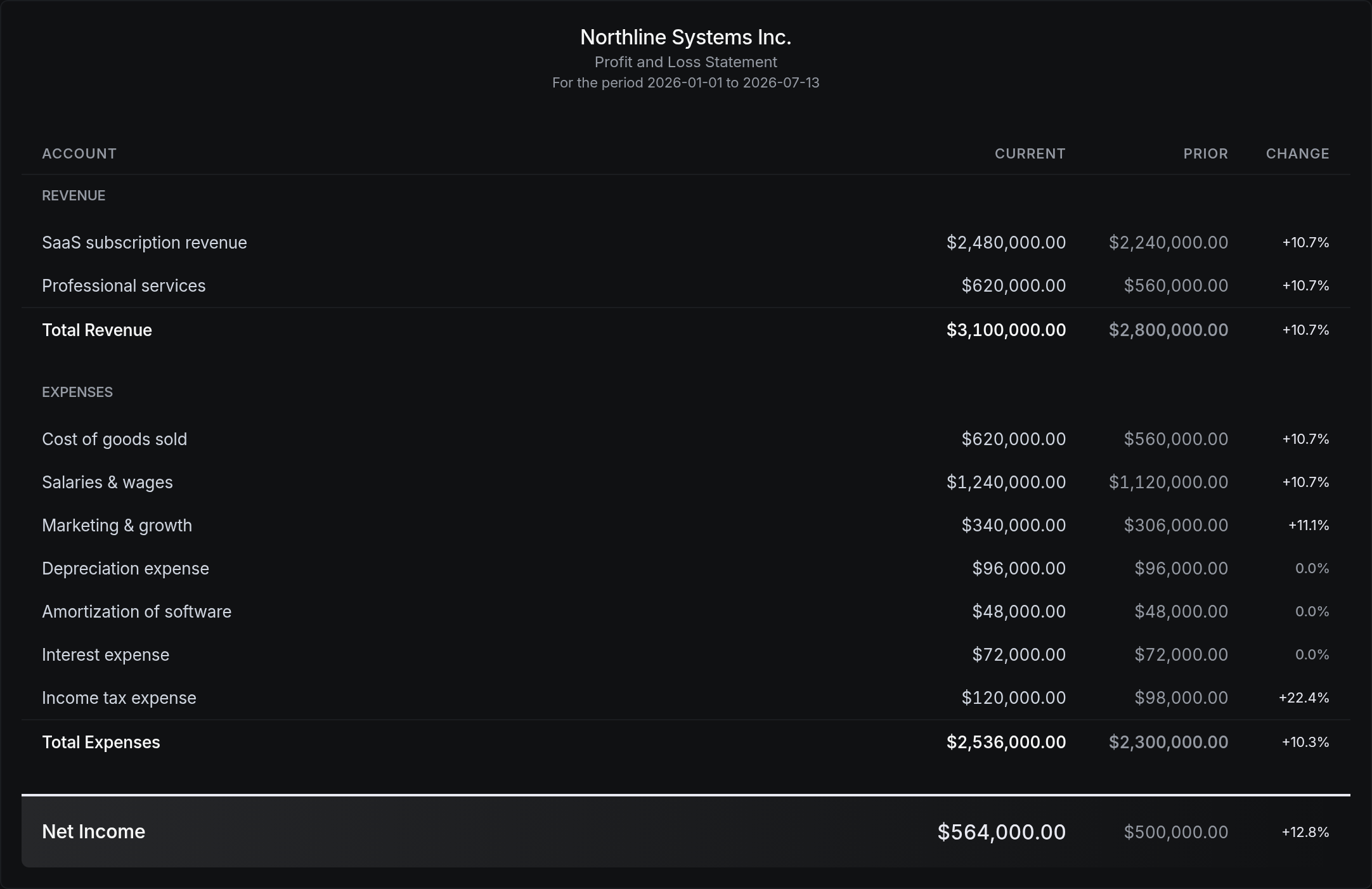





How to work this page
Accrual matches revenue to when it was earned. Cash matches it to when money moved. The basis is set once for the business and every statement follows it.
Gross margin is the health of what you sell. Net includes overhead you can change more slowly. Confusing a margin problem with a cost problem leads to cutting the wrong thing.
Prior period and prior year sit beside the current column. A seasonal business only makes sense against the same period last year.
Every line drills to its accounts and then to its individual entries.
On a phone
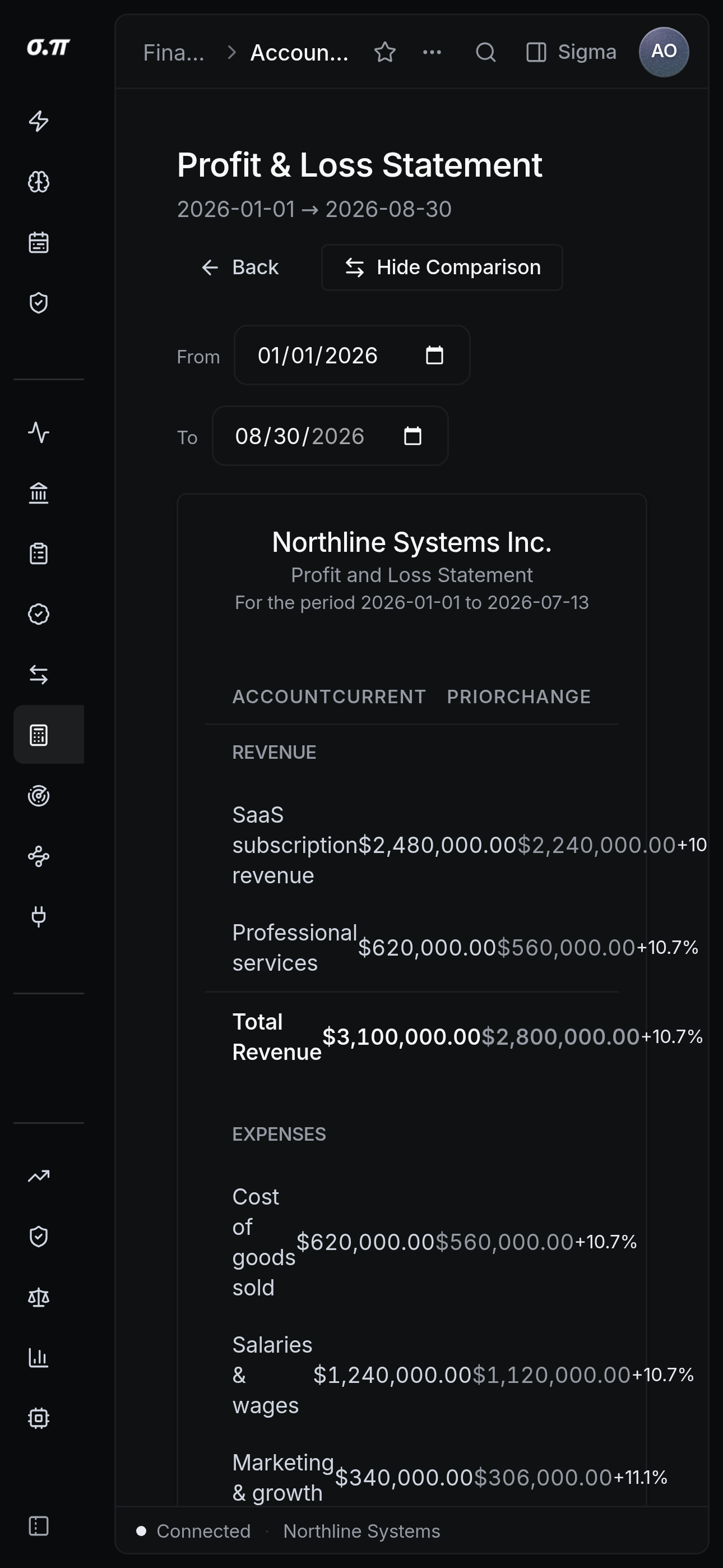
Every figure from the desktop appears here, stacked rather than reduced. Tables scroll inside themselves so the page never moves sideways, and figures keep their separators and their alignment at every width.
Questions people actually ask
Profit is not cash. Revenue earned and uncollected sits in profit and not in the bank. The cash flow statement reconciles the two.
Not here. A distribution is a return of equity, not an expense, and putting it in the profit and loss overstates your costs and understates your profit.