Ontology
What the system understands each of your things to be.
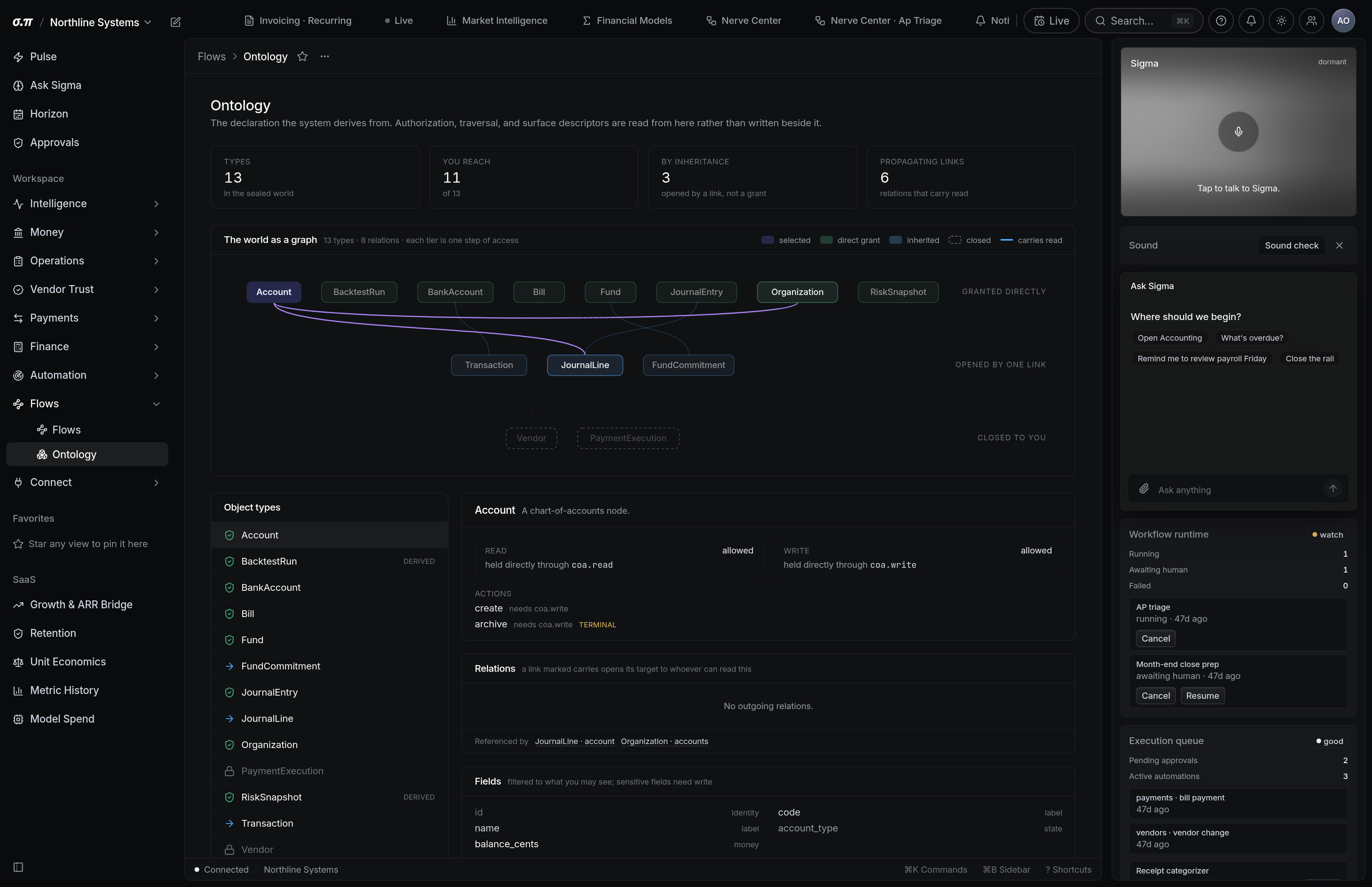
Categories, entity types, relationships and the vocabulary your business actually uses. It is the layer that lets the agent answer questions in your terms rather than in generic ones.
When you call something a job and somebody else calls it a project, the ontology is where that is recorded once.
Where everything sits




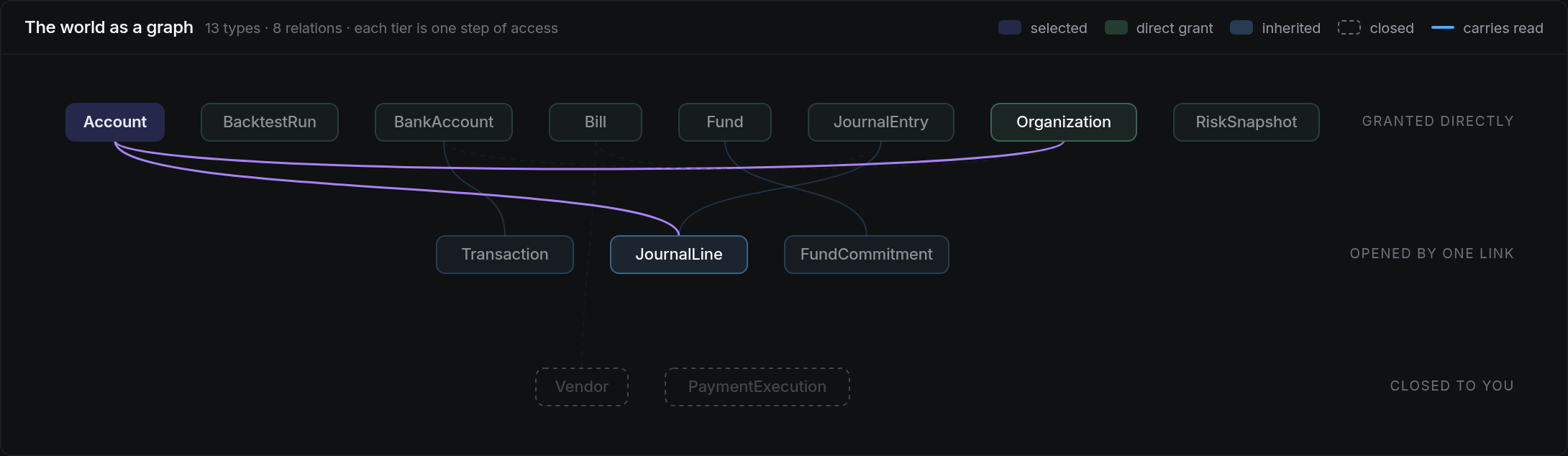
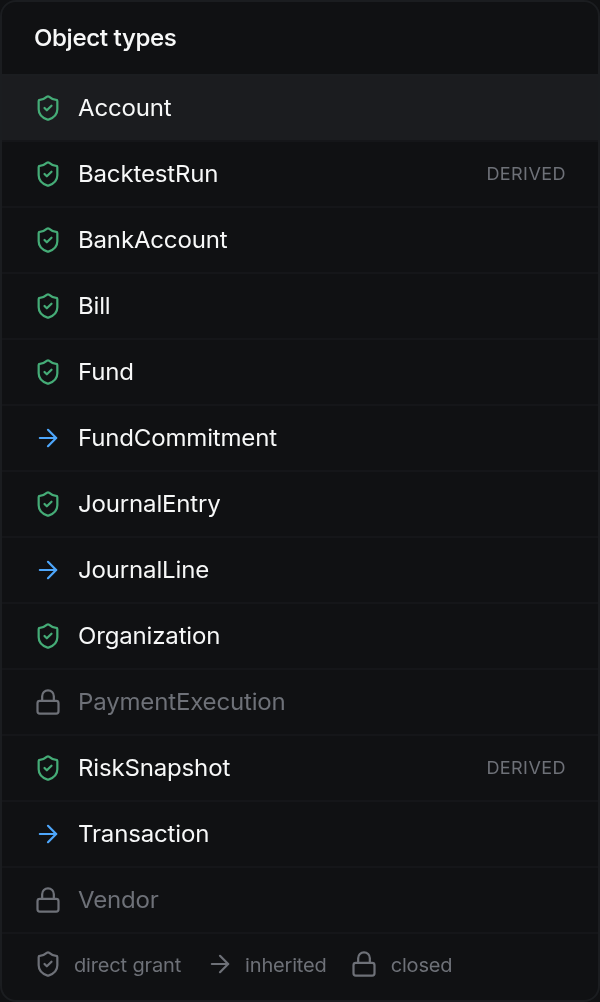
How to work this page
The words your team uses. It makes search and the agent work in your language.
Your term links to the underlying concept, so reporting stays comparable while the interface speaks your dialect.
A job belongs to a customer and has bills against it. Recording that lets figures roll up correctly.
An ontology that describes everything describes nothing usefully. Model the handful of things you actually reason about.
On a phone
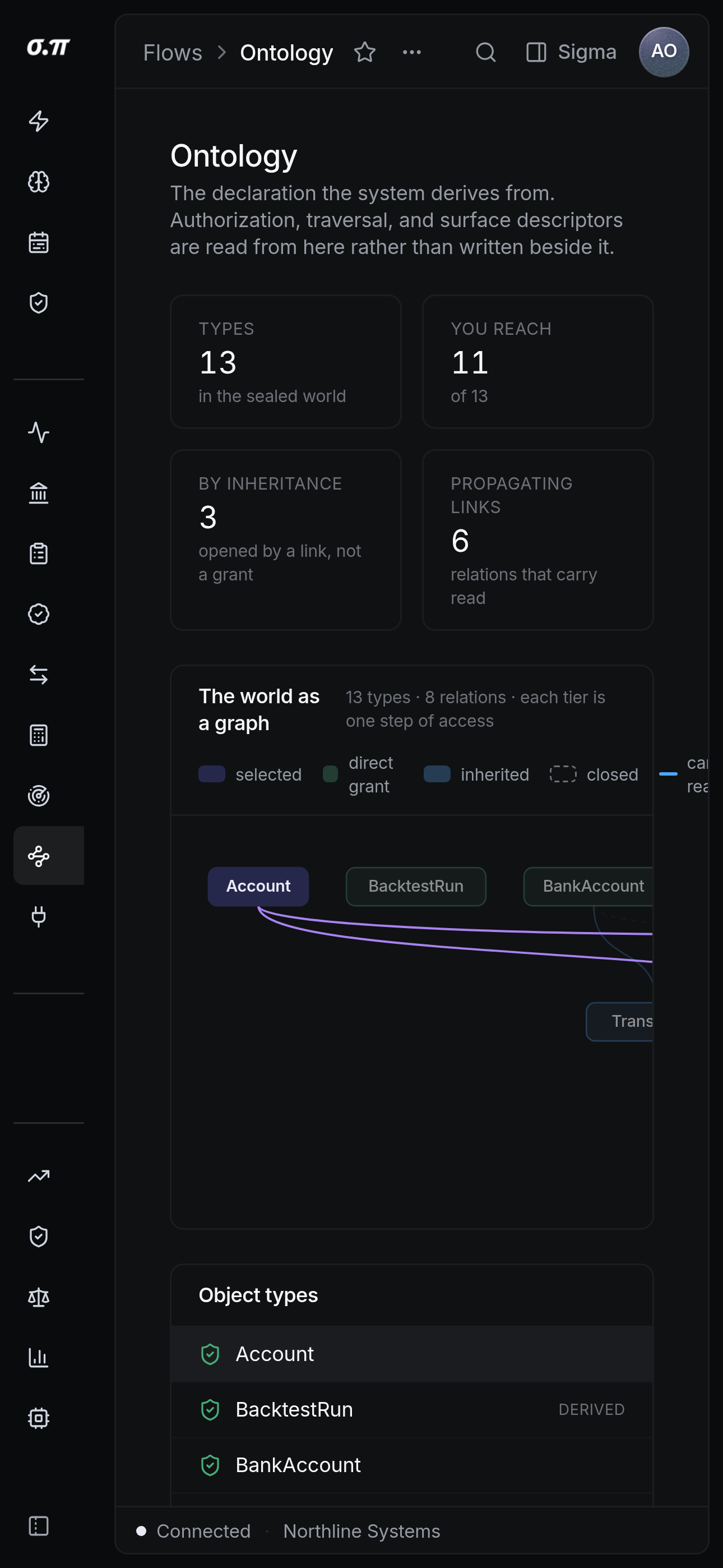
Every figure from the desktop appears here, stacked rather than reduced. Tables scroll inside themselves so the page never moves sideways, and figures keep their separators and their alignment at every width.
Questions people actually ask
No. Sensible defaults come from your trade and most businesses never touch it. It exists for the ones with genuinely unusual structures.
No. The ledger is the ledger. This is the vocabulary layer above it.