New invoice
Billing a customer, with the terms and the detail that make it get paid.
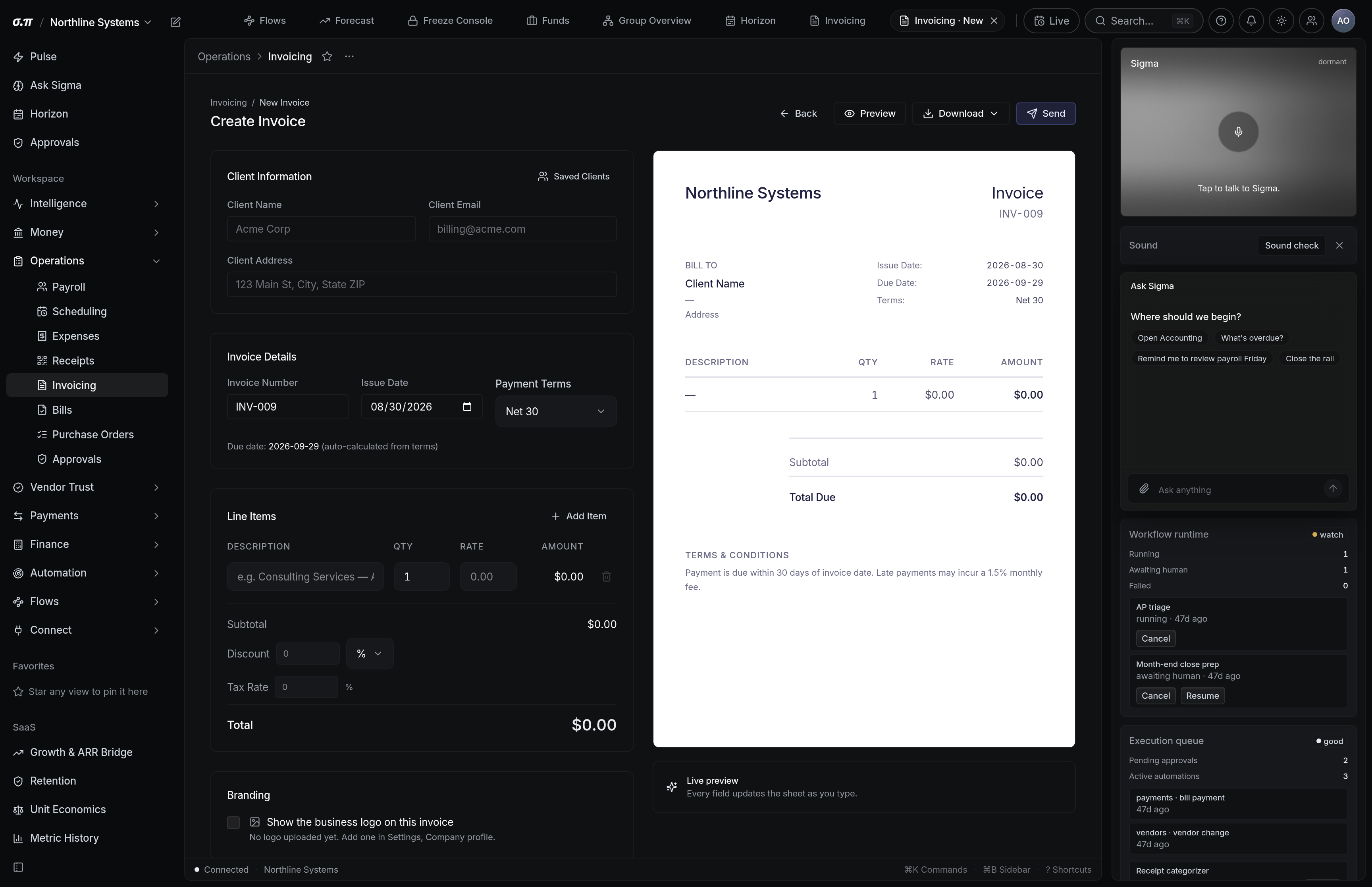
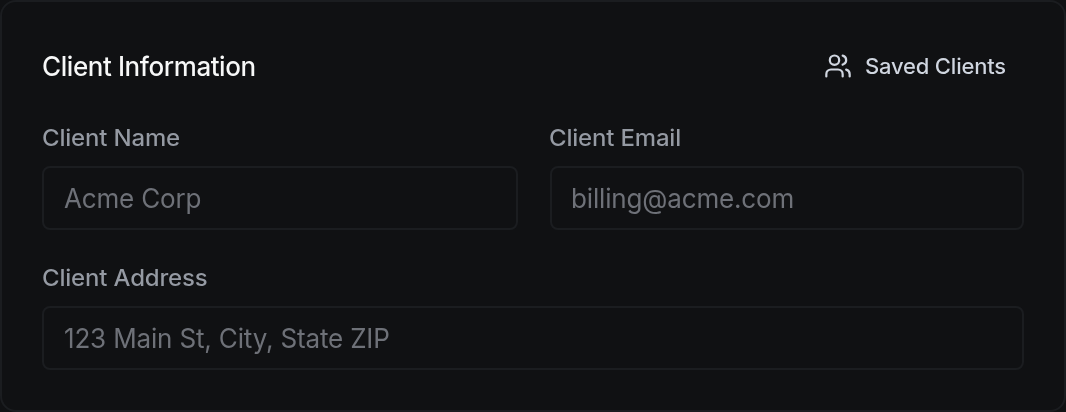
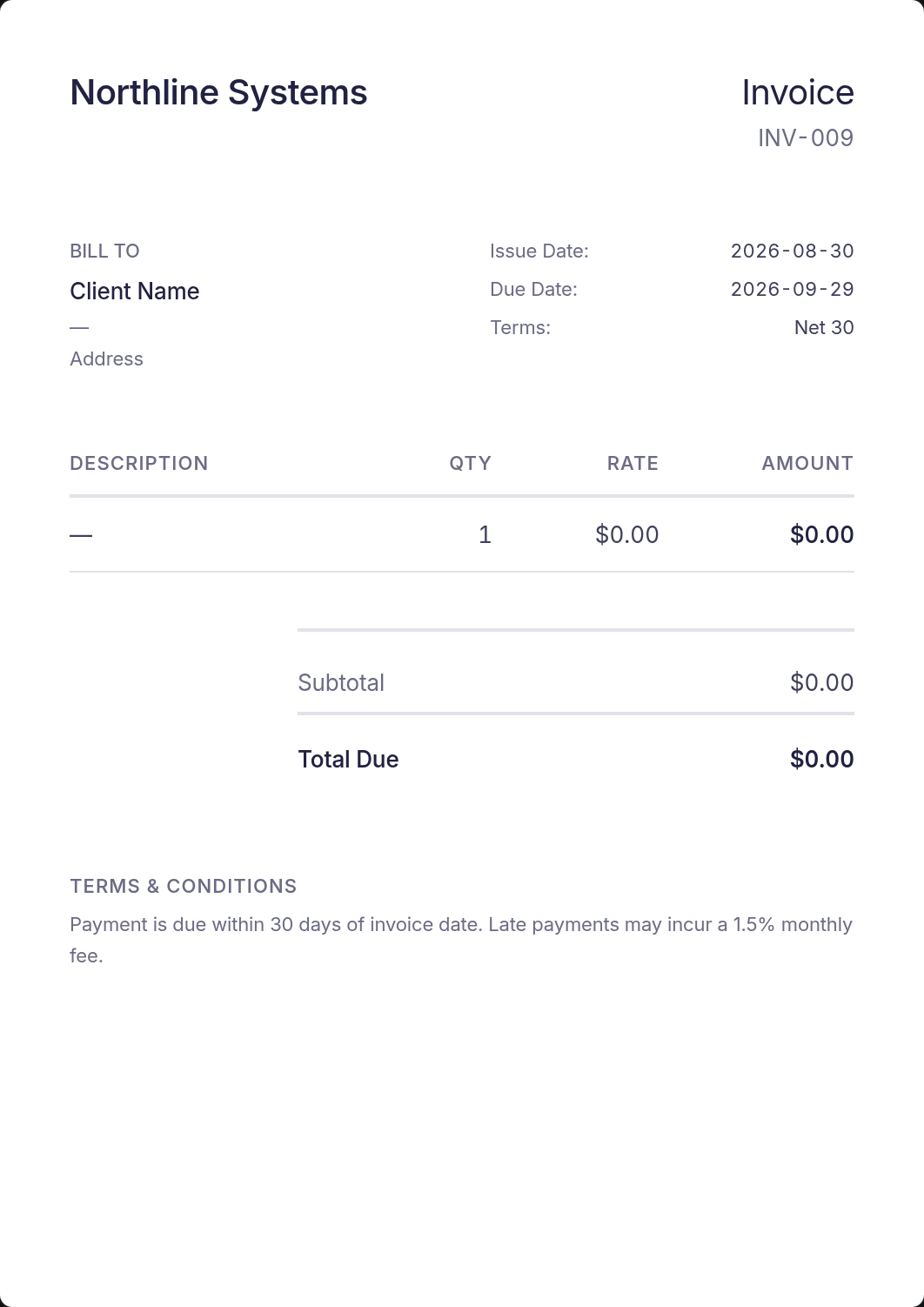
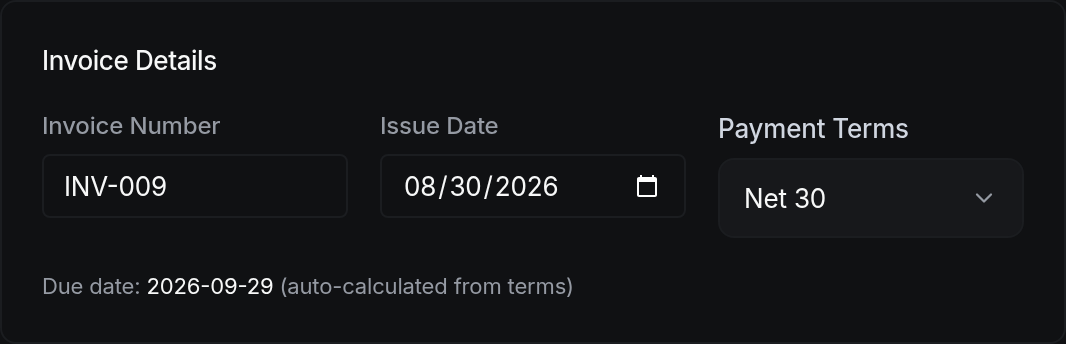
An invoice needs a customer, lines, terms and a due date. The parts people skip are the parts that delay payment: a purchase order reference the customer requires, a clear description, and terms that match what was agreed.
Amounts are entered in the currency of the business and held as whole cents. Tax is calculated per line where it applies rather than as a single figure at the bottom.
Where everything sits
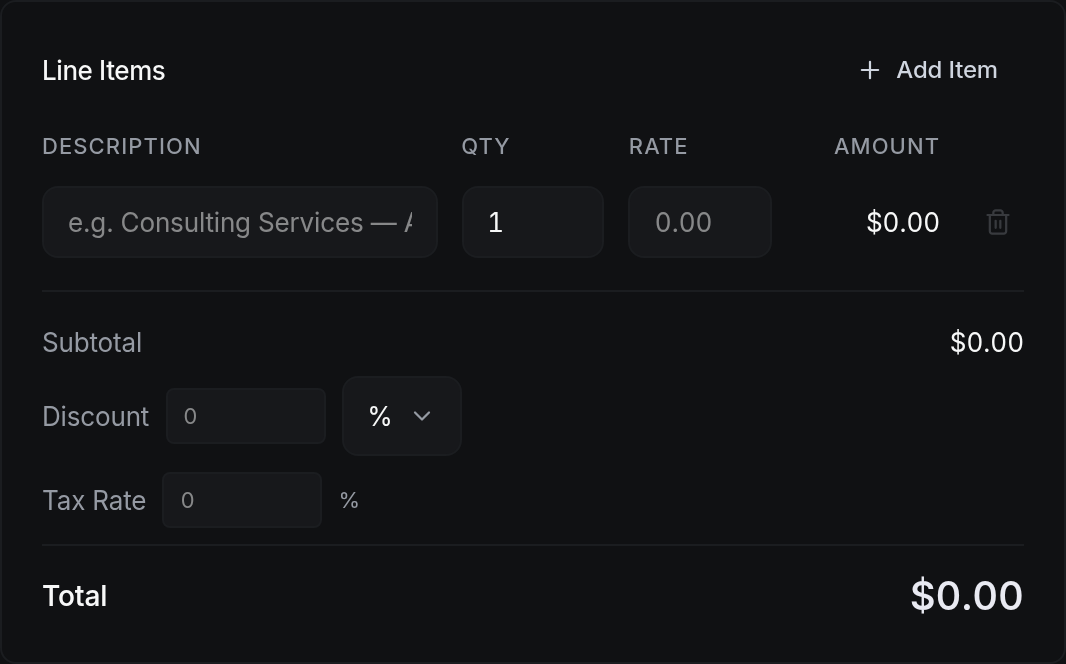


How to work this page
An invoice that does not match how the buyer records the purchase goes into a queue and stays there.
Many companies will not pay an invoice without their own purchase order number on it. Ask once and store it on the customer.
The due date drives ageing and chasing. Terms set casually create chasing you did not intend.
The recipient needs no account to view or pay. Removing a step measurably shortens collection.
On a phone
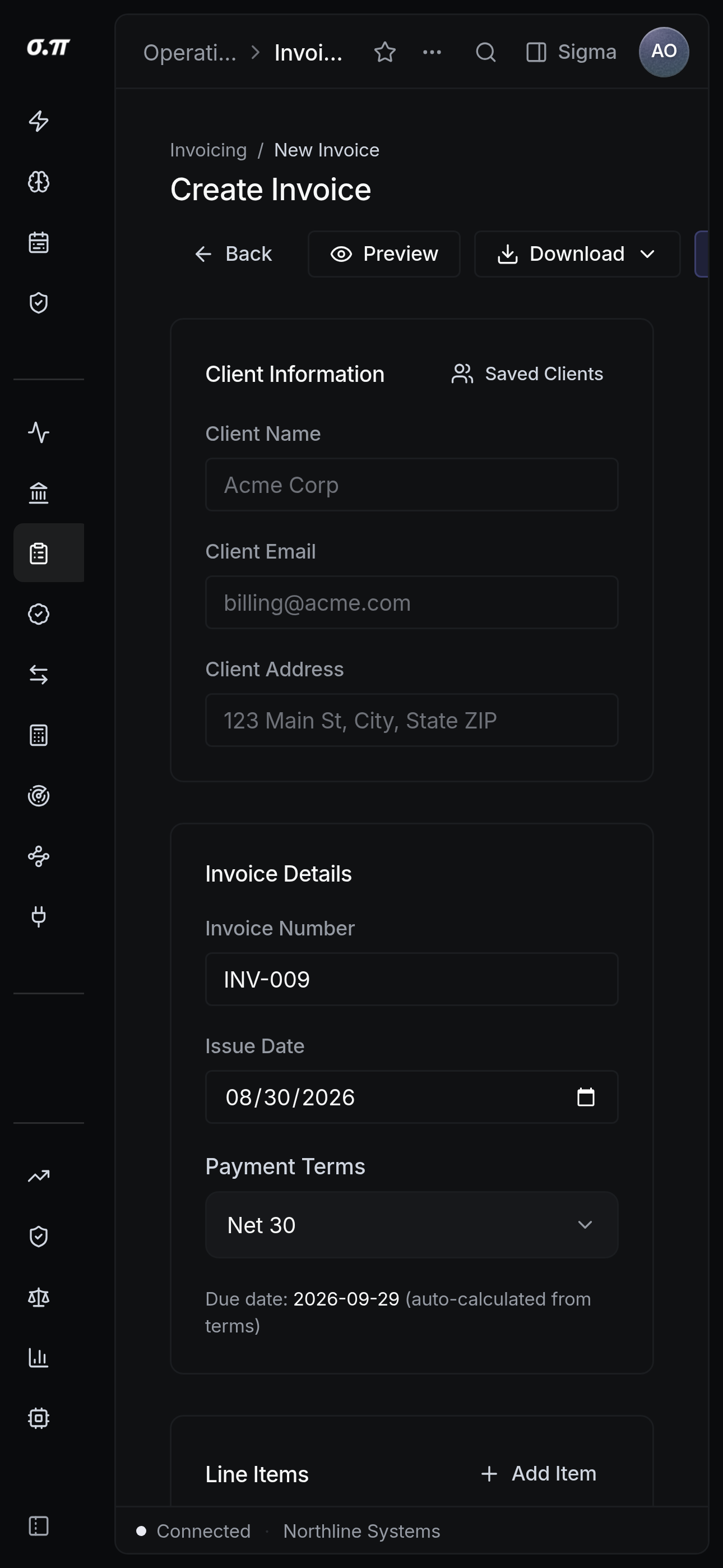
Every figure from the desktop appears here, stacked rather than reduced. Tables scroll inside themselves so the page never moves sideways, and figures keep their separators and their alignment at every width.
Questions people actually ask
Yes. The invoice is issued in the customer currency and posts to the books at the rate on the invoice date, with any difference at payment recorded as an exchange gain or loss.
Issue it as its own invoice against the same customer. Partial billing against one large invoice is harder to track than several clear ones.