Revenue cycle
From encounter to cash, with the days and the leakage at each stage.
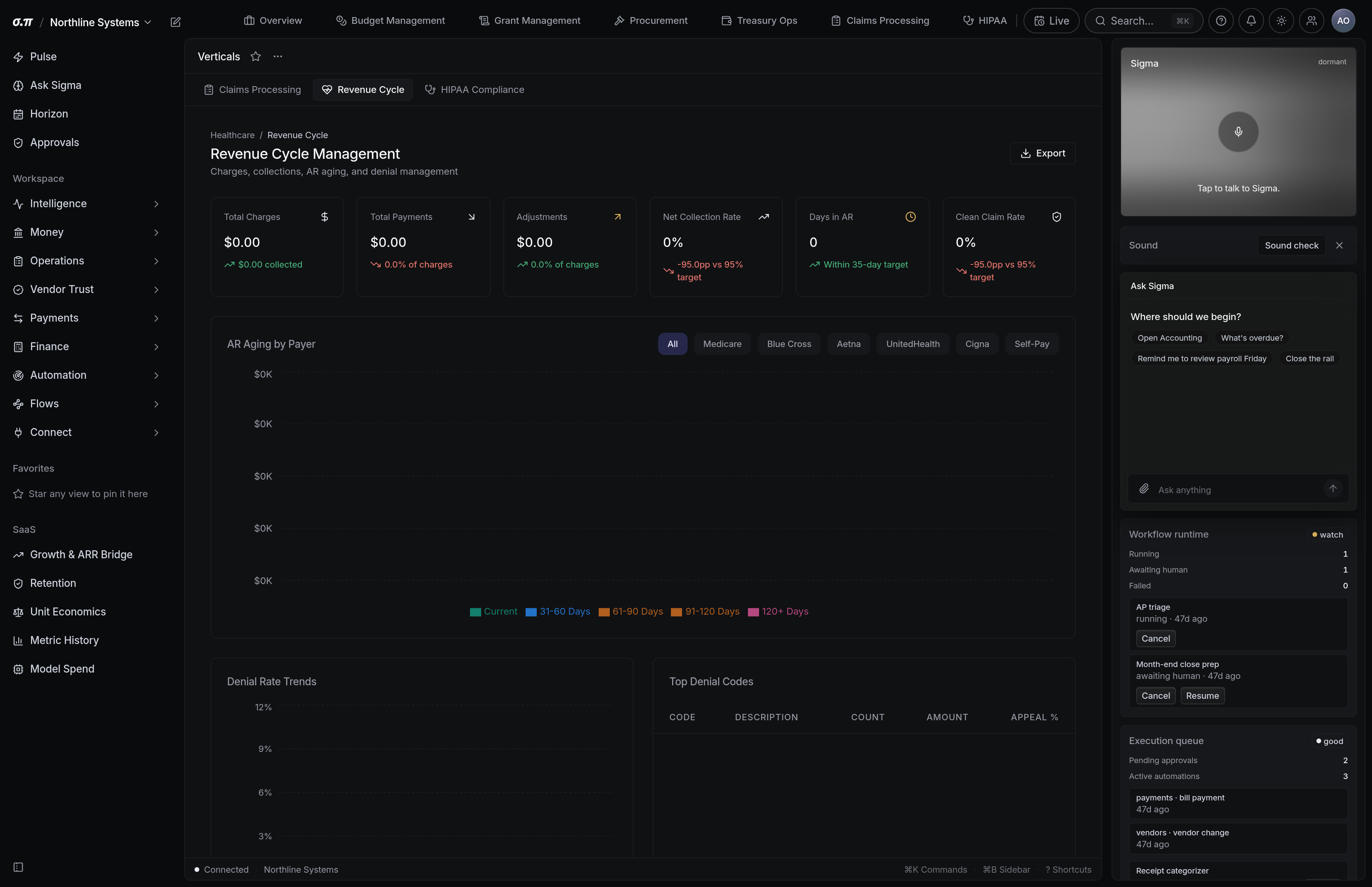
Revenue cycle is a pipeline with measurable losses. Charges not captured, claims not submitted, denials not worked, balances not collected. Each is a stage with a number.
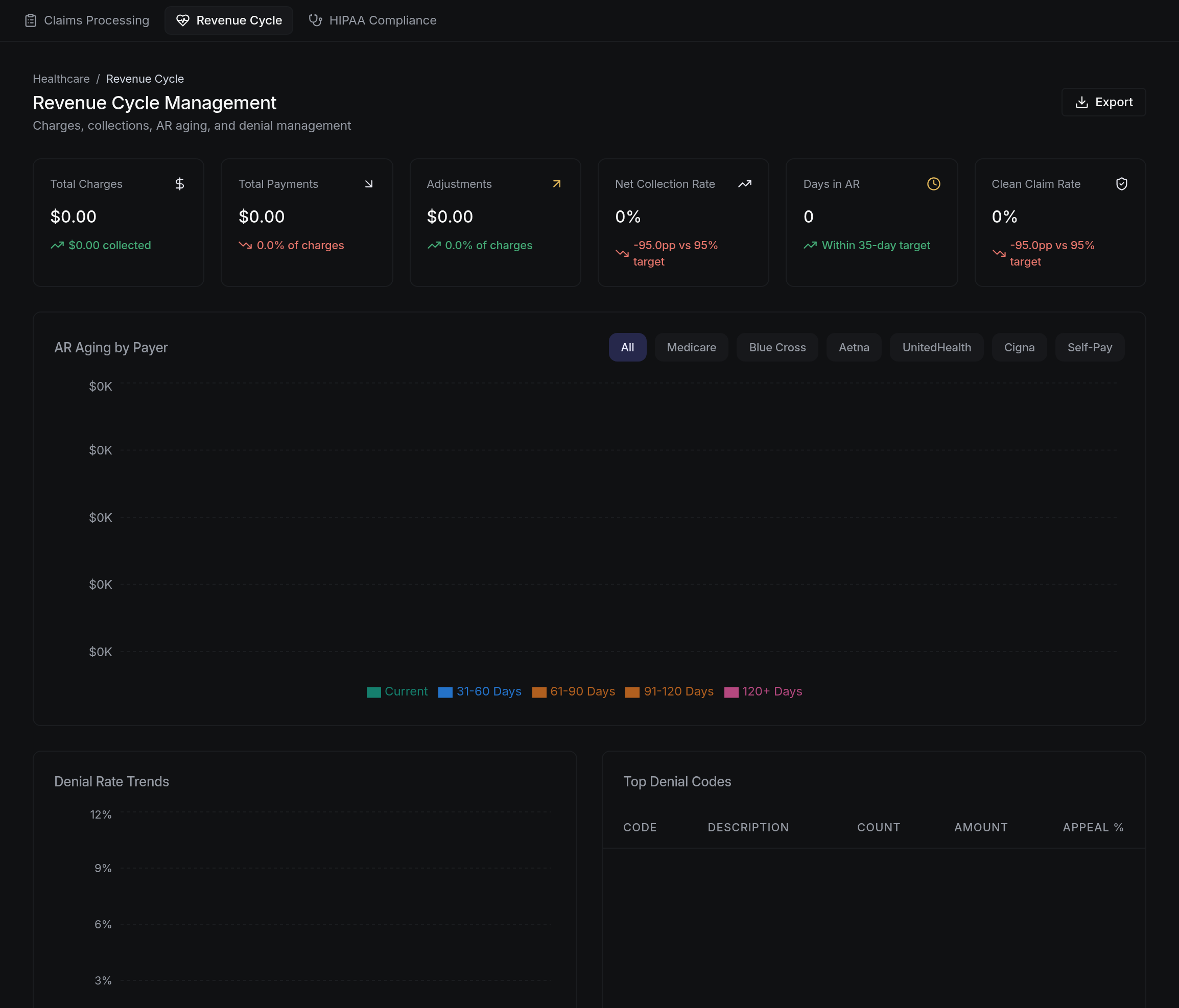
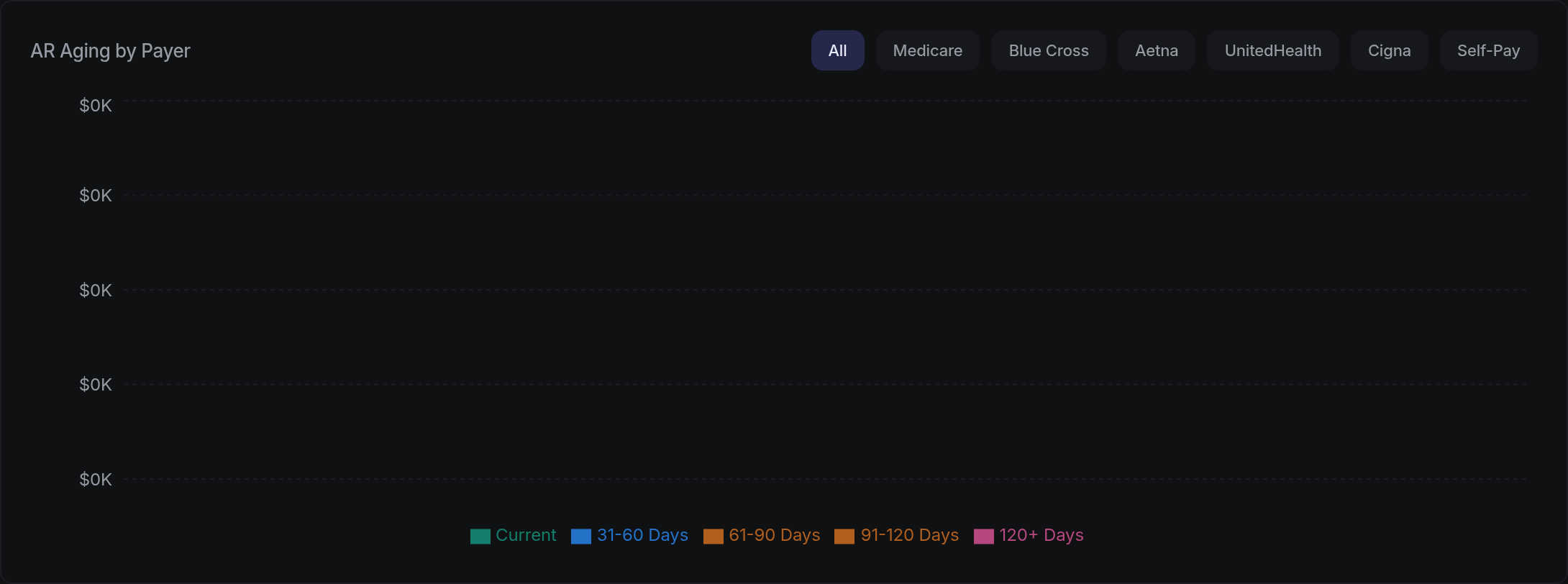
Days in accounts receivable is the headline, and the aged buckets underneath it are where the recoverable money actually sits.
Where everything sits



How to work this page
Days between service and charge entry. Every day here is a day added to every downstream metric.
A good average can hide a large aged tail. The buckets are where the truth is.
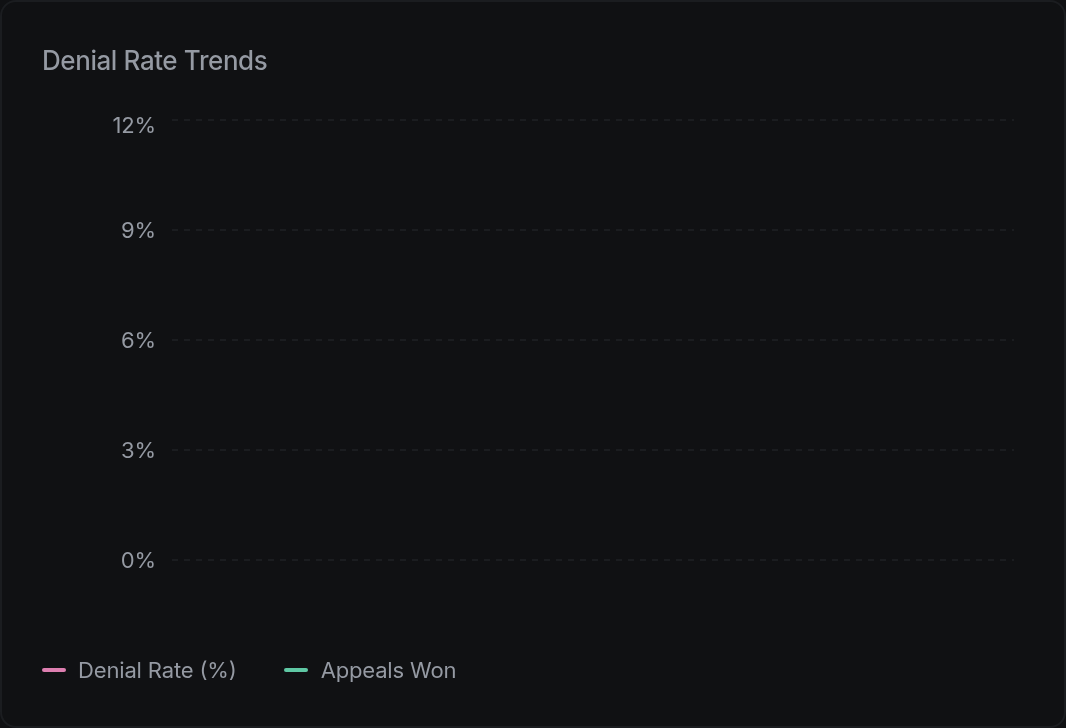
Appeal windows close. The queue sorts by remaining days rather than by amount.
They collect differently and need different work. Blending them produces a number that guides nothing.
On a phone
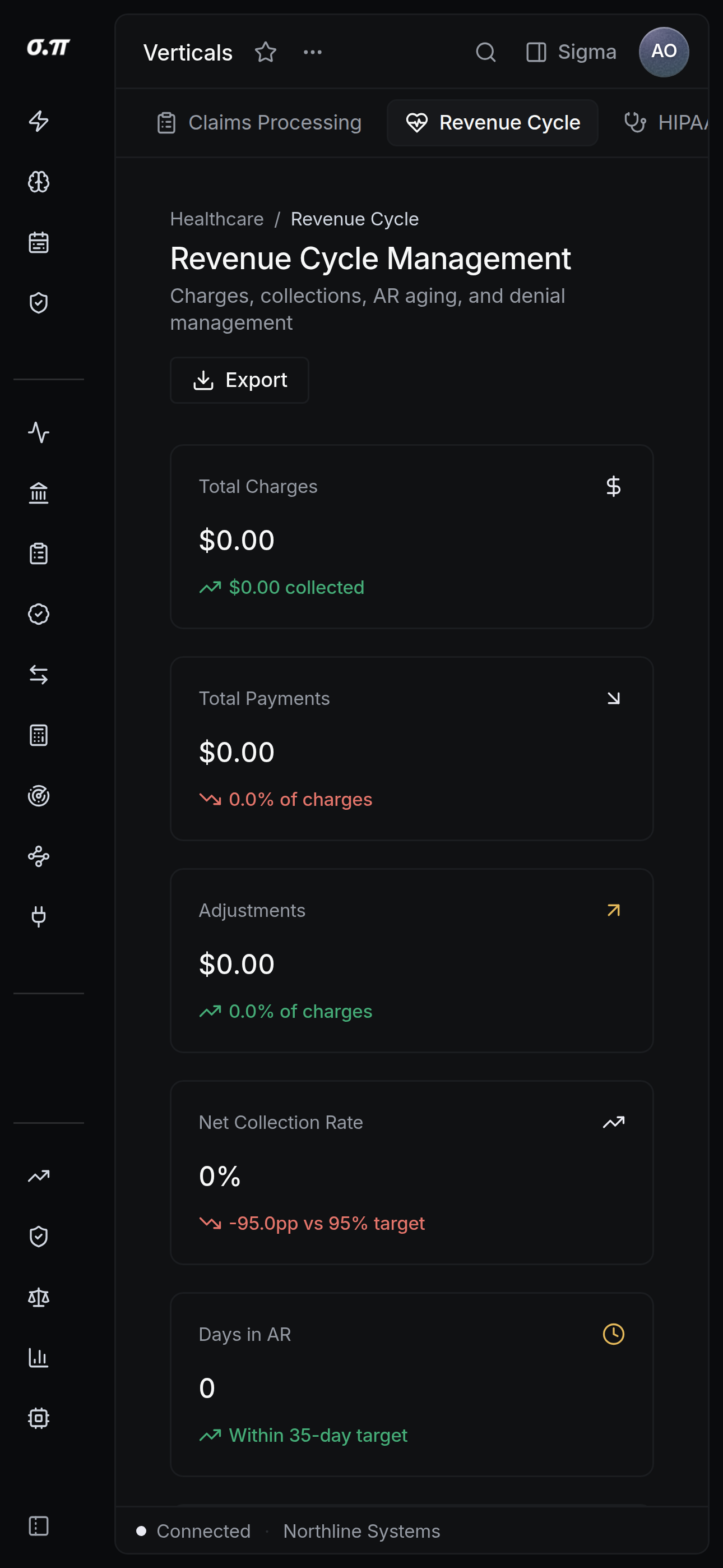
Every figure from the desktop appears here, stacked rather than reduced. Tables scroll inside themselves so the page never moves sideways, and figures keep their separators and their alignment at every width.
Questions people actually ask
It varies by specialty and payer mix, and the page shows your own trend rather than a benchmark, because your trend is the thing you control.
Contractual adjustments are separated from bad debt. The first is the contracted difference you were never going to collect. The second is money you failed to collect, and only the second is a performance problem.