Forecast
What the account balance does over the next ninety days, built from what is already committed.
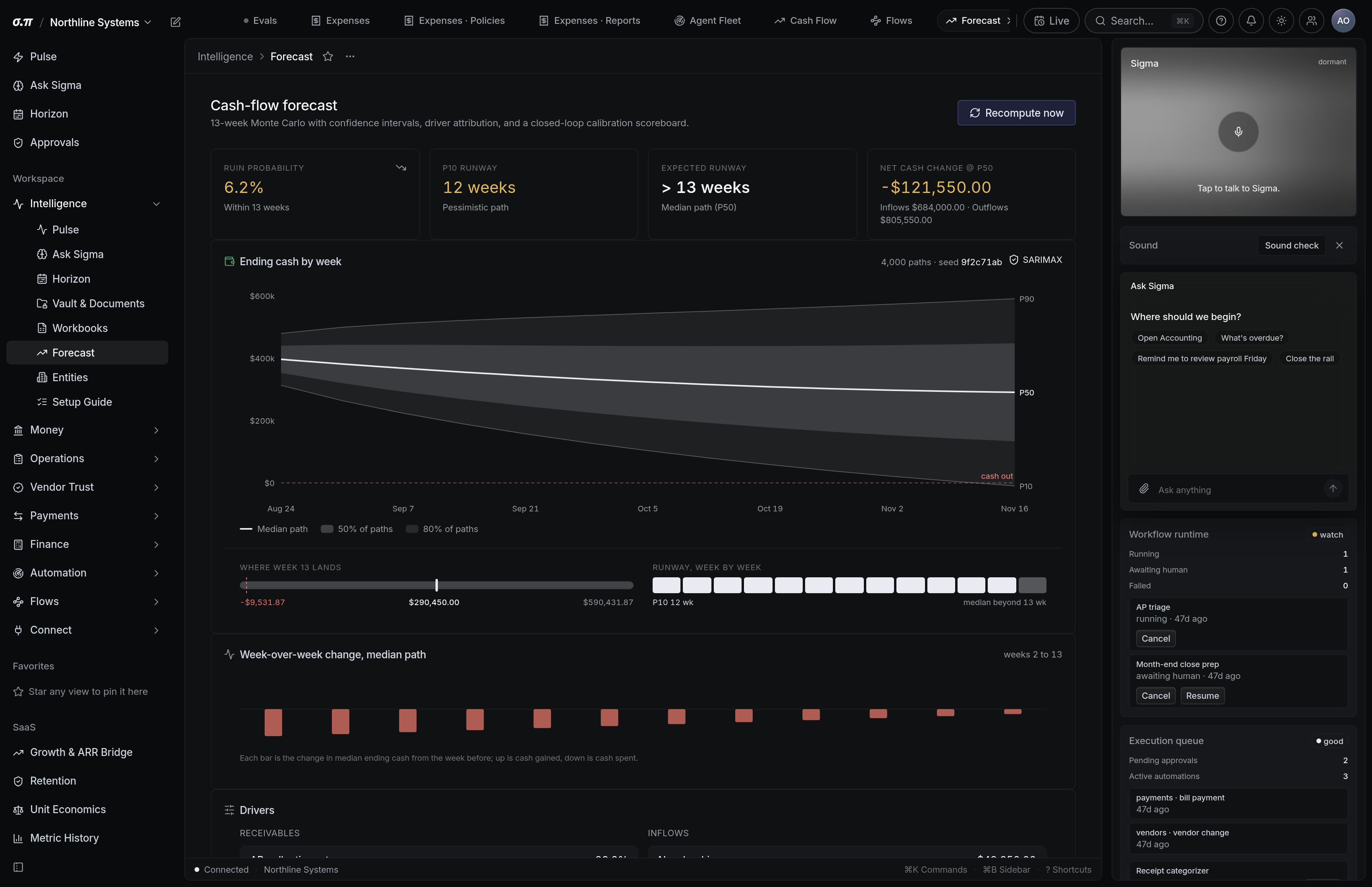
A forecast built from a growth assumption is a wish. This one is built from known obligations: scheduled bills, expected invoice collections at their historical timing, payroll runs, and recurring transfers.
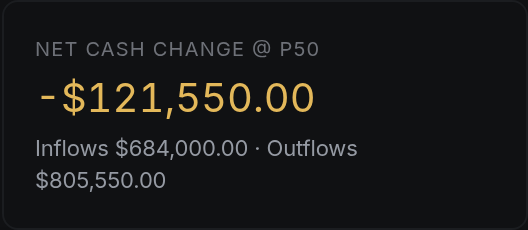
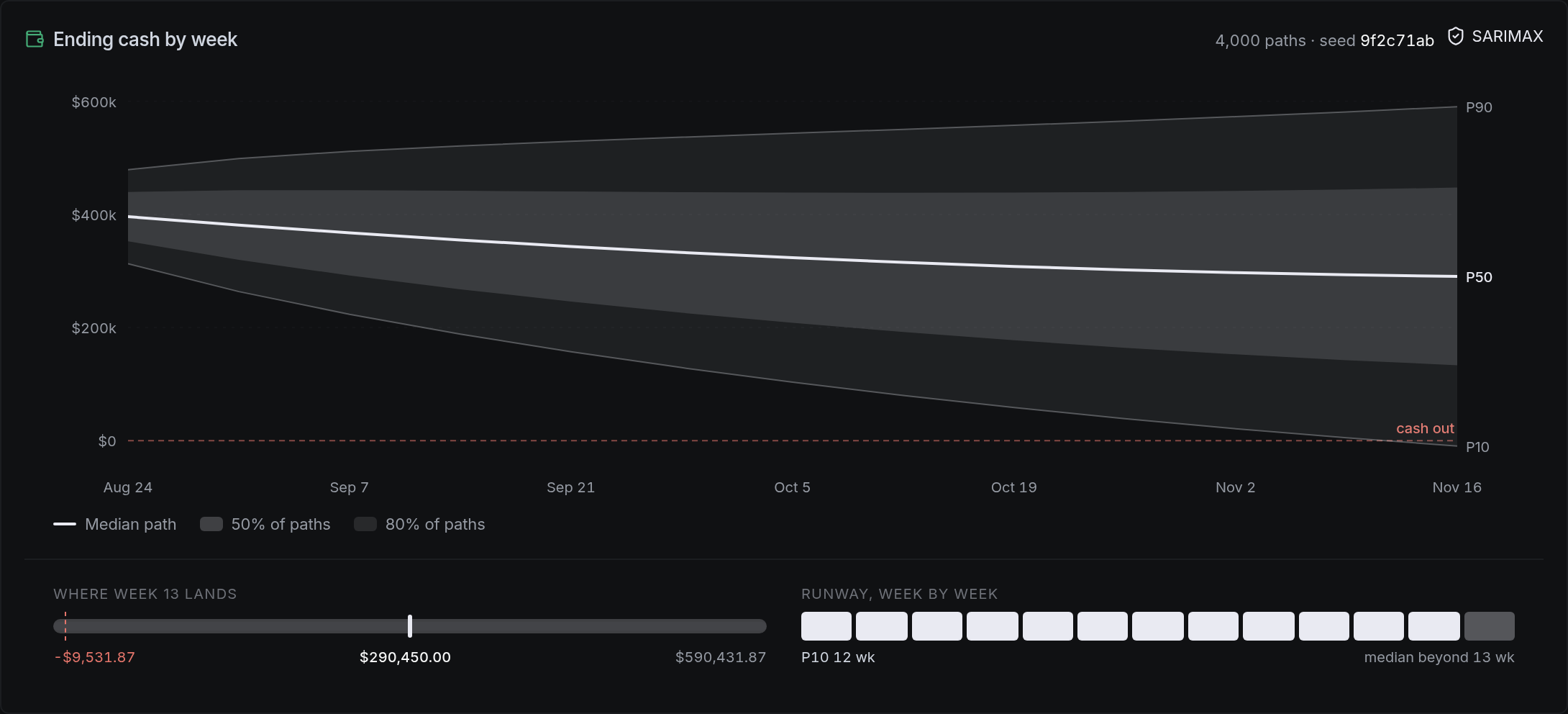
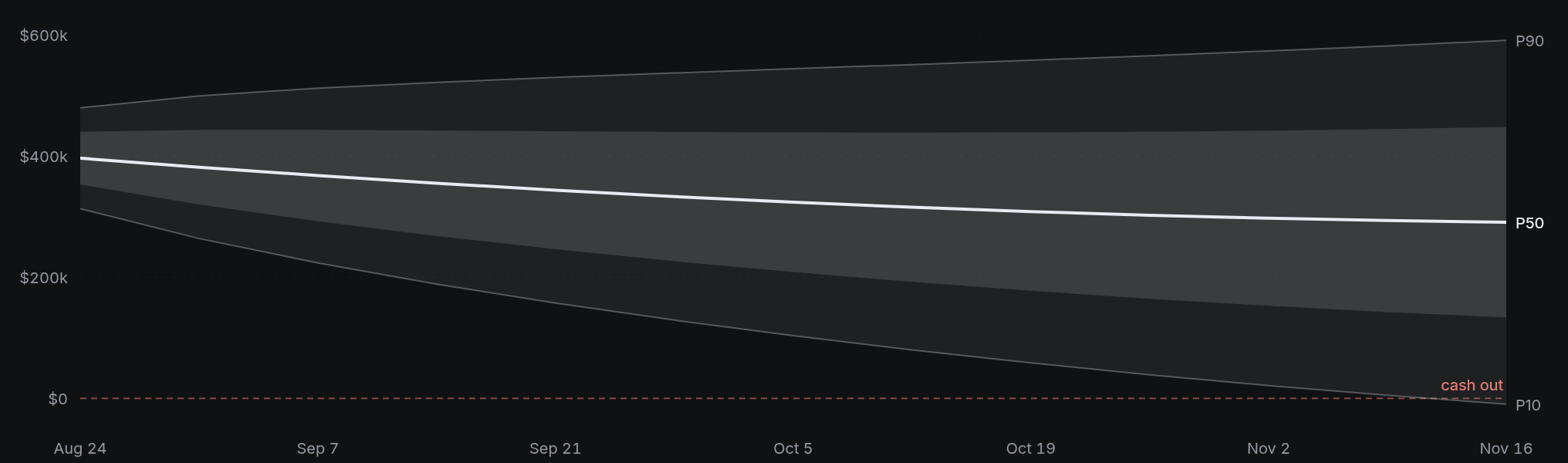
The line shows the projected balance. The shaded range around it is the uncertainty from collection timing, which is where most of the variance in a small company actually comes from.
Where everything sits
How to work this page
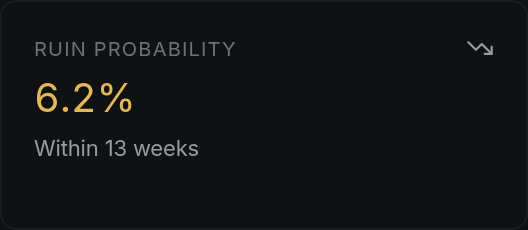
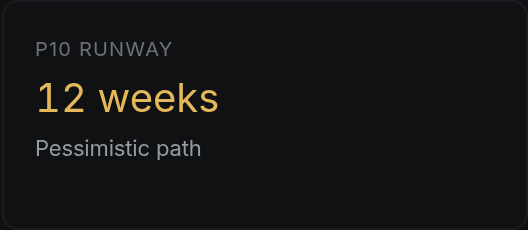
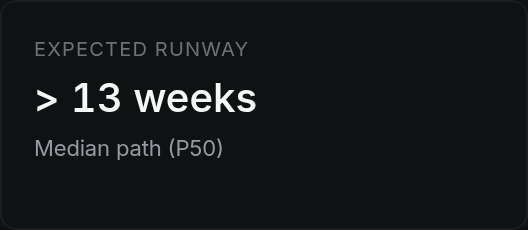
The lowest point in the window is the one that matters. A forecast that ends healthy having dipped below zero in week six is a forecast of insolvency.
Invoices are projected at each customer's own payment history rather than at terms. A customer who always pays at 45 days is modelled at 45, not at 30.
A known future cost that has no bill yet can be added as a planned item. It is marked as planned so it never gets confused with a committed obligation.
Forecast accuracy is tracked. Knowing you consistently run ten percent optimistic is more useful than any single projection.
On a phone
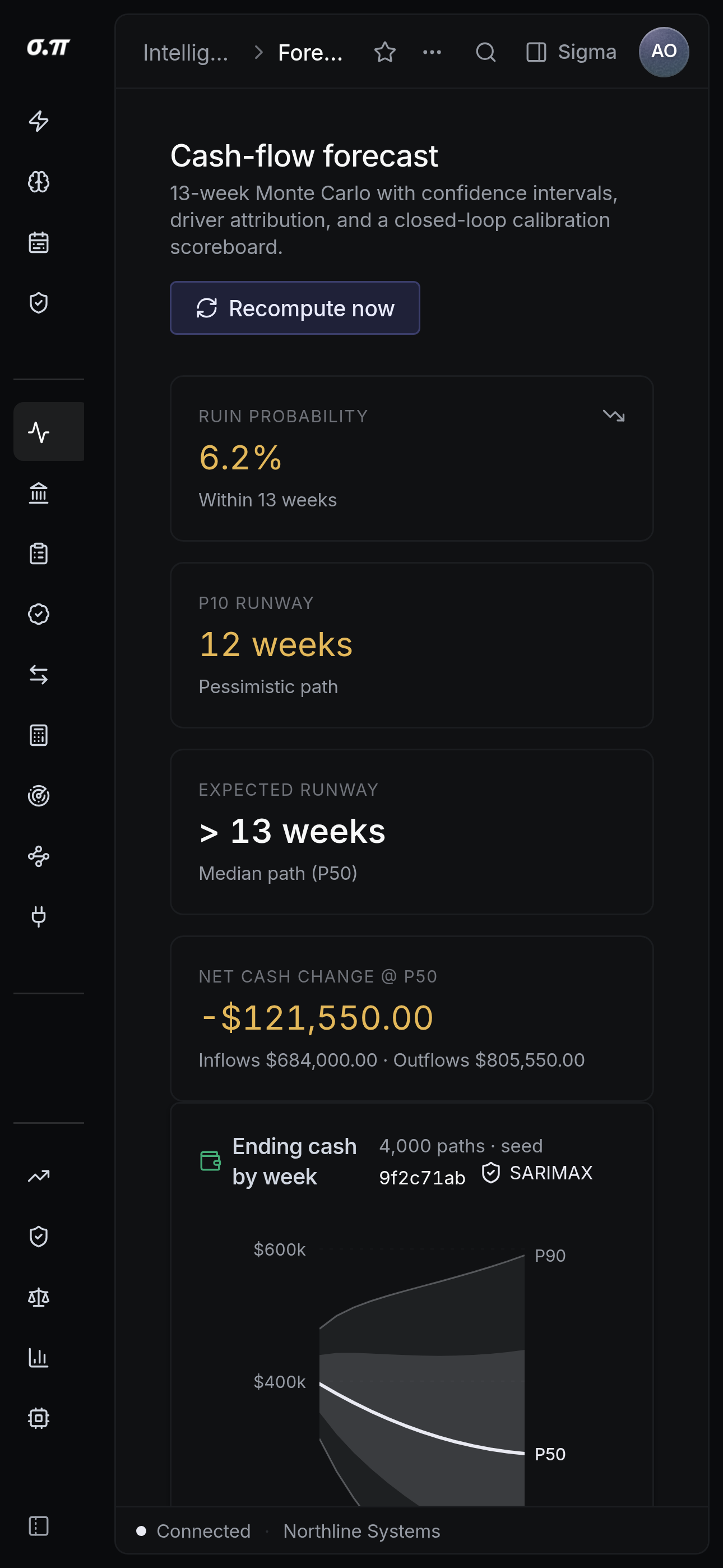
Every figure from the desktop appears here, stacked rather than reduced. Tables scroll inside themselves so the page never moves sideways, and figures keep their separators and their alignment at every width.
Questions people actually ask
Usually a small number of large receivables with inconsistent payment history. The widest contributors are named so you know which conversation would narrow it.
Yes. Known obligations from the tax calendar appear at their due dates, which is what stops a quarterly estimate arriving as a surprise.