Entities
The legal structure, its ownership, and what each entity is actually responsible for.

A business with more than one legal entity has more than one set of obligations. Each entity files its own returns, holds its own bank accounts, and can be liable separately.
This page holds the structure with its ownership edges and each entity's registrations, so the question of which entity owes what has an answer that does not depend on memory.
Where everything sits

How to work this page
Legal name, type, formation state, formation date and identifier. Type drives which returns are required, so an entity recorded as the wrong type produces the wrong obligations.
Percentages between entities, with dates. Cycles are refused, because an entity cannot own itself through a chain.
Each state an entity is registered in, with its numbers. This is what drives the filing calendar for that entity.
Consolidated views compute on top of separate records. The underlying books are never merged, so a separate return is always producible.
On a phone
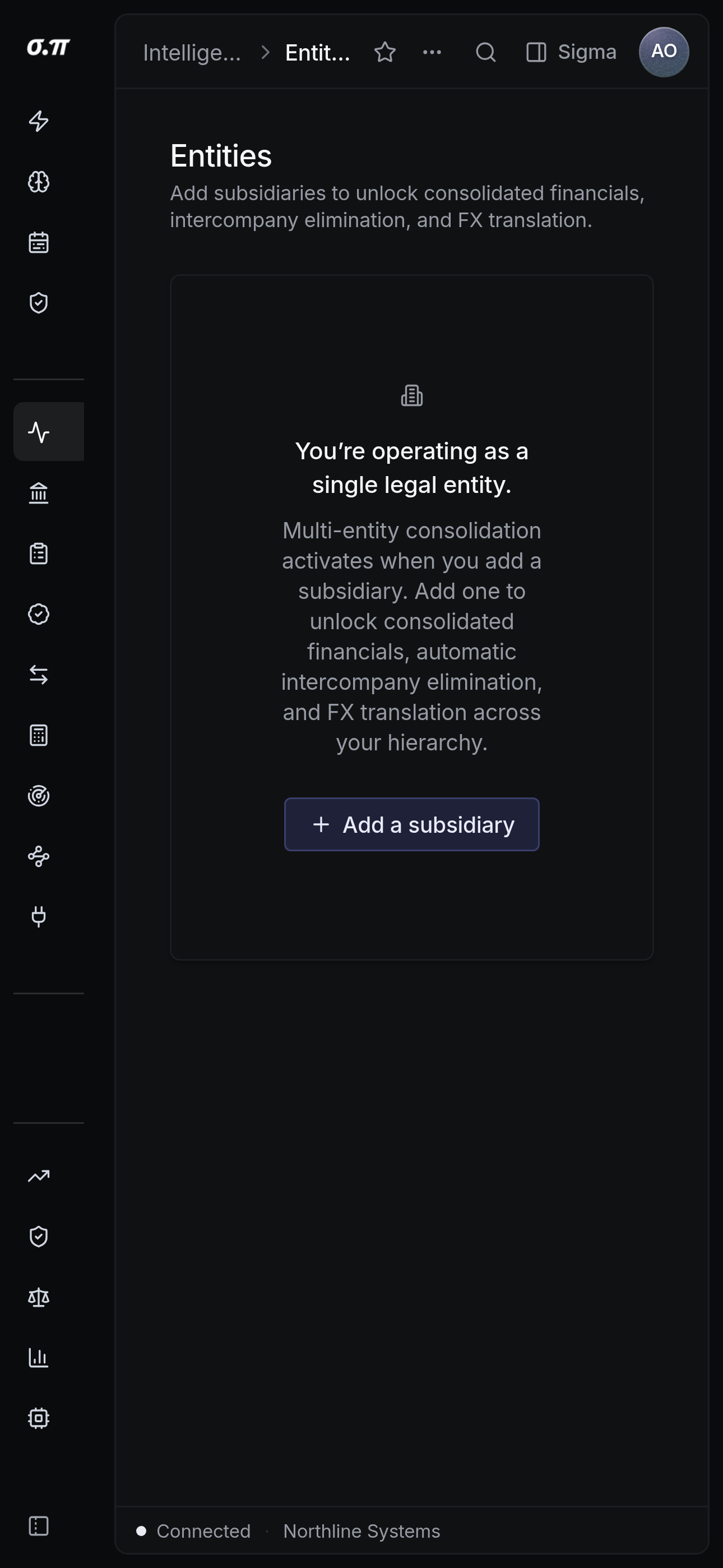
Every figure from the desktop appears here, stacked rather than reduced. Tables scroll inside themselves so the page never moves sideways, and figures keep their separators and their alignment at every width.
Questions people actually ask
Yes, and mixing them is the most common structural error. An account belonging to one entity should never carry another entity's activity.
You can mark it dissolved with the date, which stops future obligations. The record and its history stay, because dissolved entities still get examined.