Endowment
Corpus, appreciation, and the spending rate you can defend to a board.
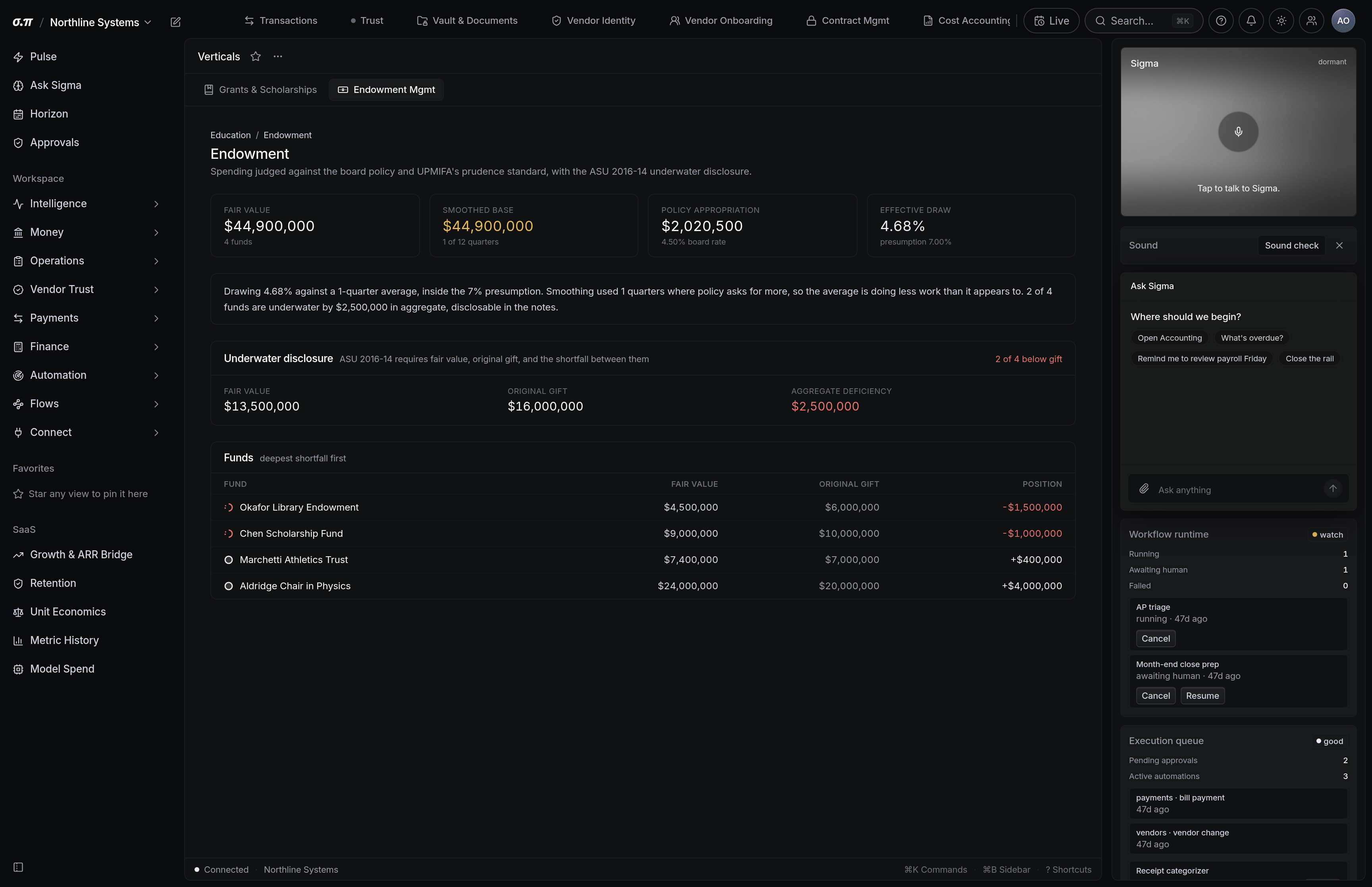
An endowment has a corpus that generally cannot be spent, accumulated appreciation that sometimes can, and a spending policy that governs the annual draw. Confusing the three is how an institution spends principal without meaning to.
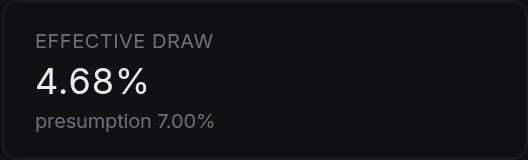
This tracks each fund with its restriction, applies the spending policy, and shows the draw against both the policy rate and the underwater test.
Where everything sits


How to work this page
The corpus, the purpose, and any spending restriction in the donor's own language. Fund-level detail matters because policies can differ by gift.
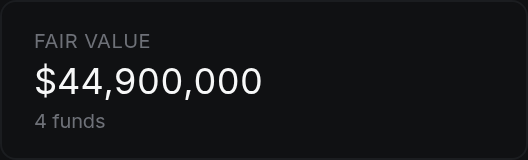
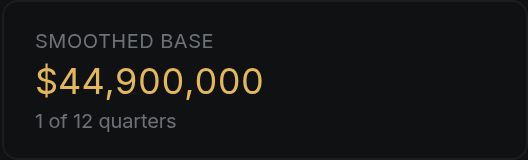
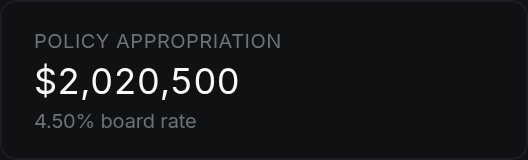
A percentage of a trailing average market value is the common form. The trailing window smooths a bad year so the draw does not collapse with the market.
A fund whose market value has fallen below its historic gift value is underwater, and many states restrict spending from it. Underwater funds are identified rather than left for an auditor to find.
What was spent, from which fund, against which restricted purpose. This is the report a board and an auditor both want and it comes from the ledger.
On a phone
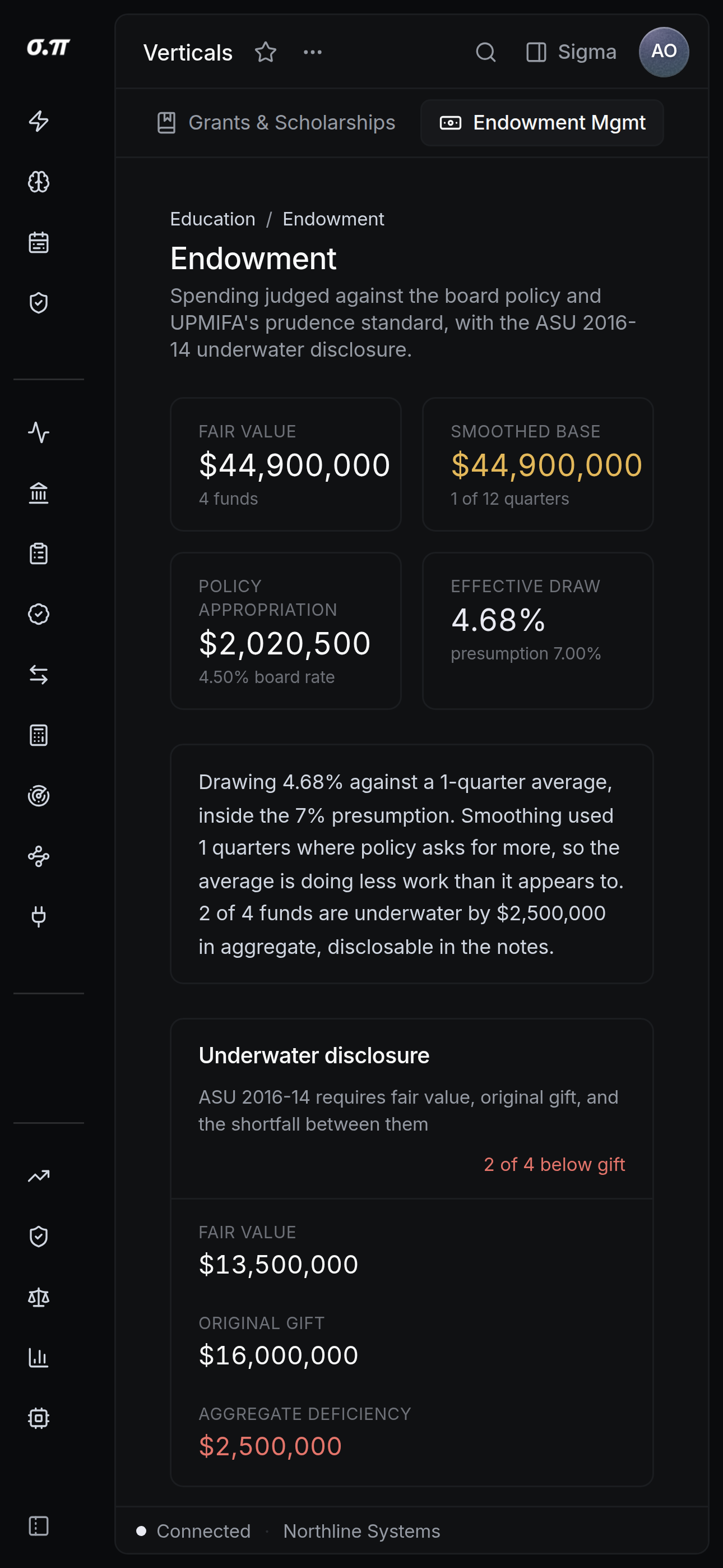
Every figure from the desktop appears here, stacked rather than reduced. Tables scroll inside themselves so the page never moves sideways, and figures keep their separators and their alignment at every width.
Questions people actually ask
Percentage of trailing average market value, with a configurable window and rate, plus banded and inflation-adjusted variants. The policy in force is recorded with its effective date so historical draws stay explicable.
Board-designated funds are marked as such. They are spendable at board discretion and reported separately from true donor-restricted endowment.