Contracts
Contract cost, funding, and the ceiling you cannot cross without a modification.
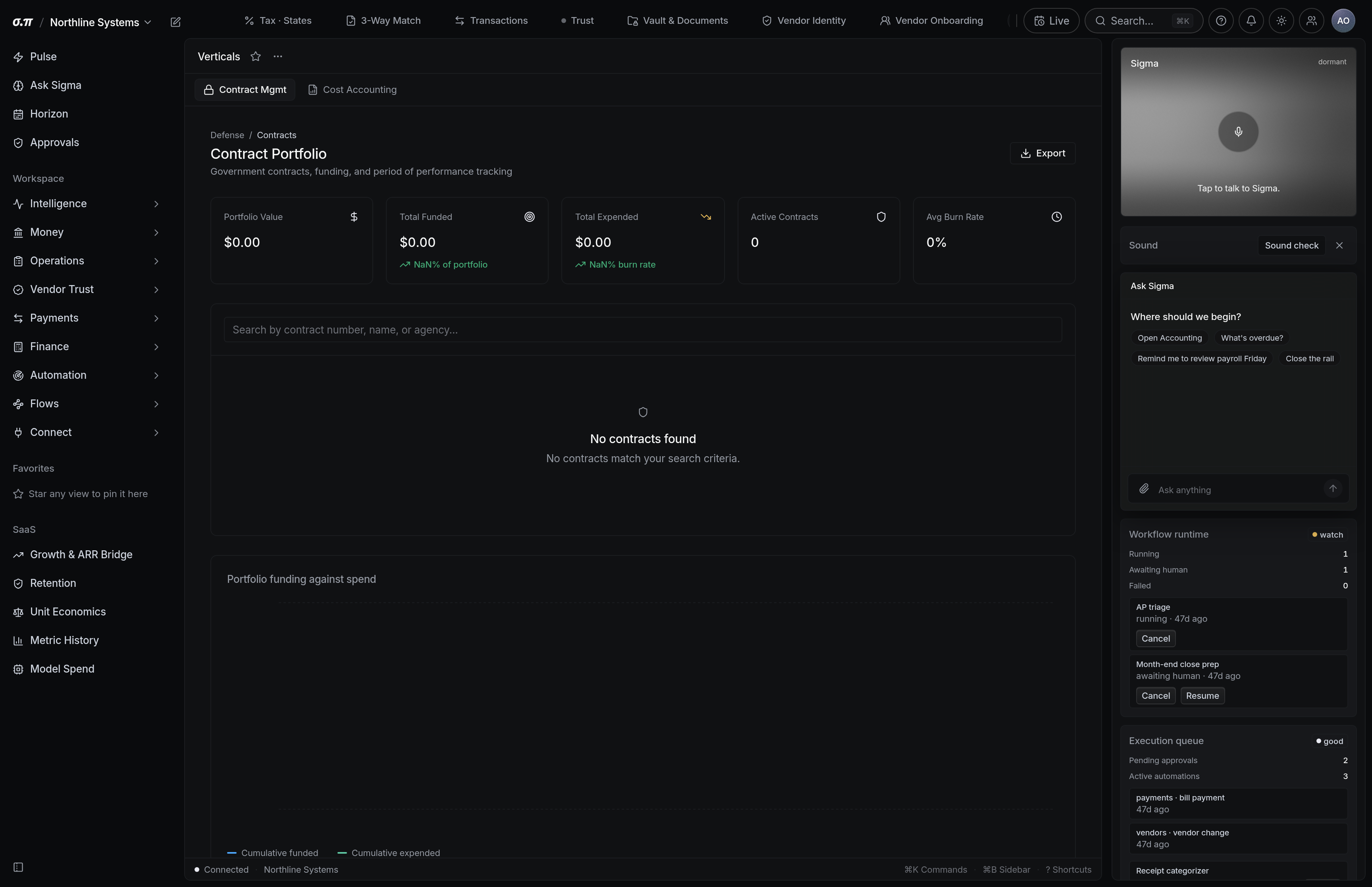
A government contract is not an invoice. It has a funded value, a ceiling, a period of performance, and cost categories that must be reported the way the contract specifies rather than the way your books happen to be arranged.
This page tracks obligated funds against costs incurred, and the burn against the period of performance. The number that matters is the gap between funded and ceiling: work performed above the funded amount is work you may not be paid for.
Where everything sits
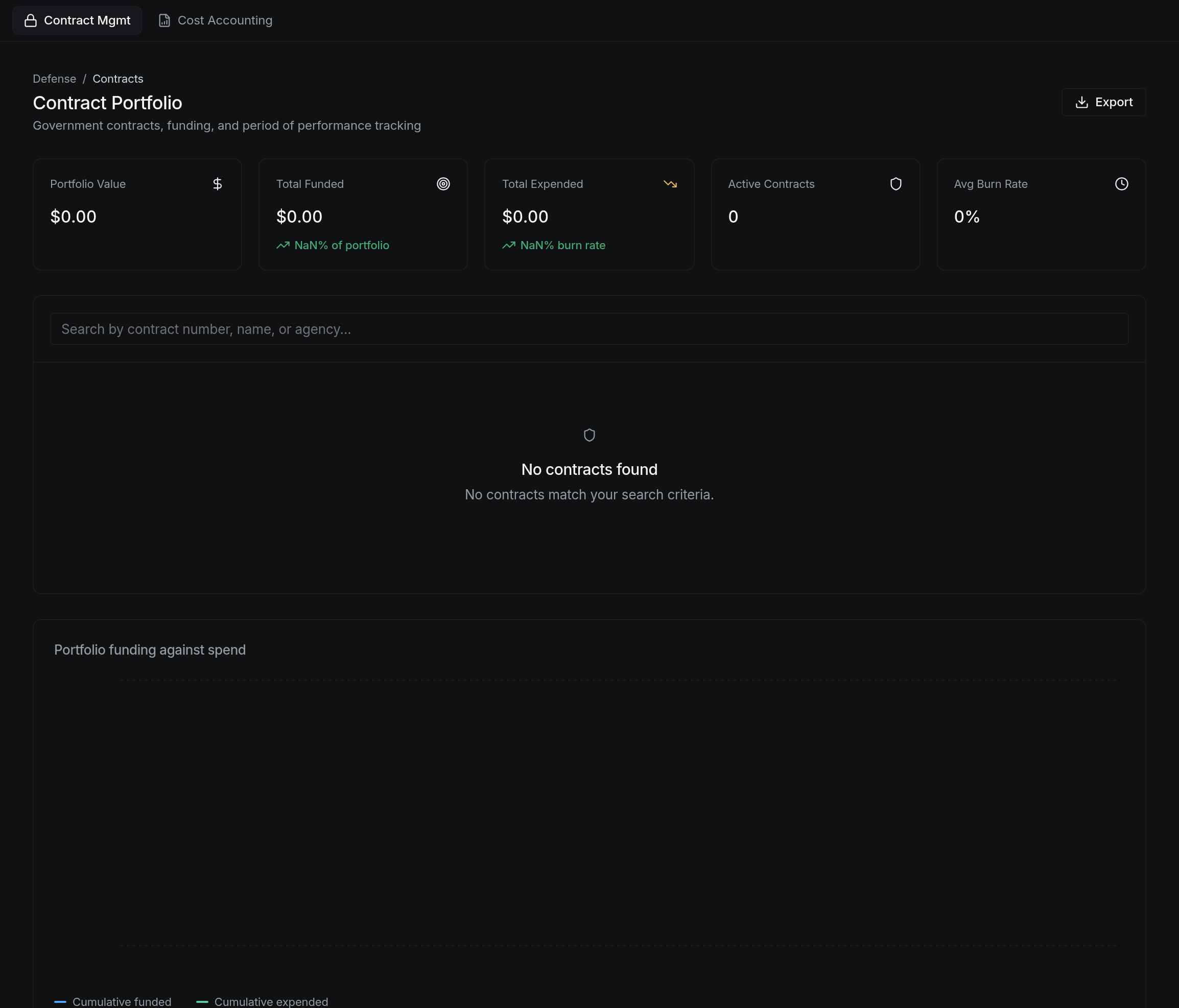




How to work this page
Contract number, type, funded value, ceiling, period of performance, and the cost categories the contract requires. Type matters because a cost-plus arrangement reports differently from firm fixed price.
Direct labour, materials, other direct costs, and the indirect pools that apply. Costs post to these categories directly rather than being reclassified at reporting time.
The bar shows obligated funding, costs incurred against it, and the ceiling above both. A limitation of funds notice is required at a threshold, and the page names that threshold rather than leaving you to calculate it.
Every mod changes funding, ceiling, period, or scope. Each is recorded against the contract with its effective date, so historical cost reporting stays correct for the period it applied to.
On a phone
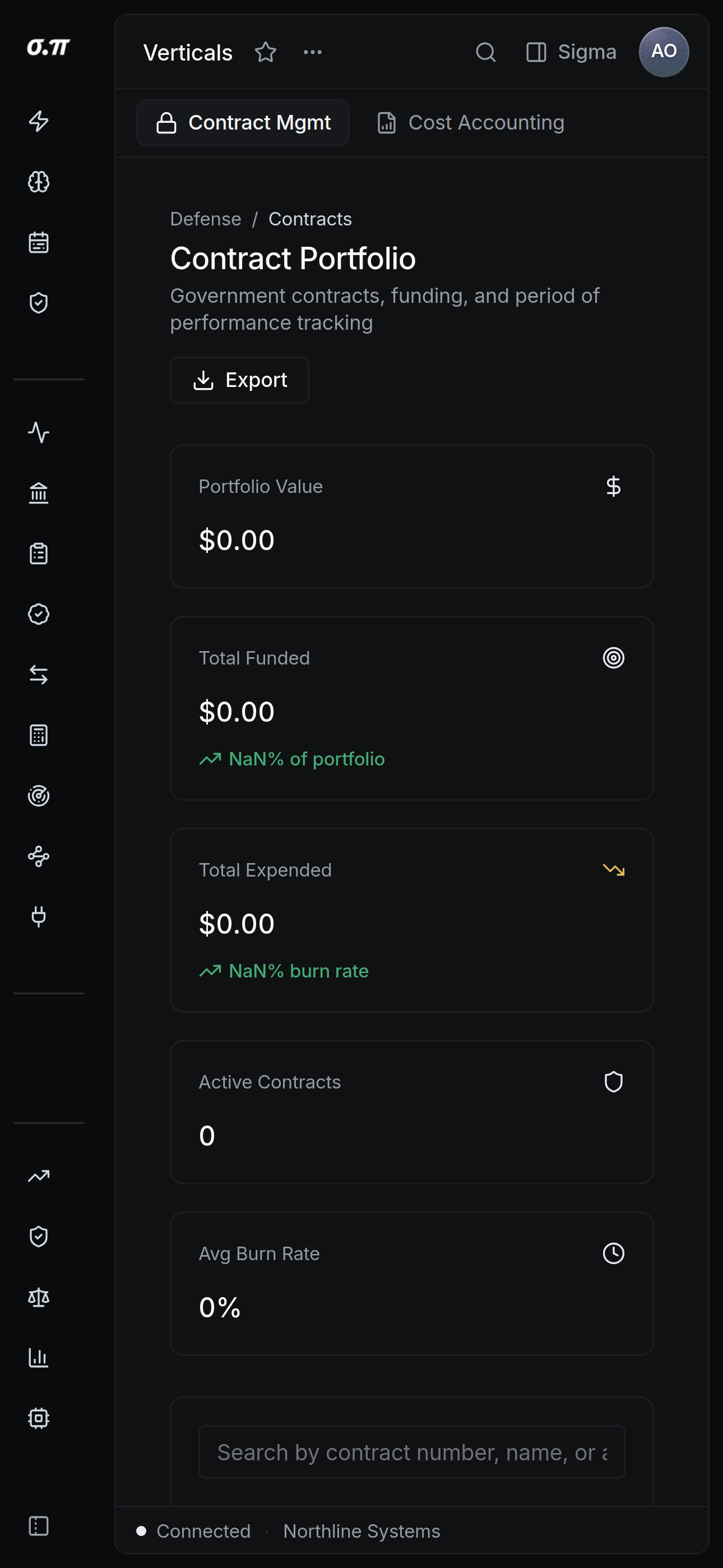
Every figure from the desktop appears here, stacked rather than reduced. Tables scroll inside themselves so the page never moves sideways, and figures keep their separators and their alignment at every width.
Questions people actually ask
Provisional rates apply during the year and the variance against actuals is tracked continuously, so the true-up at year end is a number you have watched rather than one that arrives.
Flagged at the point of entry and excluded from the pools. They stay in your books as real expenditure and out of anything billed to the contract.