Chart of accounts
The accounts your books are organised into, and the structure that makes reports readable.
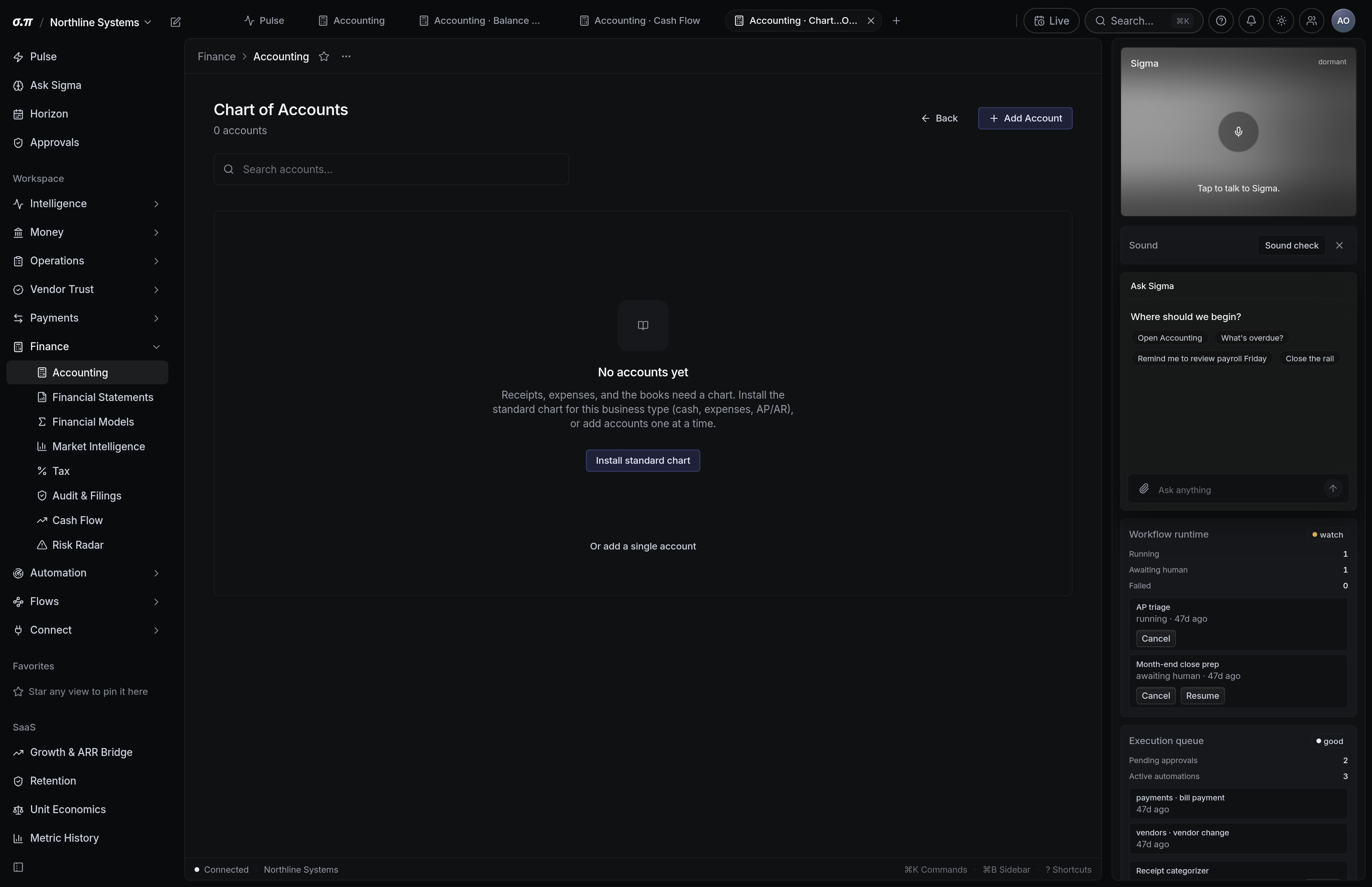
The chart is the skeleton. Too few accounts and the statements tell you nothing. Too many and nobody codes consistently, which also tells you nothing.
An imported chart from an existing accounting system comes across intact rather than being mapped onto ours, which matters when a franchisor or a funder mandates a specific structure.
Where everything sits

How to work this page
Two levels covers almost every small and mid-sized business. Depth beyond that is usually a reporting problem wearing a chart of accounts costume.
The person reading the statement is often not the person who coded the transaction. Name for the reader.
An account with history cannot be removed without breaking prior statements. Deactivating stops new postings and preserves the past.
Accounts that received nothing all year are noise. Accounts absorbing a wide mix of things need splitting.
On a phone
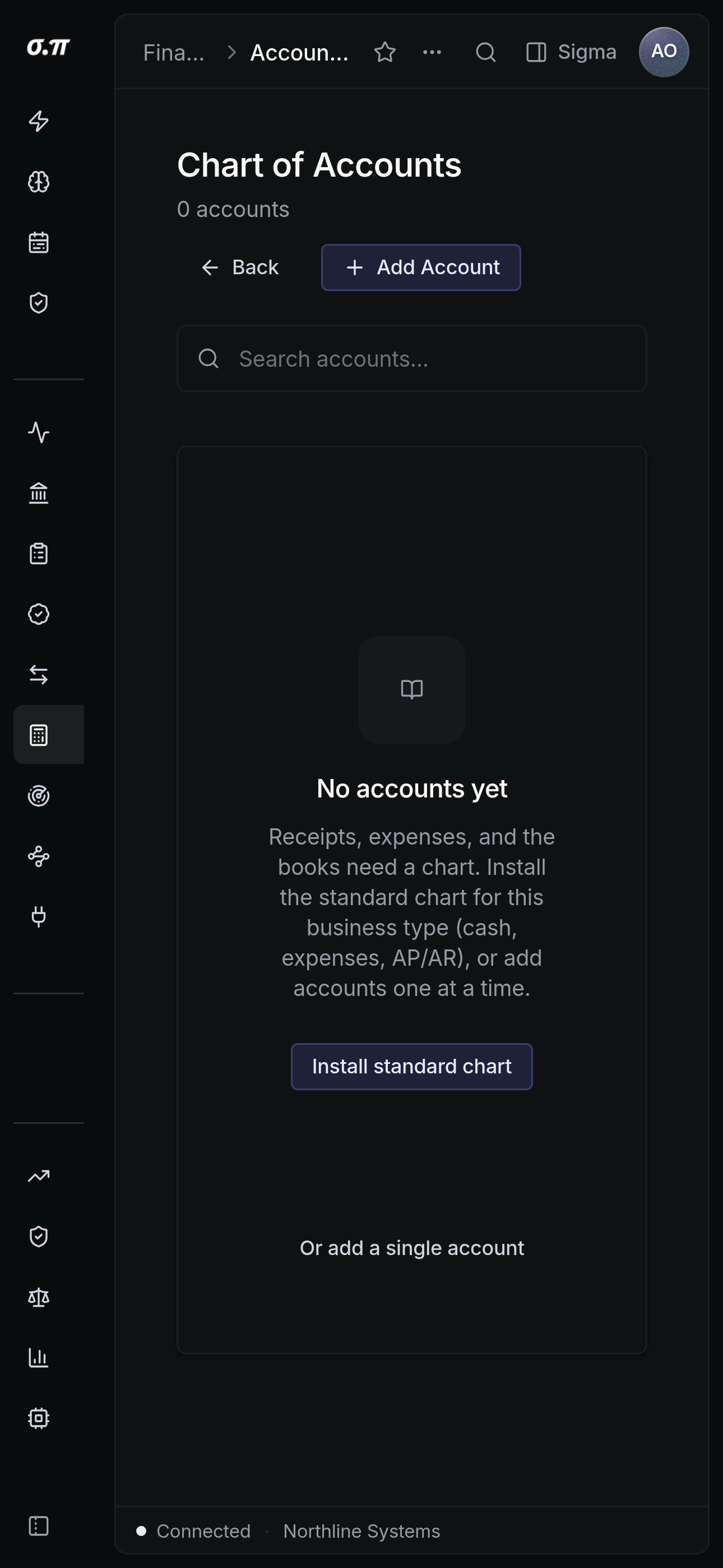
Every figure from the desktop appears here, stacked rather than reduced. Tables scroll inside themselves so the page never moves sideways, and figures keep their separators and their alignment at every width.
Questions people actually ask
Yes, and you should. Their chart is imported and used as given, because modifying it breaks the reporting templates you are required to file.
They stay exactly where they are. Deactivation only stops future postings.