Calibration
How accurate the forecasts have been, so you know how much to trust the next one.
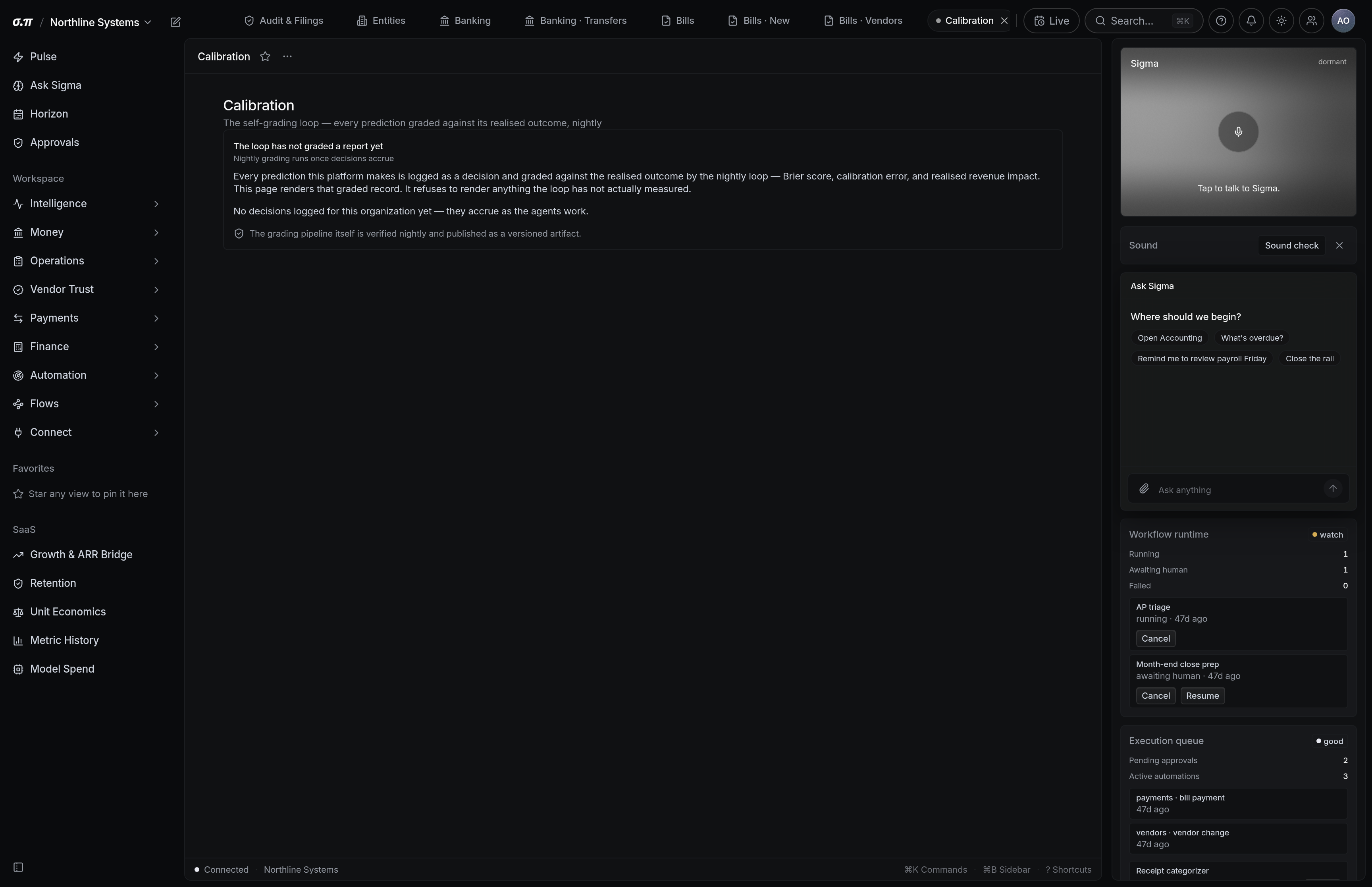
A forecast without a track record is an opinion. Calibration scores past projections against what actually happened, by horizon.
The useful output is a bias: whether the system runs optimistic or pessimistic, and by how much, at each horizon.
Where everything sits


How to work this page
Thirty day forecasts should be tight. Ninety day ones are wider and that is expected. What matters is whether the width is honest.
Consistently over or under is fixable. Random error is noise and is not.
Usually a small number of receivables with inconsistent payment behaviour. Naming them tells you which conversation would help.
Confirmed bias feeds back into the projection, so the forecast improves as it learns your business.
On a phone
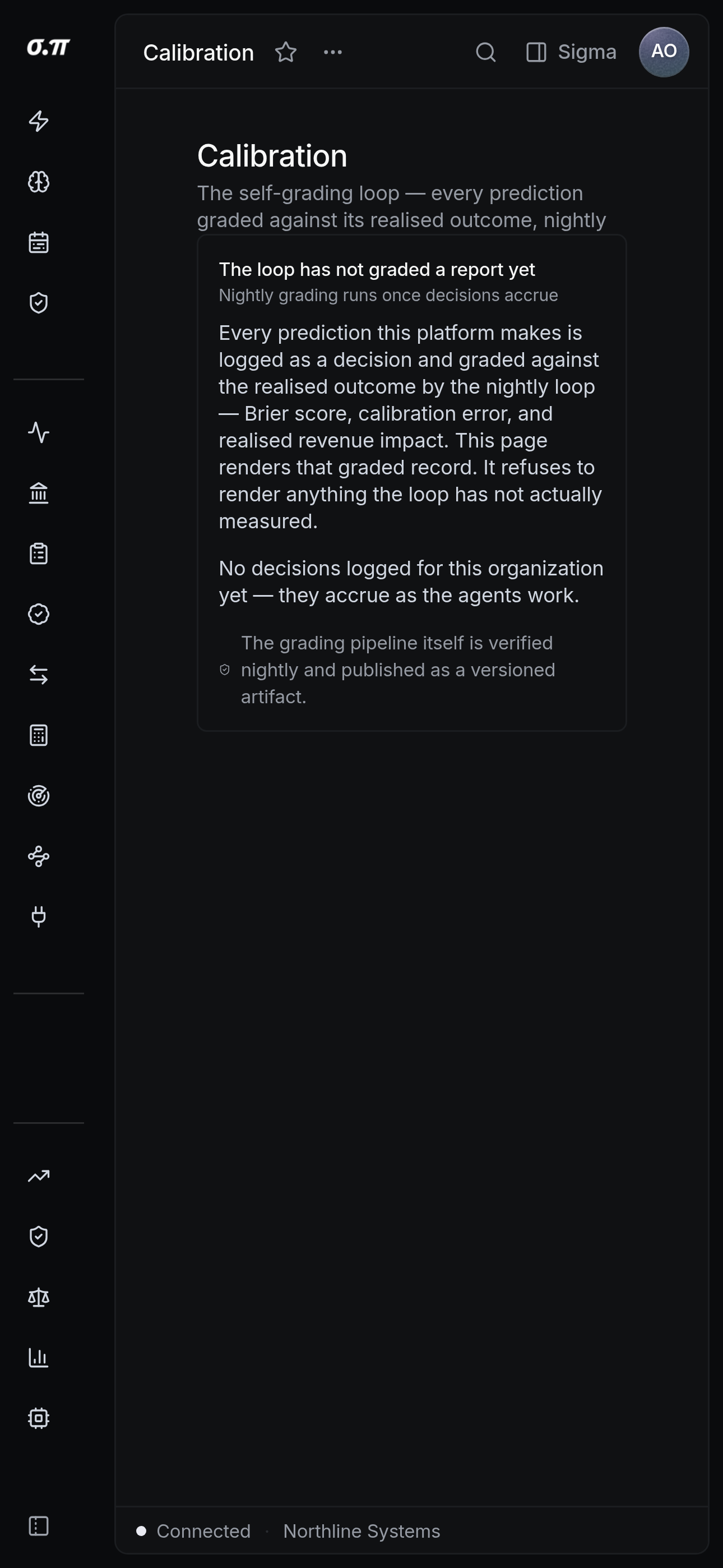
Every figure from the desktop appears here, stacked rather than reduced. Tables scroll inside themselves so the page never moves sideways, and figures keep their separators and their alignment at every width.
Questions people actually ask
Three months of history for thirty day horizons. Longer horizons need proportionally longer.
Usually incomplete data rather than a bad model. Unrecorded bills and uncategorised transactions are the common causes and both are visible.