Balance sheet
What the business owns, what it owes, and what is left, at a point in time.
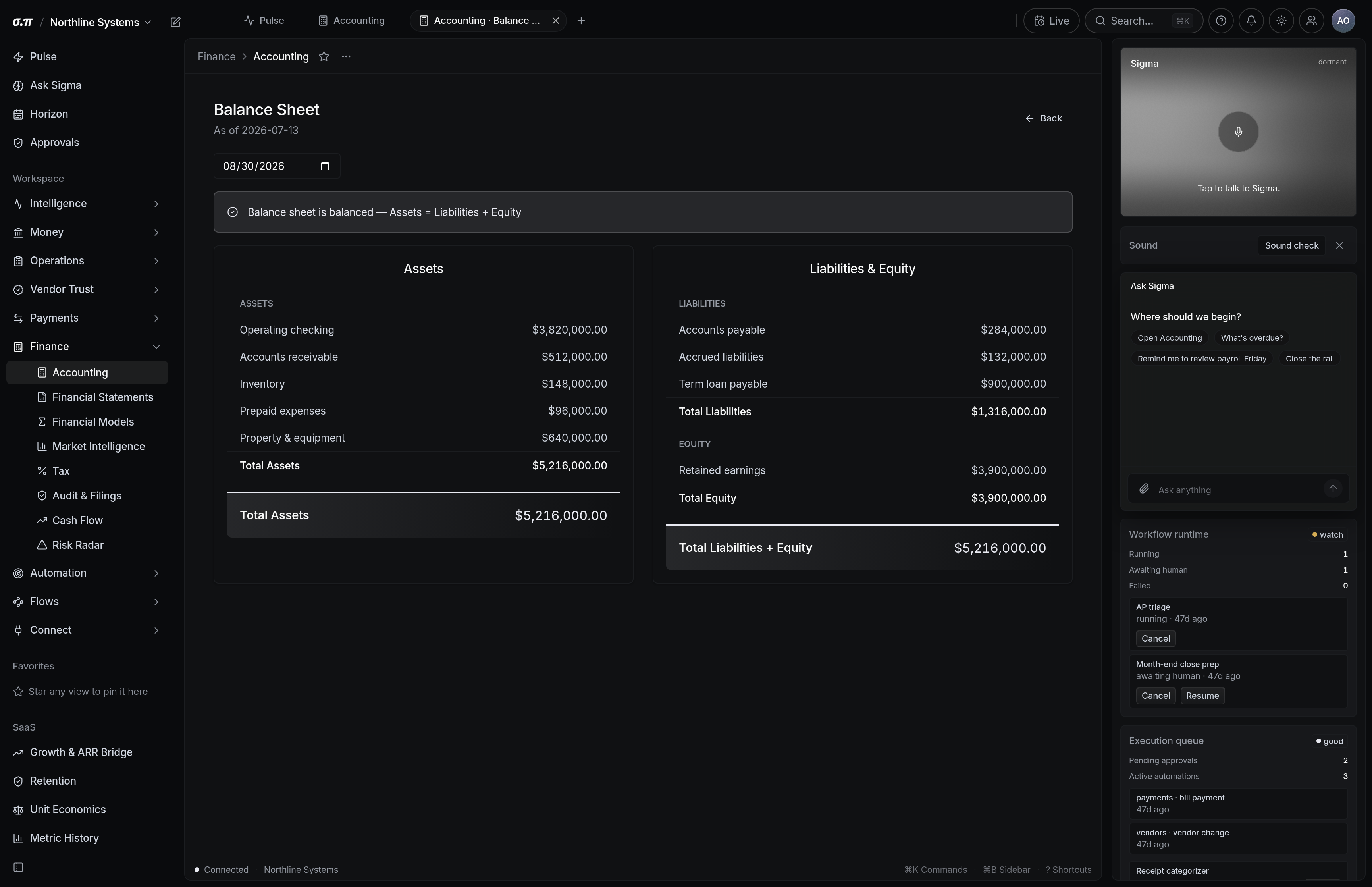
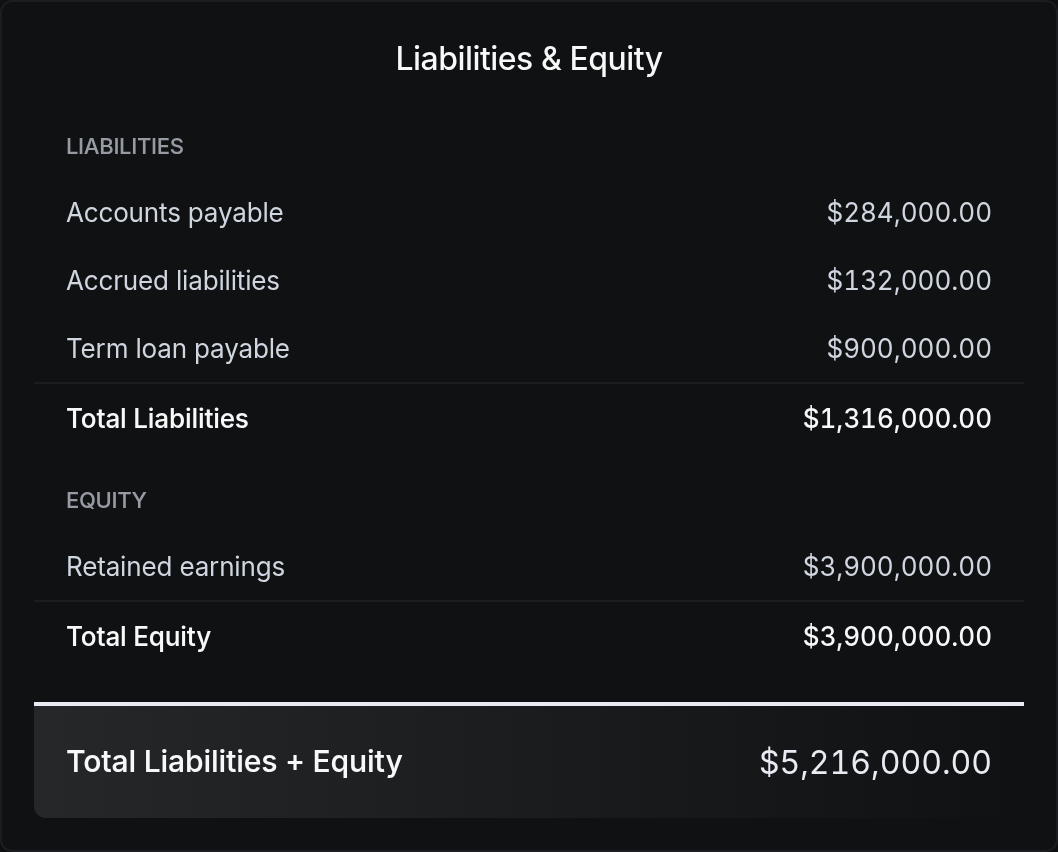
Assets equal liabilities plus equity, always, because the ledger cannot post an unbalanced entry. If this statement does not balance the problem is upstream and the trial balance will show it.
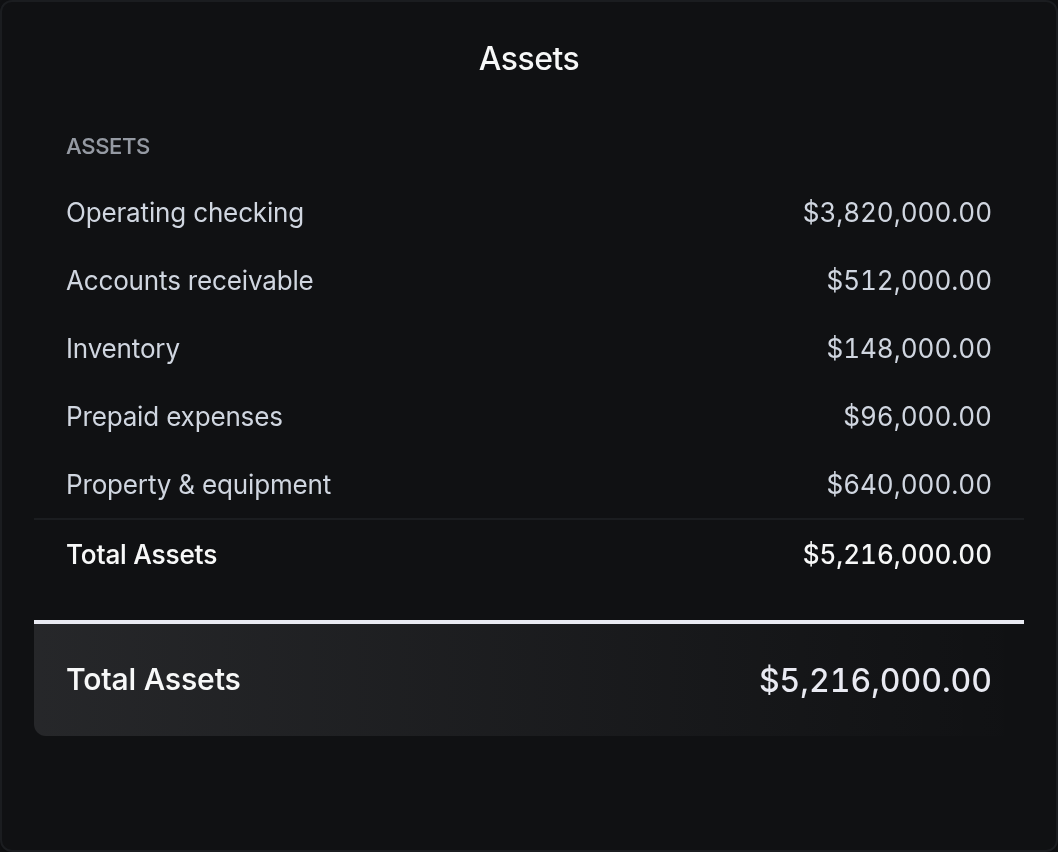
Current and non-current are separated, which is what makes working capital readable rather than requiring mental arithmetic.
Where everything sits



How to work this page
Current assets less current liabilities. It is the most honest single indicator of whether the next ninety days are comfortable.
A large receivables balance is an asset only if it collects. The ageing behind it tells you how much of it is real.
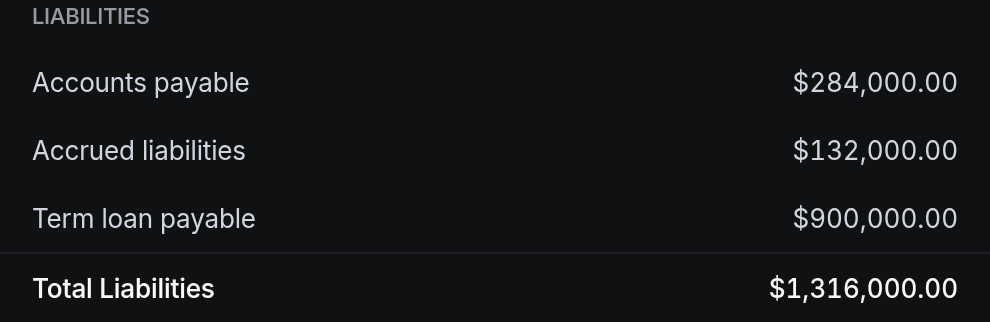
Bank, card and loan balances should agree with their statements. Differences are listed rather than absorbed.
Equity changes through profit, draws and contributions. Any other movement is worth explaining.
On a phone
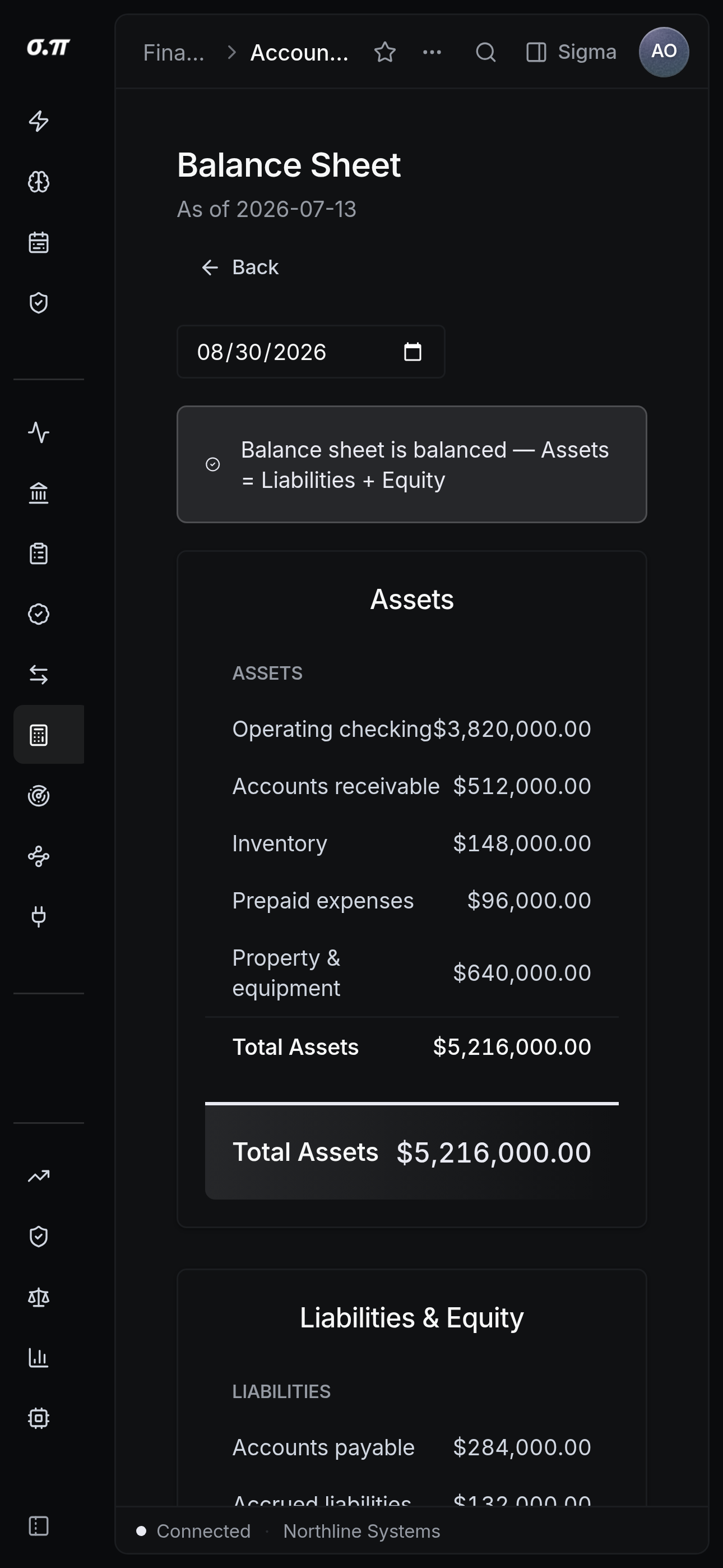
Every figure from the desktop appears here, stacked rather than reduced. Tables scroll inside themselves so the page never moves sideways, and figures keep their separators and their alignment at every width.
Questions people actually ask
Timing and unreconciled items. The balance sheet reflects posted entries. Banking reflects the institution. The difference is the reconciliation and it is listed.
At cost less accumulated depreciation, with the schedule behind each asset. Depreciation posts monthly rather than in a year-end lump.