Ask Sigma
The agent reads your ledger, not the internet, and can act on what it finds.
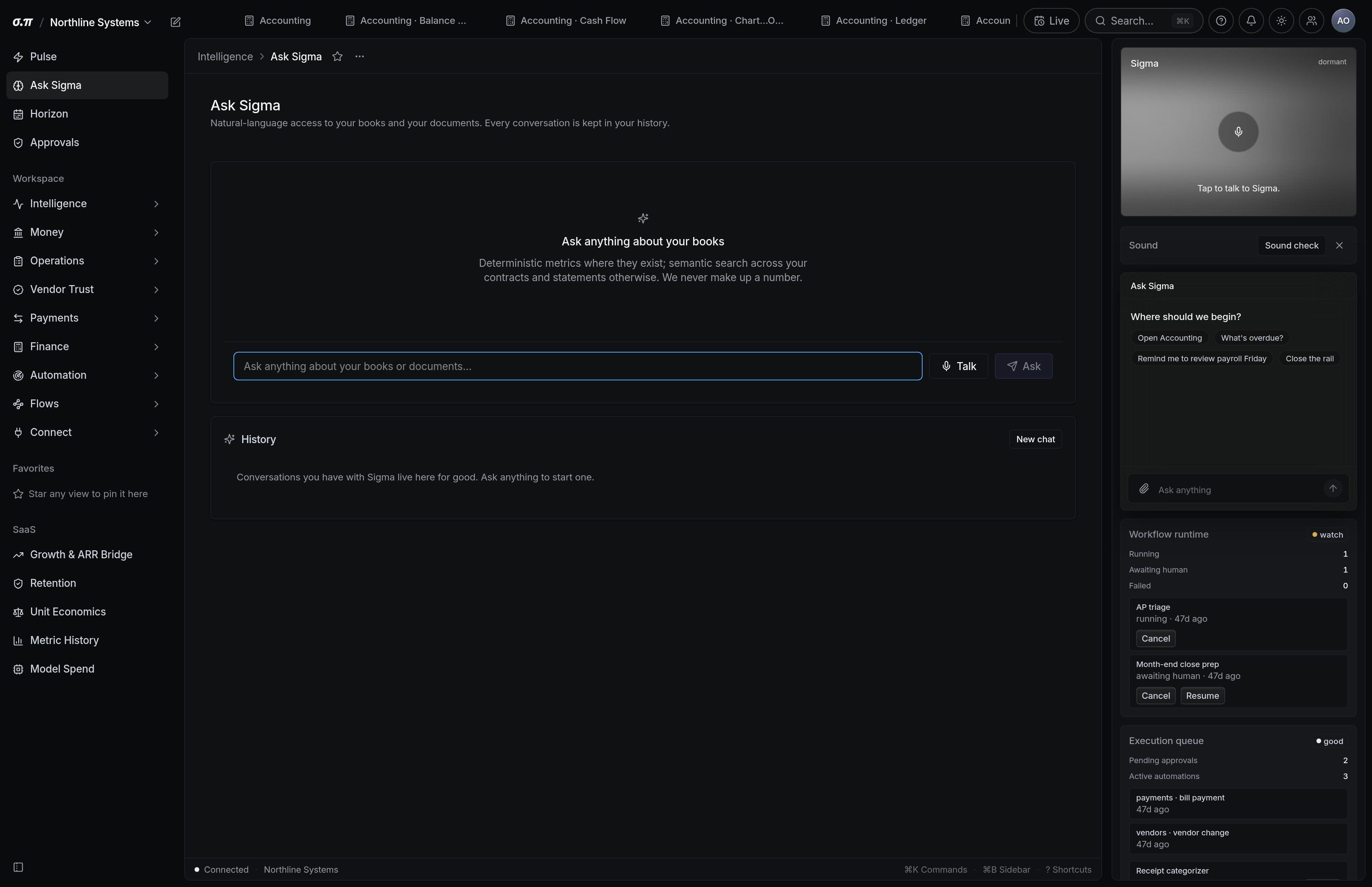
Sigma answers from this business. When you ask what you spent on software last quarter it queries the ledger and returns the figure with the transactions behind it, rather than describing how one might find out.
It holds tools. It can open a page, stage a payment for your approval, record a fact about the company, schedule something, or search your documents. Anything that moves money stops at approval and never executes on its own.
Its authority narrows during a turn. When text from an uploaded document enters the conversation the tool set shrinks, so a document cannot talk the agent into an action you did not ask for.
Where everything sits



How to work this page
What is my cash position, who is overdue, how much did payroll cost last month, what do I owe the state. Numbers come back with their source rows attached.
How do I connect a bank, where do I add a vendor, how do I run payroll. It answers with the actual steps in this product and opens the page while it explains.
The rail holds voice. Press the orb and speak. Replies are one to three sentences by design, because a spoken answer that runs long is a spoken answer nobody finishes.
The message control beside a figure on a statement sends that question into the rail without leaving the page the question is about.
On a phone
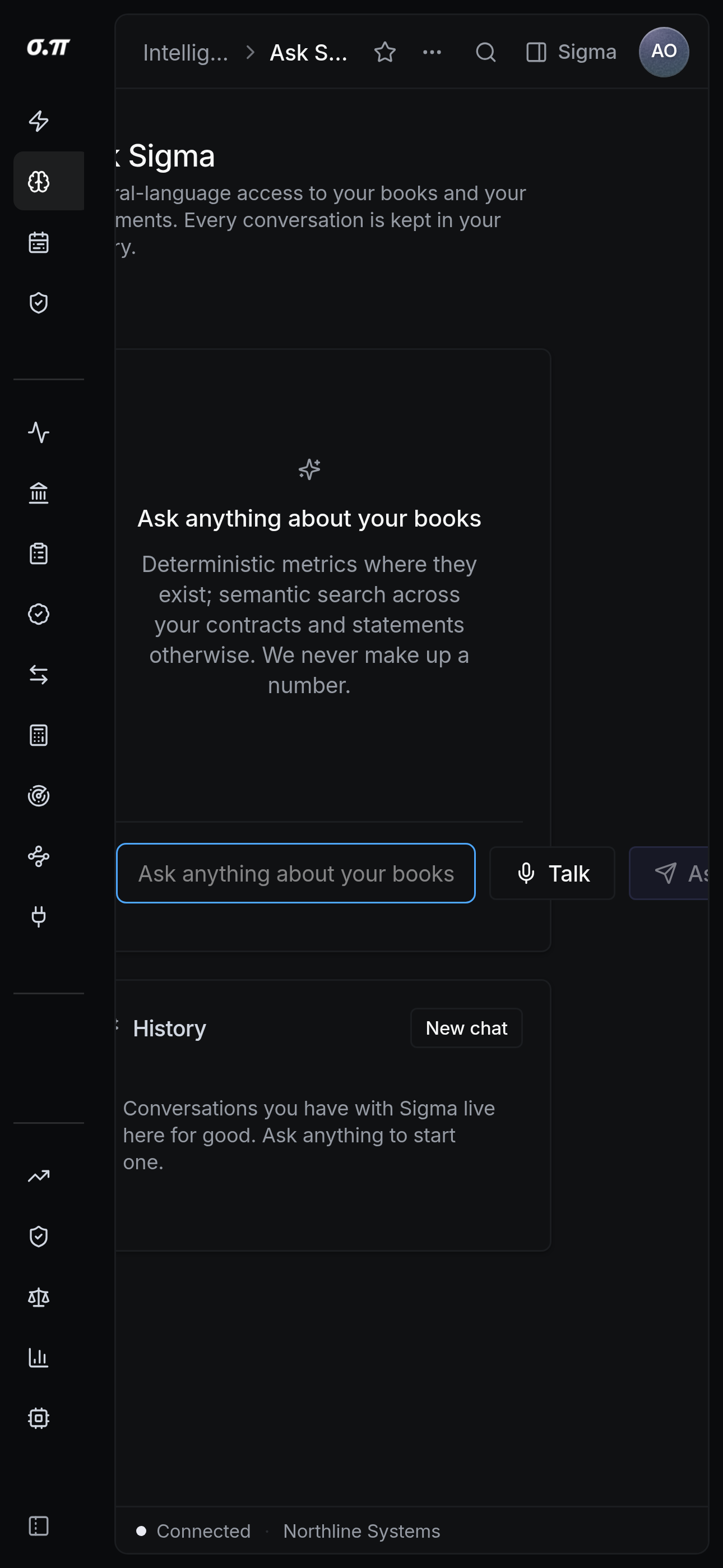
Every figure from the desktop appears here, stacked rather than reduced. Tables scroll inside themselves so the page never moves sideways, and figures keep their separators and their alignment at every width.
Questions people actually ask
It can prepare a payment. It cannot execute one. Every payment stops at an approval carrying a person's name, regardless of how it was created.
No. Authority is granted per business, and an agent working in one has no path to another's data.
It says so. It is instructed never to name a page that does not exist or invent a feature, and the page list it works from is the real navigation registry.